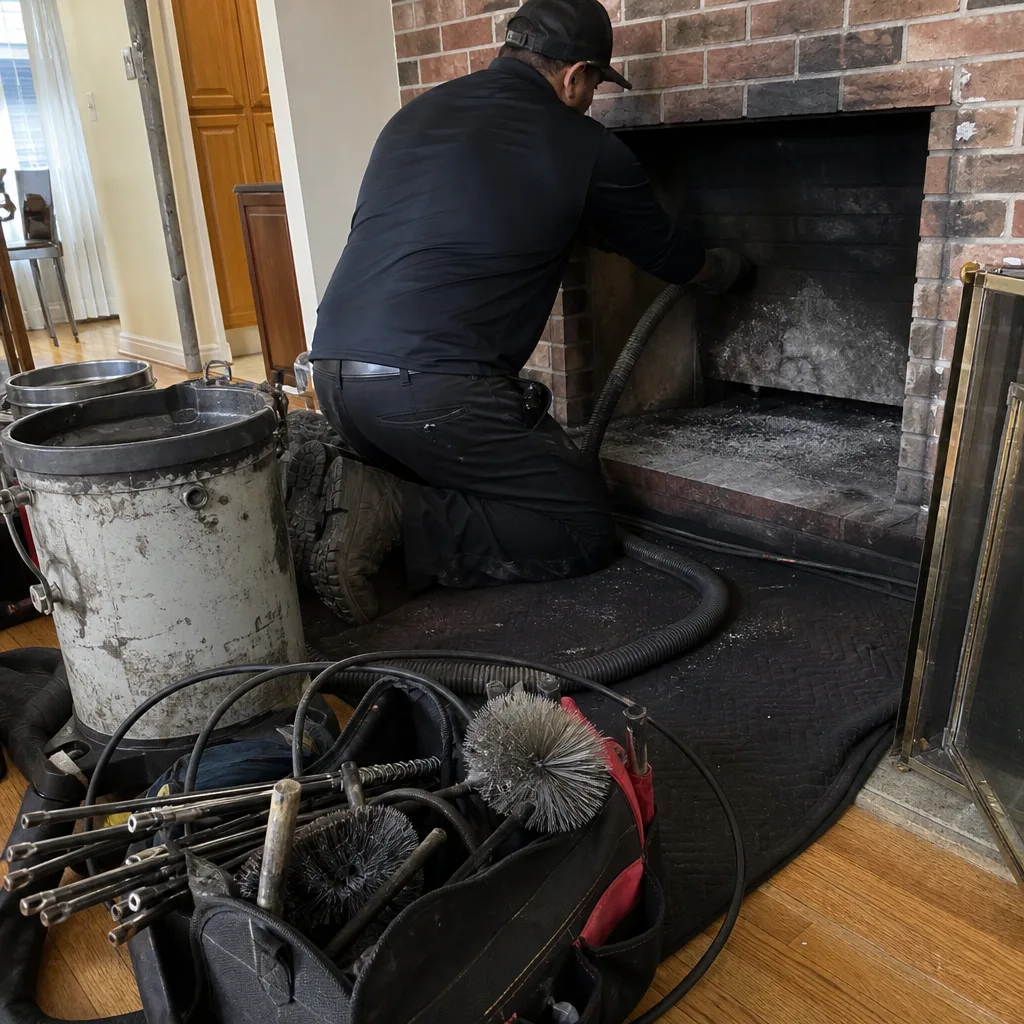
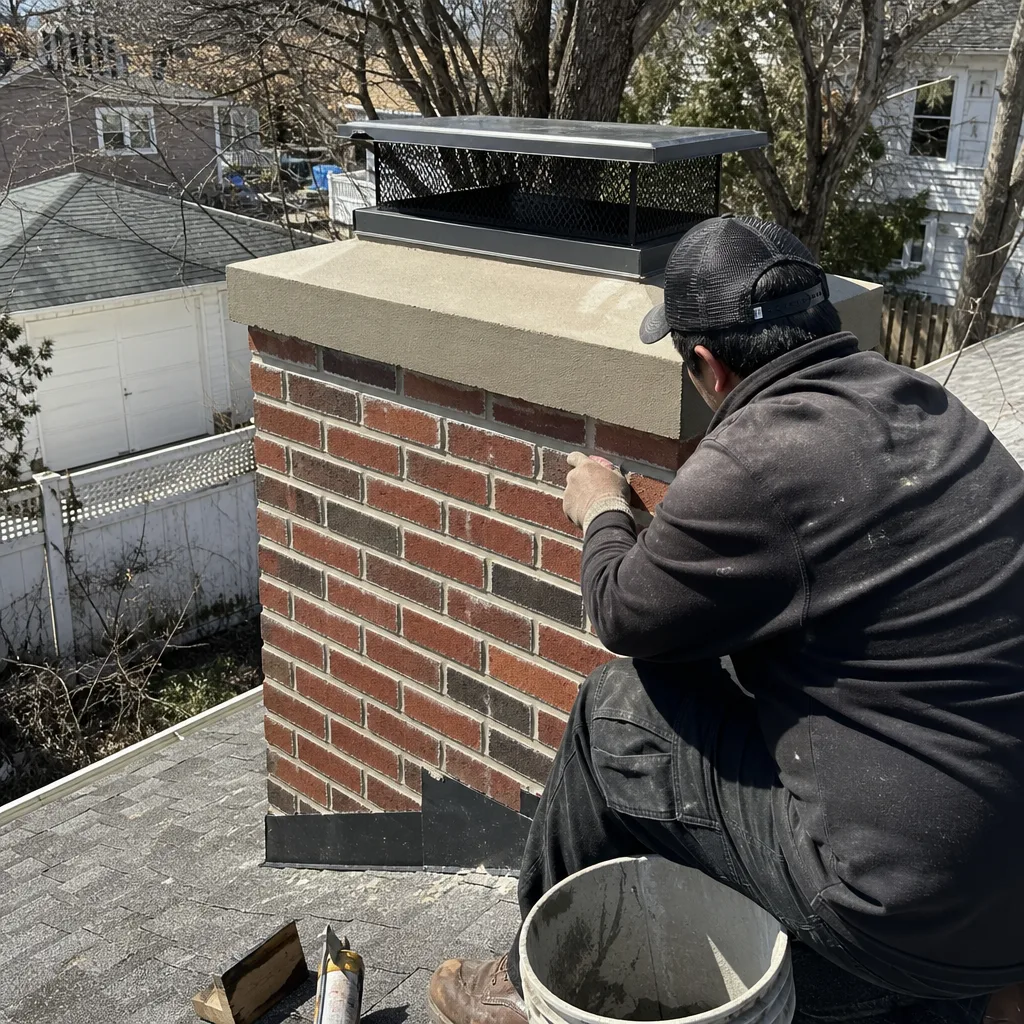
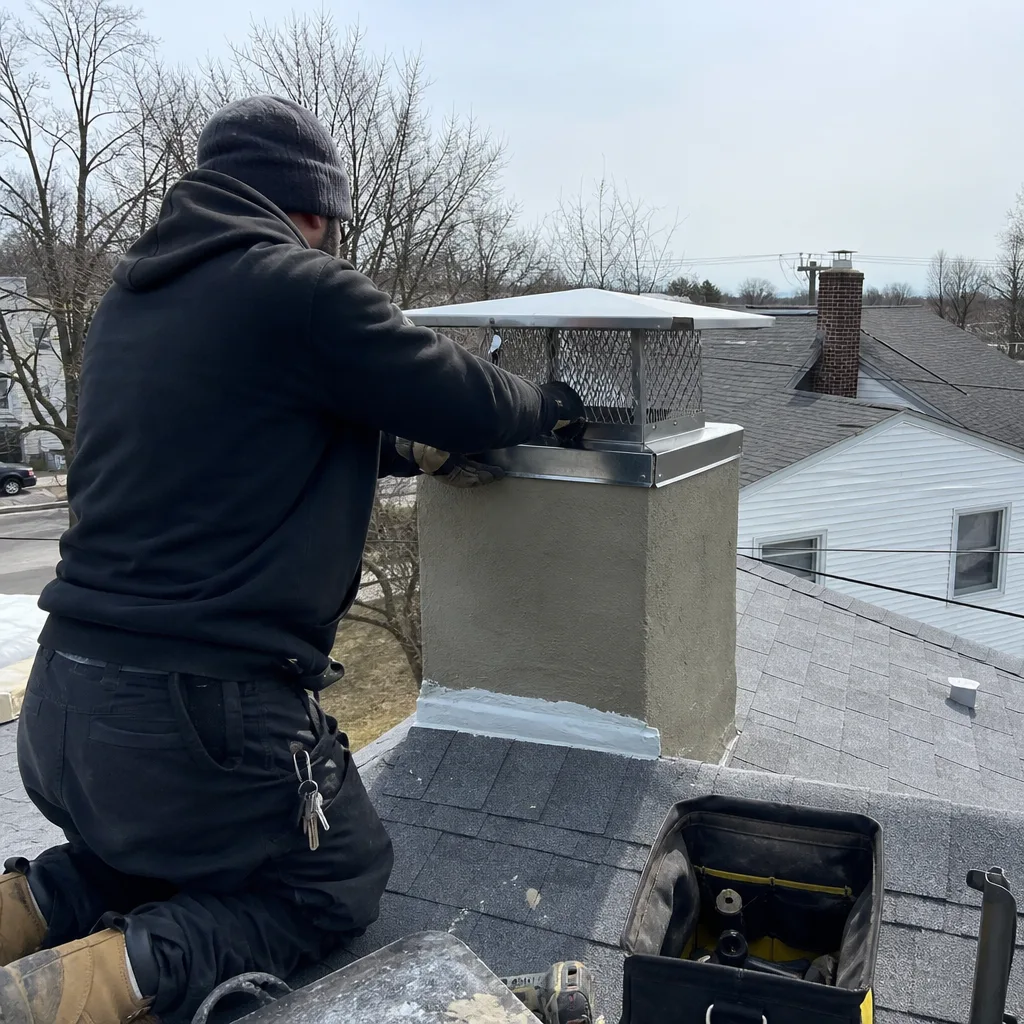
Level 1 sweep and inspection to the NFPA 211 annual standard - flue, crown, cap, and flashing checked and photographed
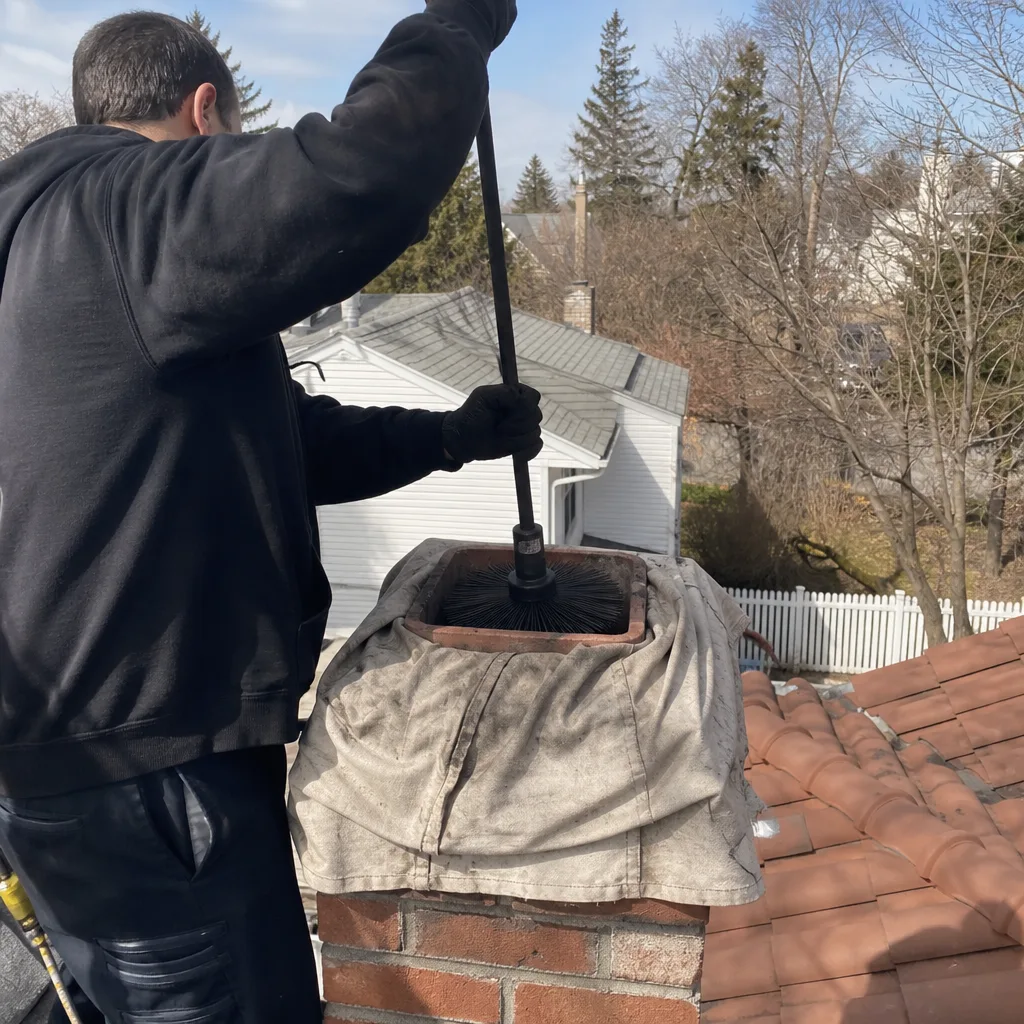
Chimney sweep logs do not sweep chimneys. They loosen some creosote - which then falls where a brush and vacuum still have to collect it.
 Before
 After
After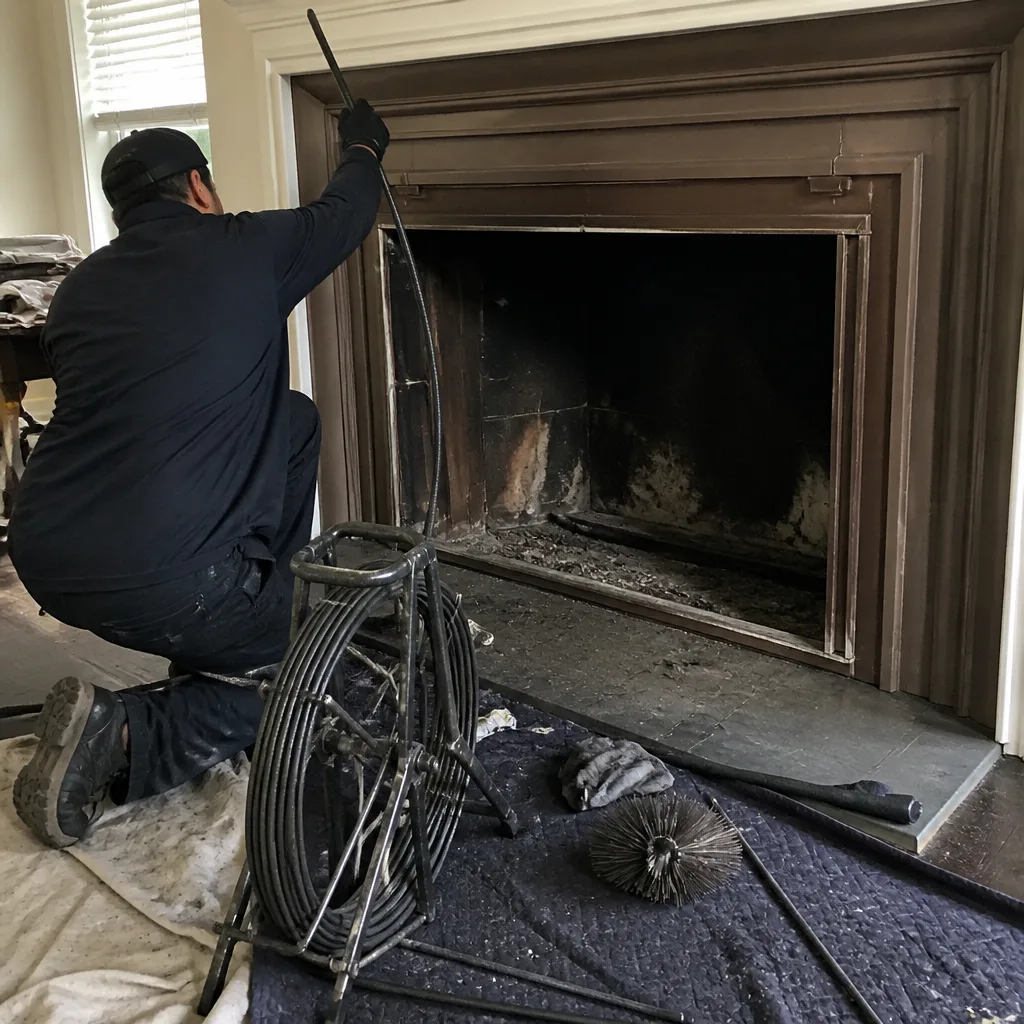 Before
 After
After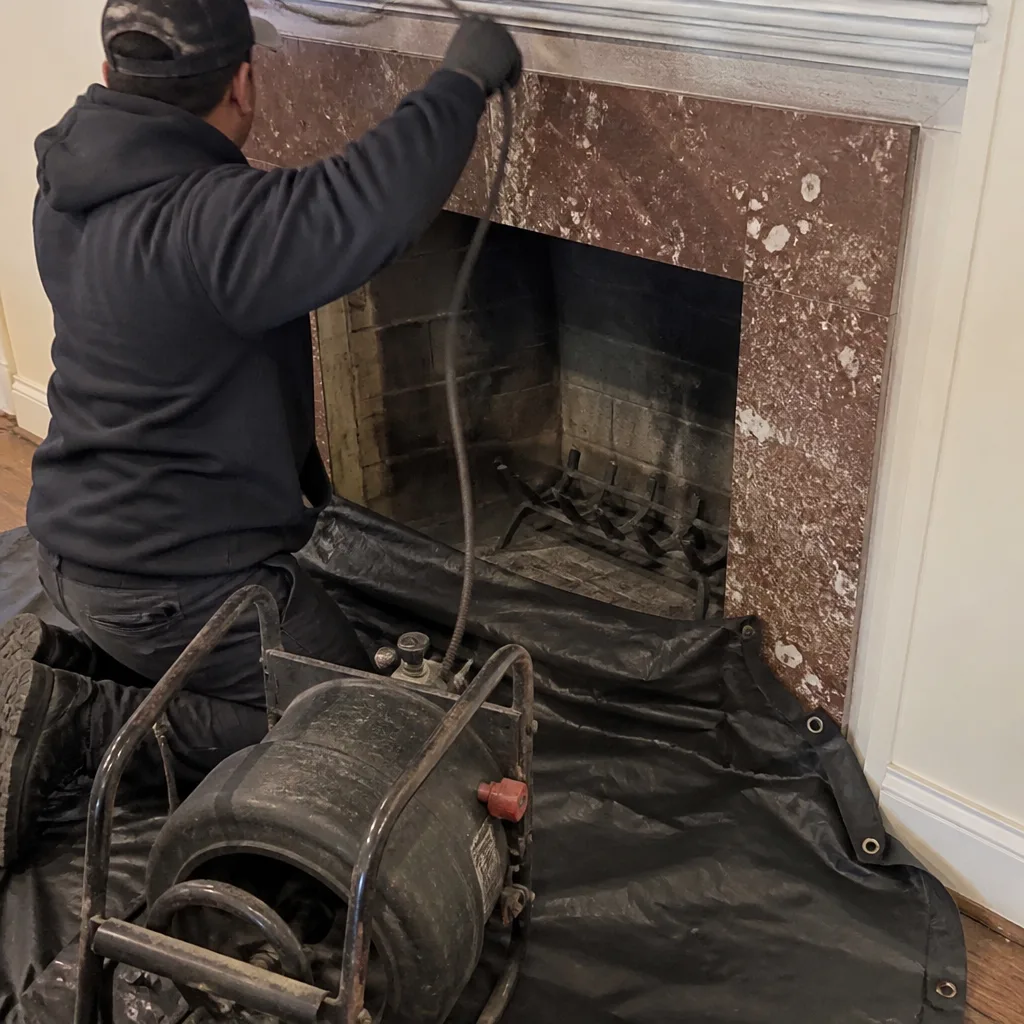 Before
 After
AfterFast, Reliable Chimney Repair Across Long Island City
Chimney repair in Long Island City runs $450-$3,800 for most jobs, with tuckpointing and flashing repair on the lower end and full chimney rebuilding at the top. If you own one of the attached brick rowhouses in Hunters Point or along Vernon Boulevard, you’re dealing with a chimney system most contractors in Queens never see: shared party-wall stacks, landmarked facades, and salt-air masonry erosion off the East River. Our crews work these blocks every week, and we carry the specific materials and permitting knowledge these buildings demand. Call (516) 240-9191 for a written quote before any work starts.
The editorial spine of this page is what makes it different: Long Island City’s pre-war housing stock is not like the detached Colonials of eastern Queens or the newer townhomes of the Bronx. Here, a chimney repair often involves multiple property owners, Landmarks Preservation Commission (LPC) sign-off, and a flue system designed for coal in 1910 that was never actually relined for gas. We write about what that means in practice, not what a generic chimney page says.
Why Level Two Chimney Flushing Is Long Island City’s Preferred Chimney Repair Company
Long Island City homeowners call us because we treat the inspection as the product, not the sales pitch. Every visit starts with an NFPA 211 Level 2 camera scan down the flue, and you get a documented photo record before we recommend a single dollar of work. That practice has been our default since 2009, and it became Clause 4 of the Haven Standard, the written operating code every Level Two technician works under. If we tell you a flue liner is failing, you’ll see the cracks on camera. If we say the crown is spalled, you’ll have photos of the exact mortar loss.
The head of operations for this market is Corrine Halstead, and the standard she holds crews to is simple: written price, written scope, written warranty, before anyone touches a ladder. No tech is allowed to give a verbal “it’ll probably be around” number. That’s Haven Standard Clause 1. We answer the phone live around the clock, because a chimney leak discovered during a February nor’easter doesn’t wait for a web form response.
Long Island City’s housing stock makes local experience non-negotiable. About a third of our LIC calls involve a party-wall chimney shared between two or three rowhouses, and the legal question of who pays for what is almost always messier than the masonry itself. We’ve handled enough of these to walk you through the access agreement, the LPC application if the exterior face is landmarked, and the written scope that apportions costs fairly between neighbors.
Our Chimney Repair Services in Long Island City
Mortar Repointing and Tuckpointing
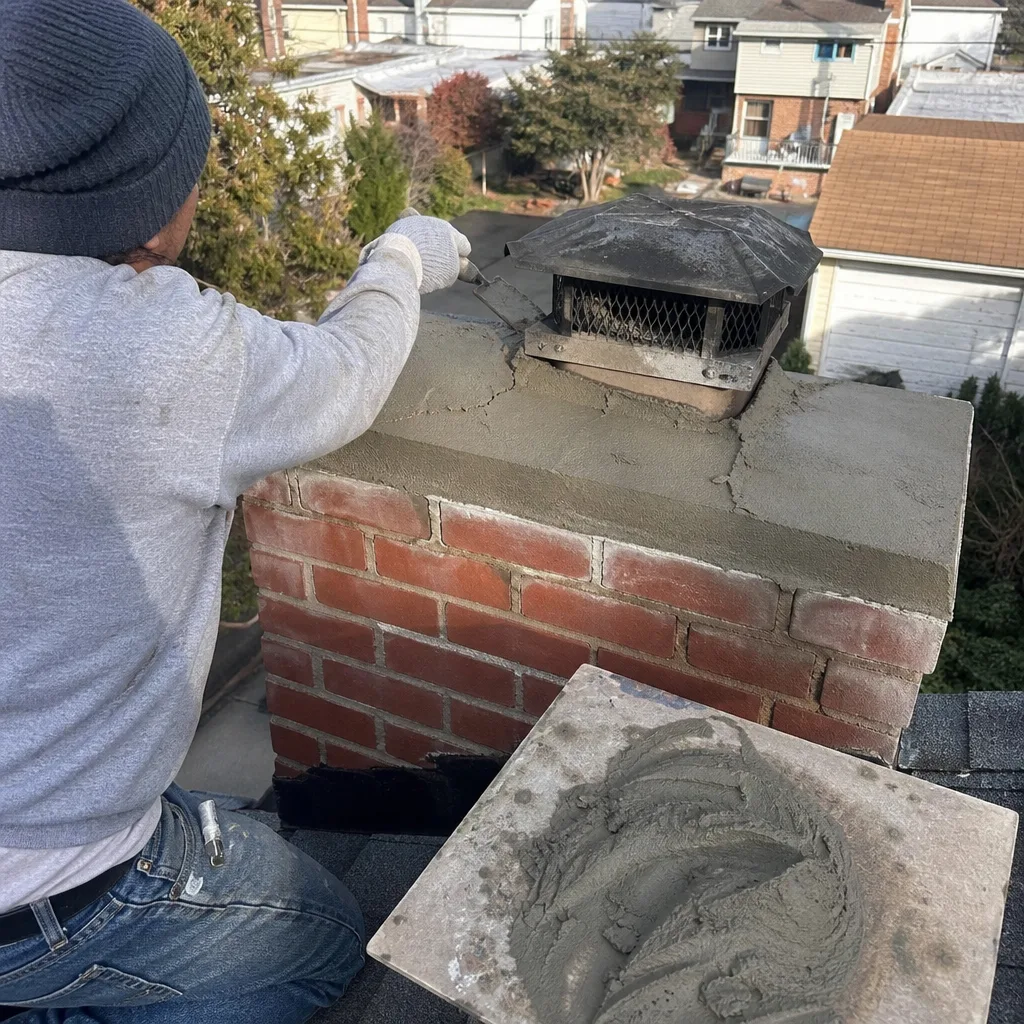
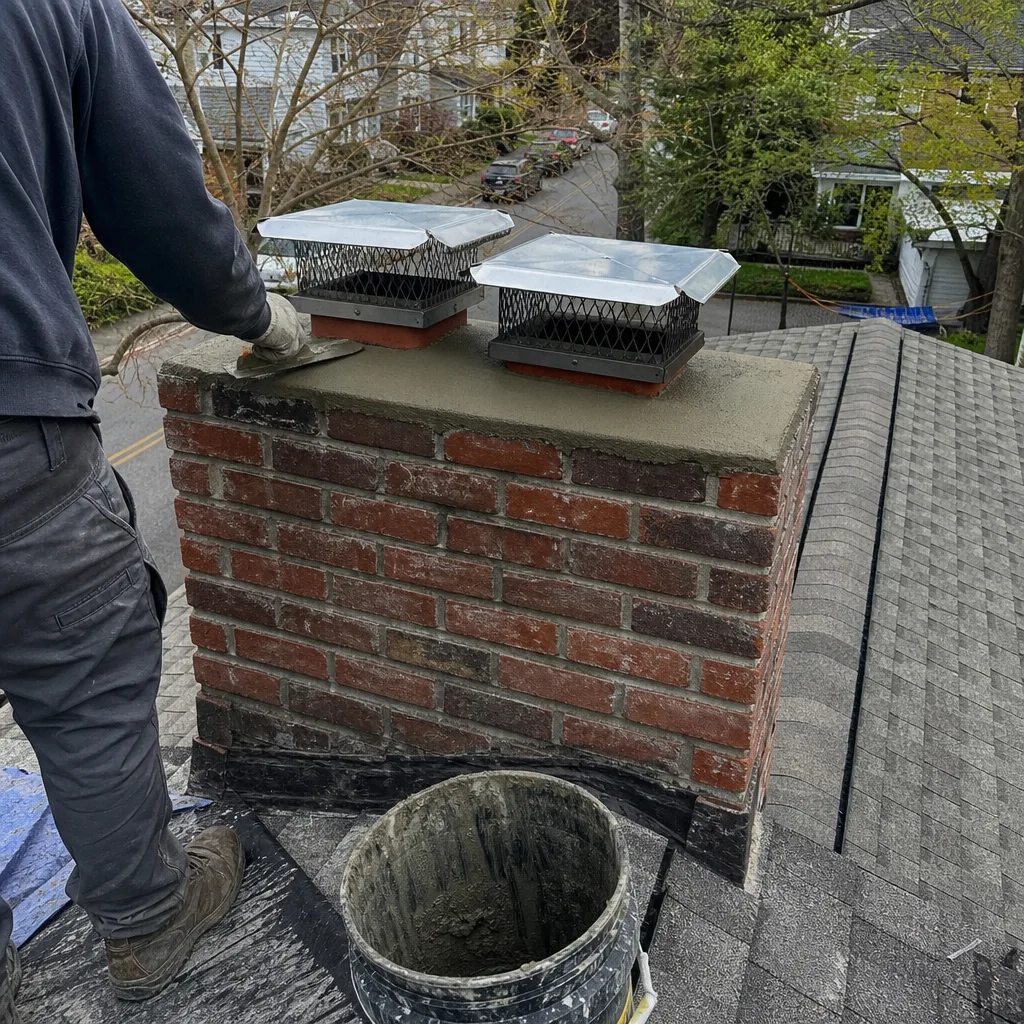
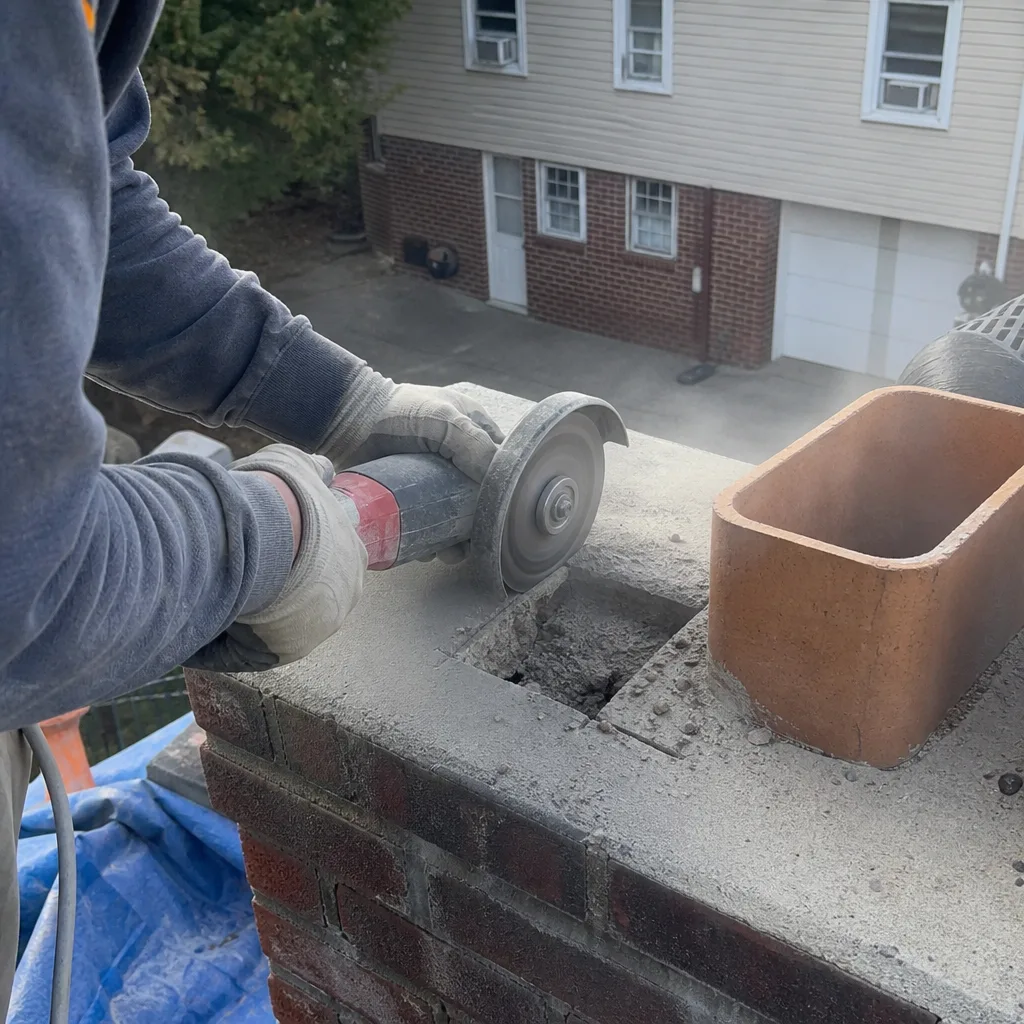
Mortar repointing in Long Island City typically runs $650-$1,900 depending on the height of the stack, the number of faces being worked, and whether scaffolding is required. The salt-laden wind off the East River and Newtown Creek eats through lime-and-sand mortar joints noticeably faster here than in inland Queens zip codes, and we routinely see rowhouse chimneys where the mortar is recessed a half-inch or more behind the brick face. Tuckpointing restores both the structural integrity and the water-shedding capacity of the stack. On landmarked rowhouses, we match the mortar color and joint profile to the LPC standard, because a mismatched repoint is the fastest way to trigger a stop-work order from a sharp-eyed landmarks inspector.
Spalling Brick Repair
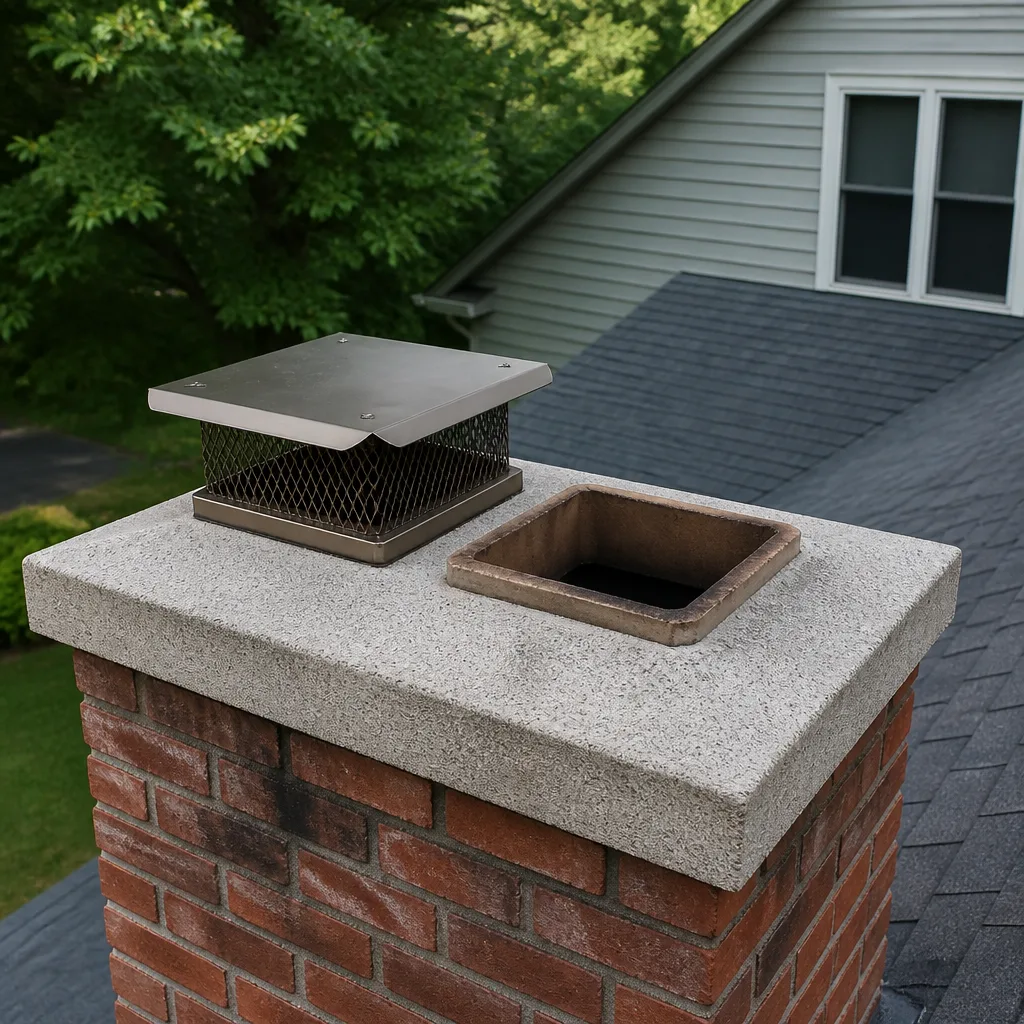
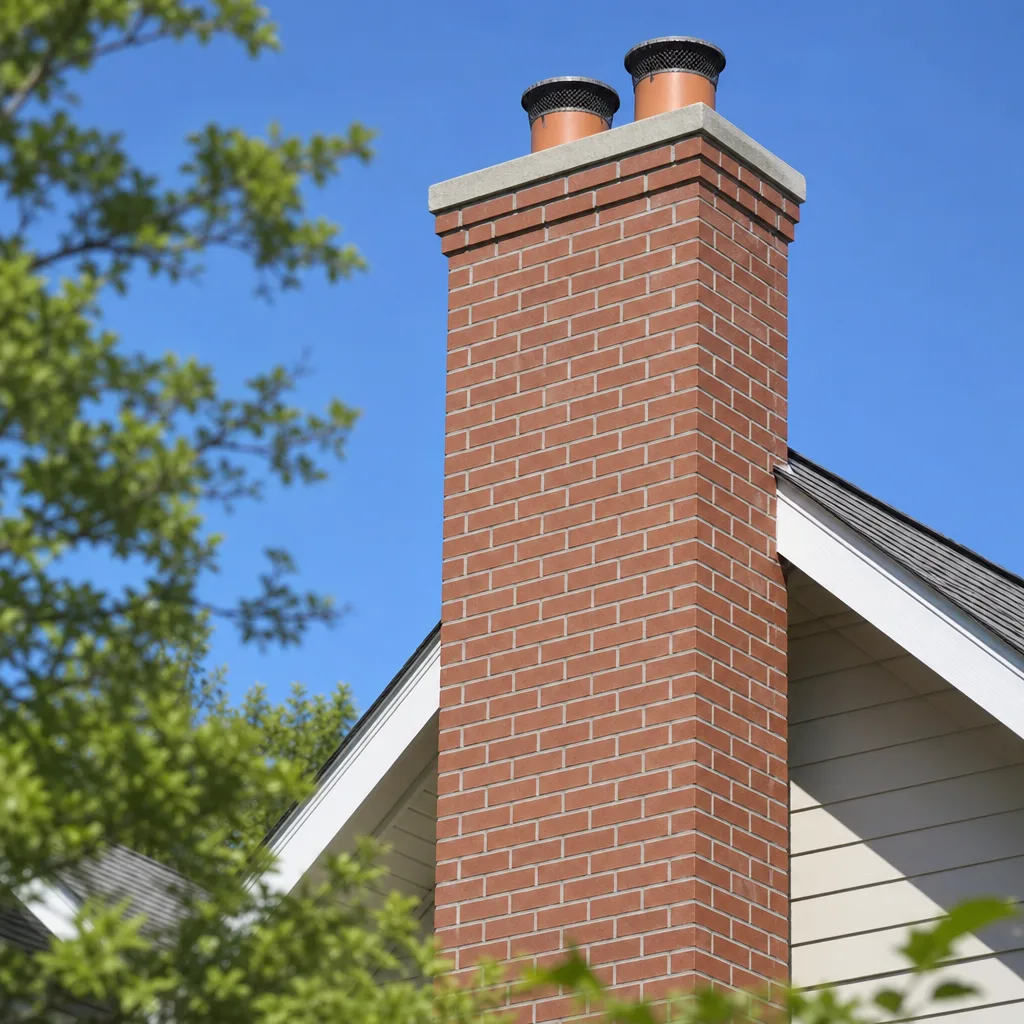
Spalling is the trade term for brick faces popping off in flakes and chunks, usually from water absorbed into the masonry and then freezing. On a Long Island City rowhouse chimney, spalling brick repair typically runs $800-$2,400. The failure mode we see most often along 45th Avenue and 46th Road is the chimney crown: the concrete cap that sheds water was poured in the 1920s with no drip edge and no overhang, and after a century of East River freeze-thaw cycles, the top two or three brick courses are shedding into the roof valley. We remove the deteriorated brick, stitch in matching replacement units, and recast the crown so water actually leaves the stack instead of soaking into it.
Chimney Waterproofing
Chimney waterproofing in Long Island City costs $450-$1,200 and is one of the only chimney repairs we recommend proactively. The brownstones and brick rowhouses of Hunters Point are built from softer, high-absorption brick than the harder-fired face brick used in mid-century Queens construction. That softer brick soaks up East River moisture like a sponge, and any waterproofing application has to be vapor-permeable or you’ll trap water inside the masonry and accelerate spalling. We use masonry sealers rated for historic brick and apply them only after all repointing and crown work is done. Waterproofing alone won’t fix a failing chimney, but it will buy years of service life out of one that’s been properly repaired.
Flashing Repair
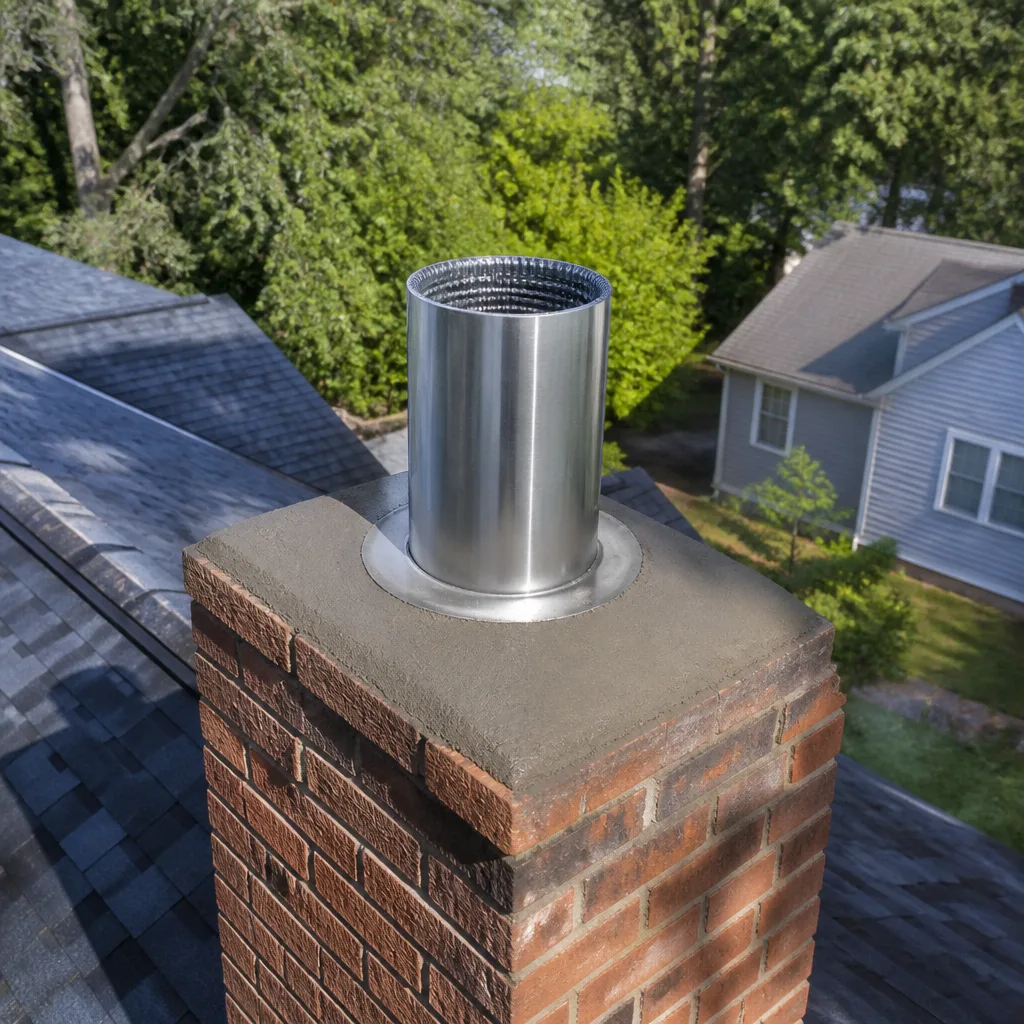
Chimney flashing repair in Long Island City rowhouses runs $350-$900. Flashing is the sheet-metal transition where the chimney meets the roof, and on an attached rowhouse, the flashing detail is different from a detached home: the chimney often rises through or adjacent to the party wall, and water running down the shared roof slope concentrates at the flashing seam. We fabricate copper and aluminum flashing on site to match the existing roof penetration, and we always inspect the counterflashing at the brick line, because that’s where 80 percent of LIC chimney leaks actually originate.
Chimney Rebuilding
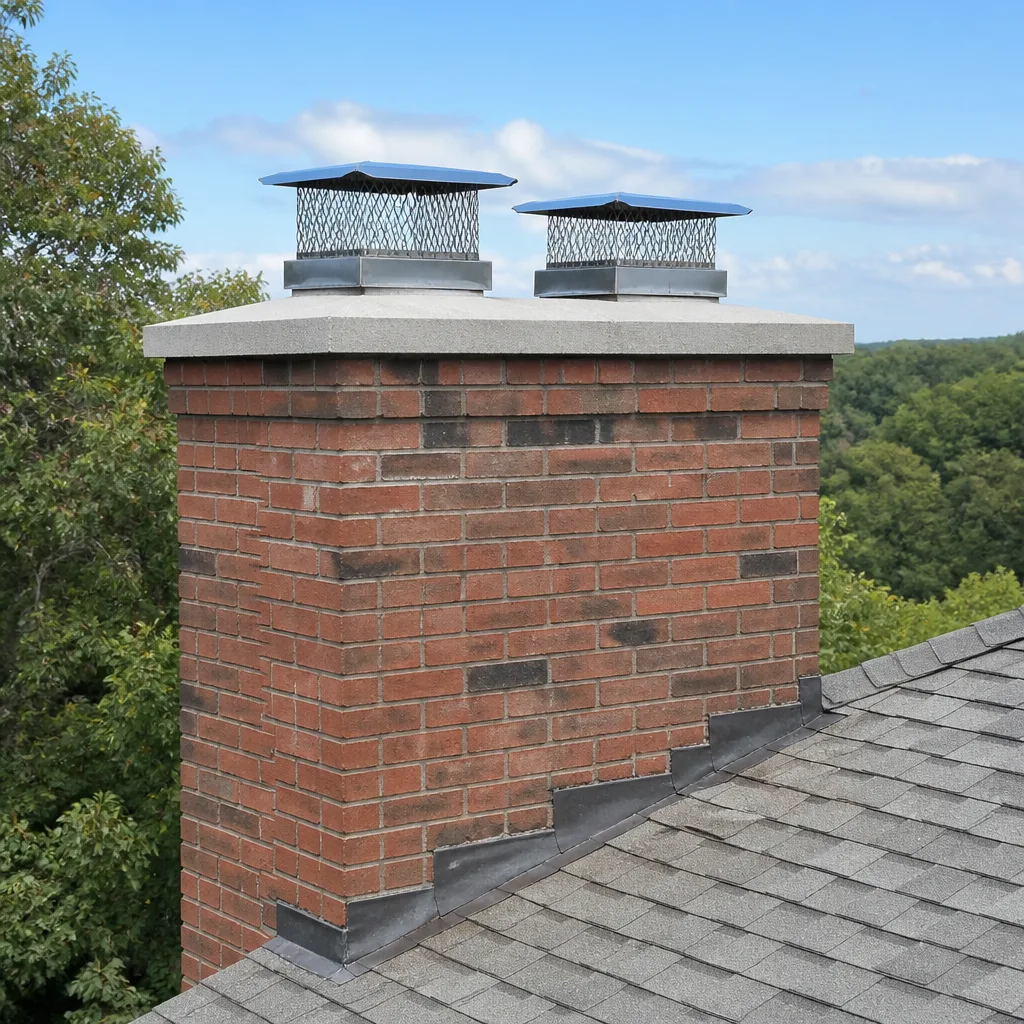
Full chimney rebuilding in Long Island City starts around $2,400 and runs to $7,000+ depending on the number of stories, whether scaffolding or a lift is required, LPC review time, and whether the rebuild includes the shared flue. We rebuild from the roofline up when the masonry is too far gone for spot repairs: new firebrick, new crown, new cap, new flashing. On landmarked blocks, we submit the LPC application with photographs and a written scope before any material is removed, because a demolition-first, permit-later approach leaves the chimney open to the weather and the owner open to fines. The rebuild is documented with photos at every stage, and you get the full photo record when we’re done.
What happens when you call
- 1
A real person answersNo phone trees - you reach a local pro.
- 2
You get an upfront price rangeHonest numbers before anyone is dispatched.
- 3
A background-checked tech heads outLicensed & insured, dispatched right away.
- 4
You approve before work beginsNothing starts until you say go.
BeforeAfterTrusted Brands We Service in Long Island City
We stock and install parts from Famco, Copperfield, and Olympia Chimney because their components hold up under the specific conditions Long Island City chimneys face: salt air, hard freeze-thaw cycling, and rowhouse roof access constraints. If your cap is rusted through or your damper is seized, we carry replacements locally and can usually complete that work the same visit. For liner work, our Chimney Repair team relies on HeatShield’s resurfacing system when a full DuraFlex liner isn’t required, because it lets us repair rather than replace in the tight, shared flues common in pre-war LIC rowhouse stacks.
Common Chimney Repair Problems We See in Long Island City Homes
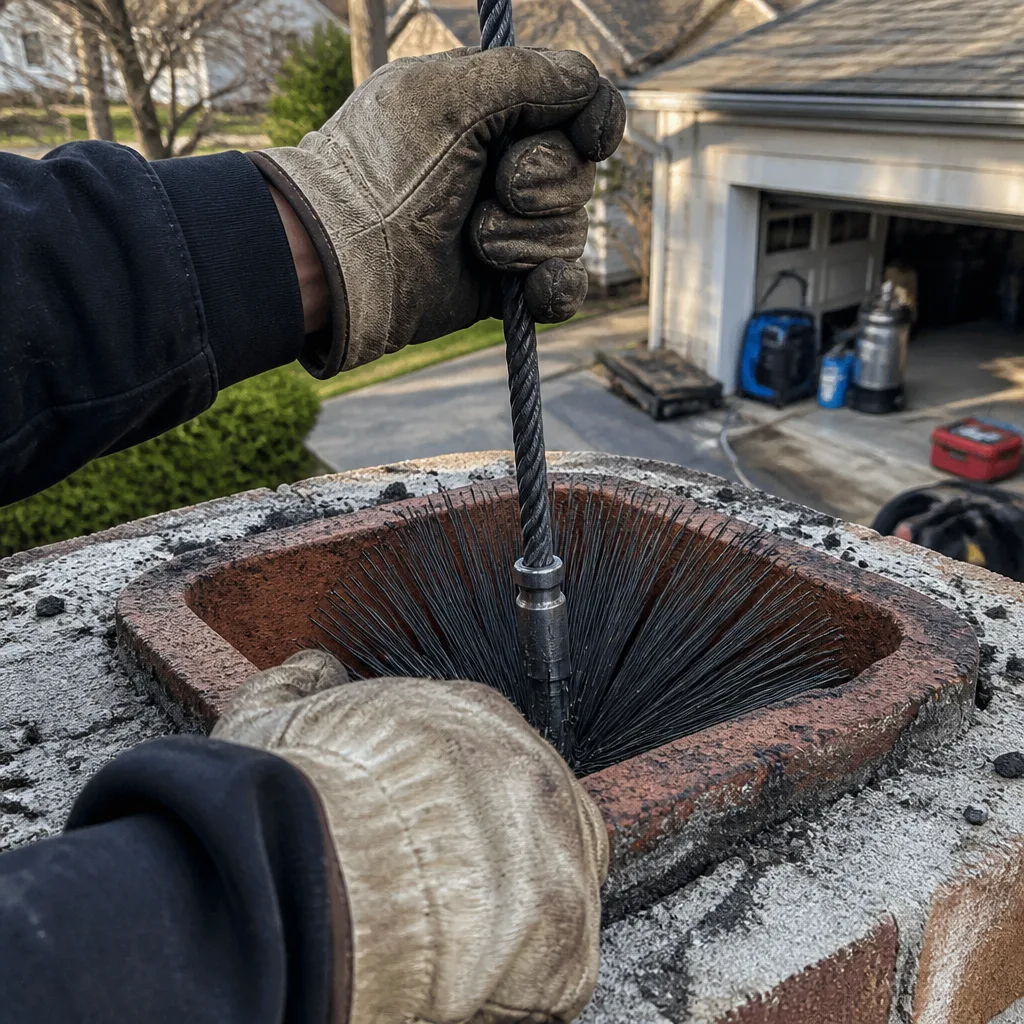
- Shared party-wall flues that were never relined. Hunters Point rowhouses were built for coal. When owners switched to gas in the 1950s and 1960s, the original terra-cotta flues stayed in place, unlined, and now serve two or three adjacent properties. Exhaust gases leak through cracked mortar joints into neighboring units, and the repair implicates everyone attached to the stack.
- Salt-air crown deterioration. Chimney crowns on rowhouses a block or two from the East River spall faster than the same crown on a house in Maspeth. The wind off the water carries salt and freeze-thaw moisture directly onto the horizontal surfaces, and once water gets under the crown, every course below it is at risk.
- Unpermitted exterior work on landmarked blocks. If your rowhouse is within the Hunters Point Historic District, any exterior chimney repair, tuckpointing, or cap replacement requires LPC approval first. Plenty of out-of-borough contractors don’t know this, and the result is a stop-work order with scaffolding already up and the chimney half-open to the weather.
- Flashing failures at the party wall. On attached rowhouses, the chimney often rises through or immediately adjacent to the shared wall, and water running down the roof slope concentrates at the flashing seam between the two properties. This is a different leak pattern than a detached home, and the fix requires coordinating with the neighbor whose roof contributes runoff.
Pricing for Chimney Repair in Long Island City, NY
- Flashing repair: $350-$900
- Mortar repointing / tuckpointing: $650-$1,900
- Chimney waterproofing: $450-$1,200
- Spalling brick repair: $800-$2,400
- Chimney rebuilding: $2,400-$7,000+
Height, access, and LPC review are the big variables in Long Island City specifically. A four-story rowhouse on 45th Avenue needs scaffolding; a two-story rear chimney on 47th Road might not. A landmarked facade adds 2 to 6 weeks for writing the LPC application and waiting for the hearing, which doesn’t change the masonry price but does affect the schedule. Everything is quoted in writing before work starts, and the price you sign is the price you pay. Call (516) 240-9191 for a free estimate, and if you already have a written quote from another contractor, bring it. We offer a Free Second Opinion on any written estimate, and we’ll tell you plainly if the other guy’s scope is right, wrong, or missing something.
We Also Serve Cities Near Long Island City
While most of our work is concentrated in Long Island City and the Hunters Point blocks, we also serve Long Island City adjacent neighborhoods and nearby communities: Astoria, Jackson Heights, Elmhurst, and New York. If you’re just over the Pulaski Bridge into Brooklyn or a few blocks up Northern Boulevard into Woodside, the same crew, the same written pricing discipline, and the same photo-record standard apply. Most of our Long Island City customers discovered us because we already work the block next to theirs.
Serving Long Island City, NY - Our Local Coverage Area
We’re based in the Long Island City area and know this community well. Use the map below to see our service coverage - if you’re nearby, we can almost certainly help.
FAQs - Chimney Repair in Long Island City
Does a chimney repair on a Long Island City rowhouse require Landmarks Preservation Commission approval?
Any exterior repair, repointing, or cap replacement on a rowhouse within the Hunters Point Historic District requires NYC Landmarks Preservation Commission review and approval before work begins. Interior flue work, like a liner replacement or HeatShield resurfacing, does not. Interior repairs are typically the fastest chimney work you can do, because they are the work the LPC doesn’t regulate. If you’re not sure whether your address falls inside the district boundary, call (516) 240-9191 and we’ll check the block and lot against the LPC map before you spend a nickel.
My neighbors and I share a party-wall chimney. Who is responsible for repairs to the common flue?
Under New York law, the owners of a party wall are co-owners, and responsibility for a shared chimney flue is typically apportioned by use and contribution. In practice, if two adjoining rowhouses share a brick stack and one owner’s flue is failing, both owners have an interest in the repair because a leak or a carbon monoxide backdraft doesn’t respect the property line. We write a scope that identifies exactly which flues serve which unit, what portion of the stack is failing, and what the fair allocation is based on actual evidence from the camera scan. Written evidence is the only thing that keeps a shared-flue repair from turning into a neighbor dispute, and that documentation is what we provide.
Can a gas furnace and a wood-burning fireplace safely share the same flue in a Long Island City rowhouse?
No. A gas furnace and a wood-burning fireplace cannot share the same flue, and this is one of the most common safety violations we find in Long Island City rowhouses that converted from coal. Gas appliances produce acidic moisture that attacks the mortar joints and turns creosote from wood burning into a corrosive sludge, and both appliances require separate flues sized to their own draft needs. If your rowhouse has a gas conversion feeding into an old coal flue that also serves a fireplace, that arrangement was never code-compliant and needs to be separated. We camera-scan each flue, map what actually serves what, and give you a written scope for getting each appliance onto its own correctly sized liner.
Why does the chimney crown on my Long Island City rowhouse deteriorate faster than houses a few blocks inland?
Salt-laden wind off the East River, combined with Long Island City’s exposure to open water on two sides, accelerates freeze-thaw spalling on horizontal masonry surfaces. The salt acts as a nucleation point for ice, which means water in the crown freezes faster and with more expansion force than the same moisture would in, say, Elmhurst or Maspeth. Add to that the fact that most LIC rowhouse crowns were poured without a drip edge, and you get a masonry surface that sheds its top layer every 7 to 10 years. The fix is a correctly tooled crown with an overhang, not just another coat of sealant. Call (516) 240-9191 for a camera-backed assessment of what your crown actually needs.
How often should a pre-war Long Island City rowhouse with multiple fireplaces and gas appliances get a chimney inspection?
Annually, per NFPA 211, and we’ll tell you plainly that a rowhouse with two fireplaces, a gas furnace, and a gas water heater in Long Island City is the highest-workload chimney system most homeowners will ever own. Multiple appliances, a shared stack, a converted coal flue, and a landmarked exterior all argue for a Level 2 camera inspection every single year, not every three. The inspection takes about an hour and produces a photo record, and it’s what catches a cracked flue liner or a failing crown before either of them puts exhaust gases into a bedroom. For the scope of your particular stack, call (516) 240-9191, and we’ll schedule the inspection at a time that works.
Contact Level Two Chimney Flushing in Long Island City
If your Long Island City rowhouse needs chimney repair, start with a call to (516) 240-9191. You’ll talk to a live person, not a voicemail tree. We’ll schedule a technician to inspect the stack, run the camera, and show you exactly what’s there before any money changes hands. Written price, written scope, written warranty: that’s the way every single job has worked since 2009, and that’s the way the next one will work on your block. Our crews dispatch from our New York City office and serve Long Island City locally.
Written by Corrine Halstead, Owner at Level Two Chimney Flushing, serving Long Island City under the Haven Standard.
Chimney Repair in Nearby Areas