
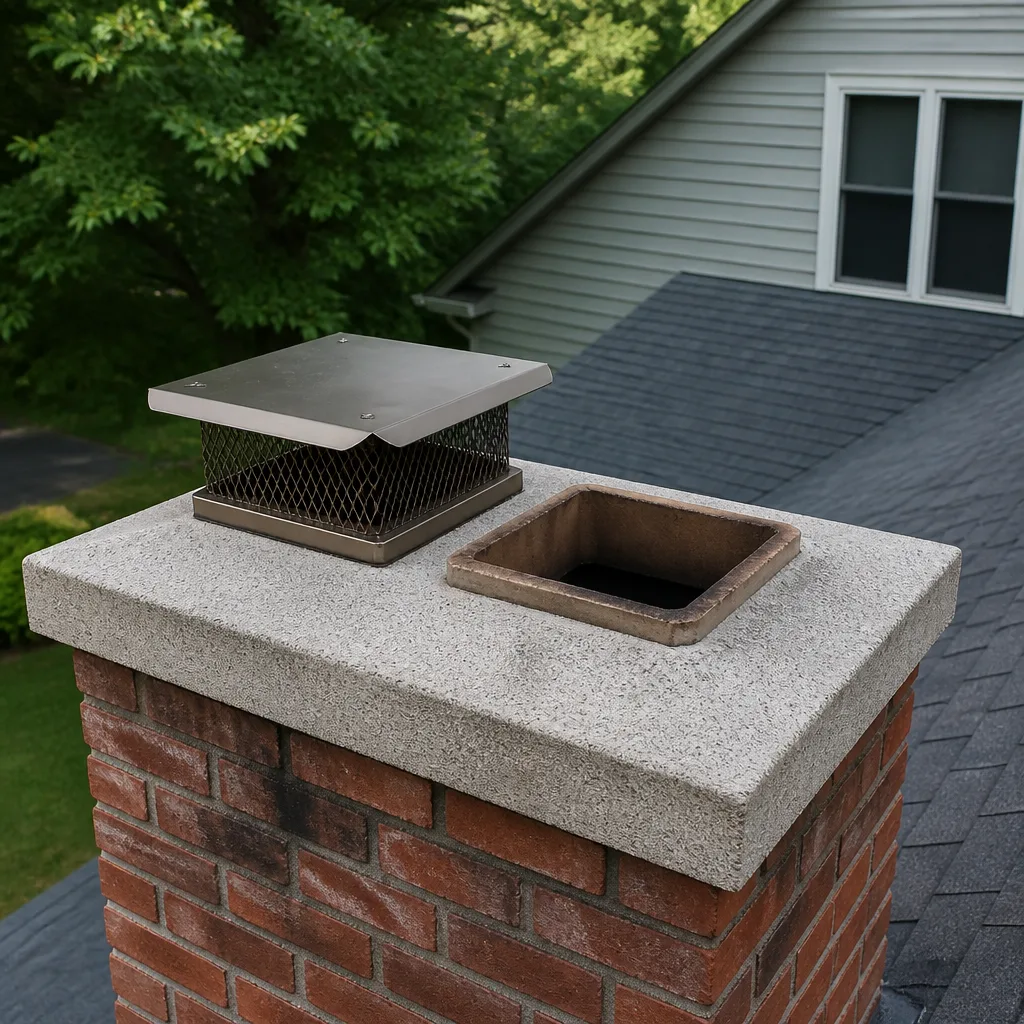
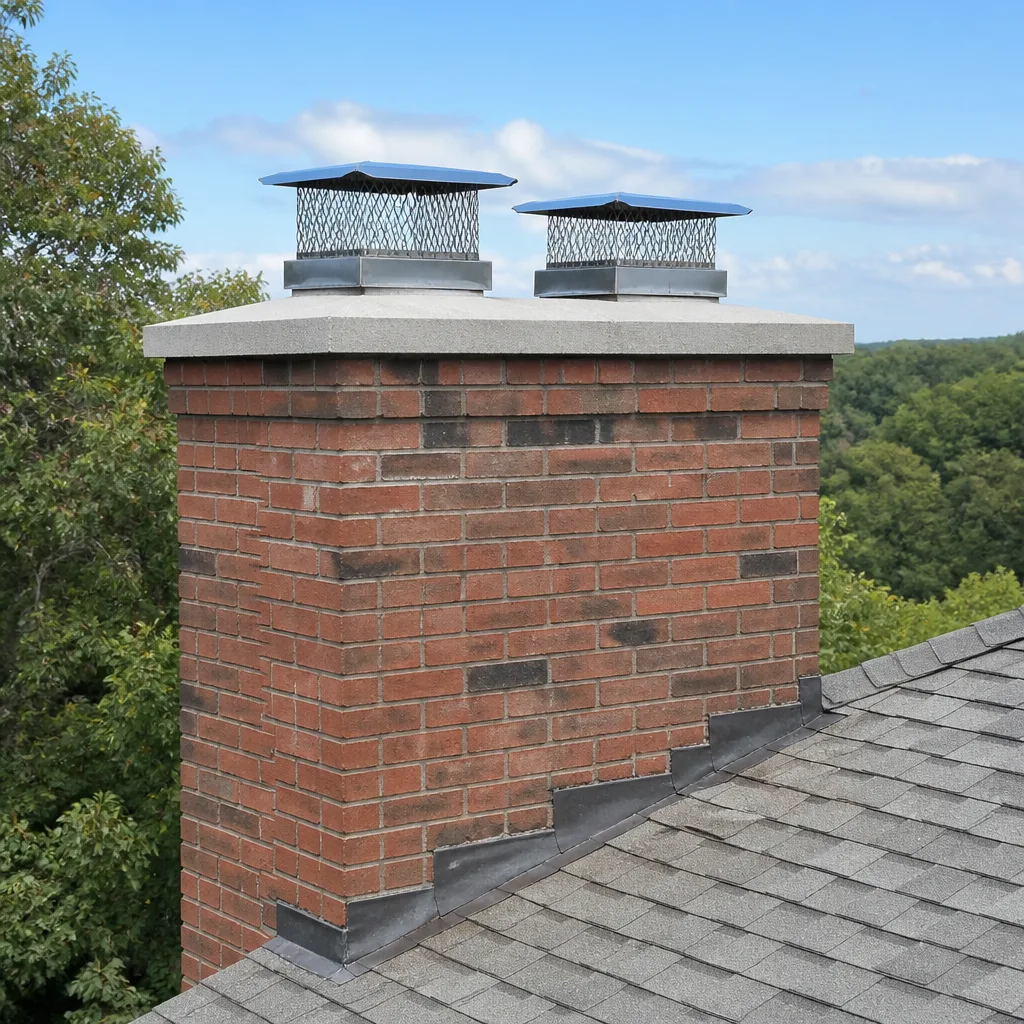
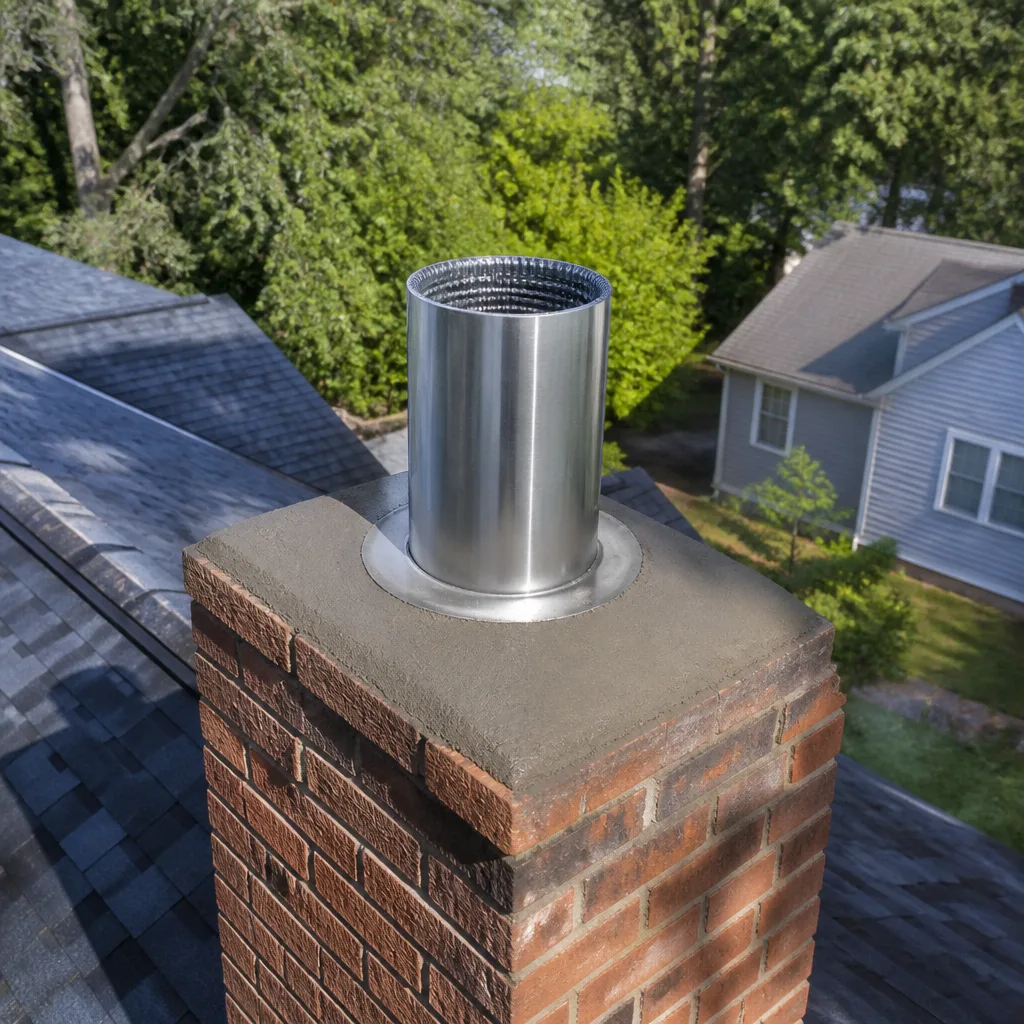
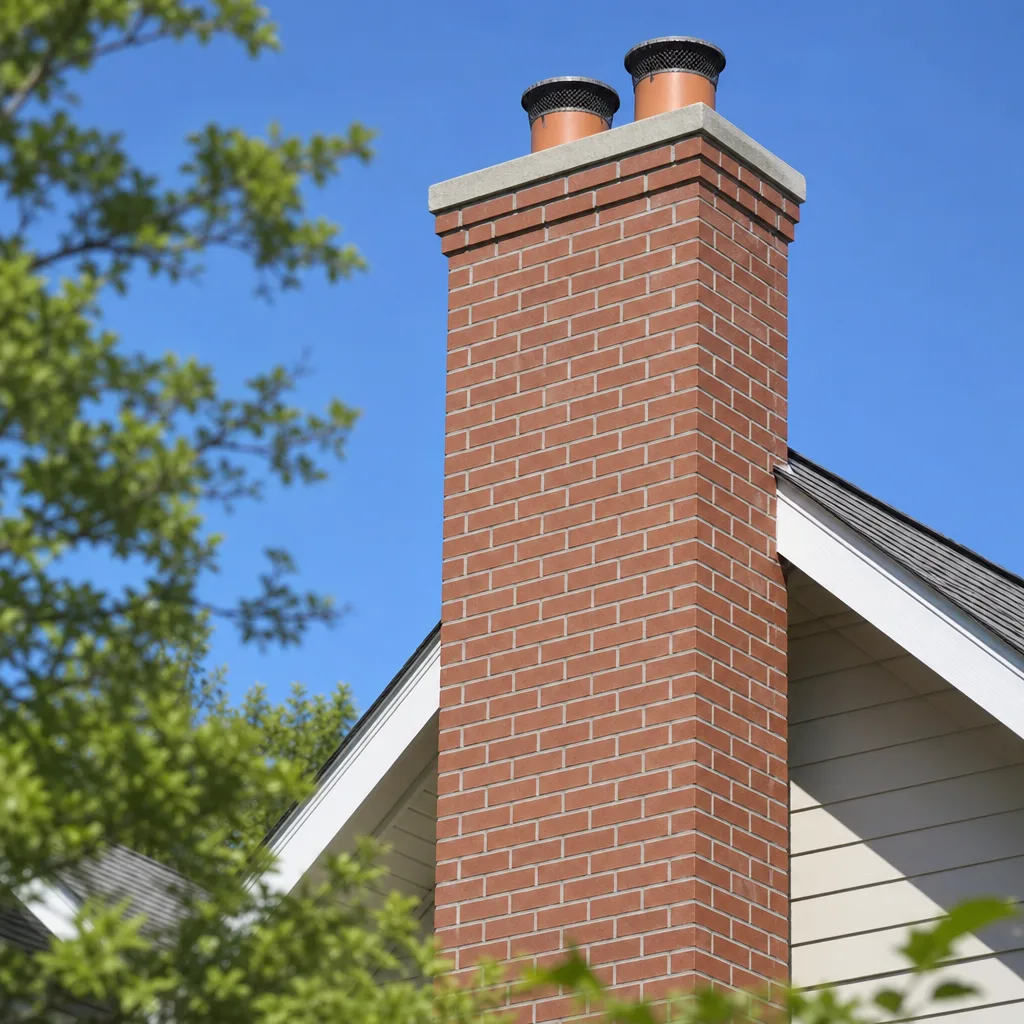
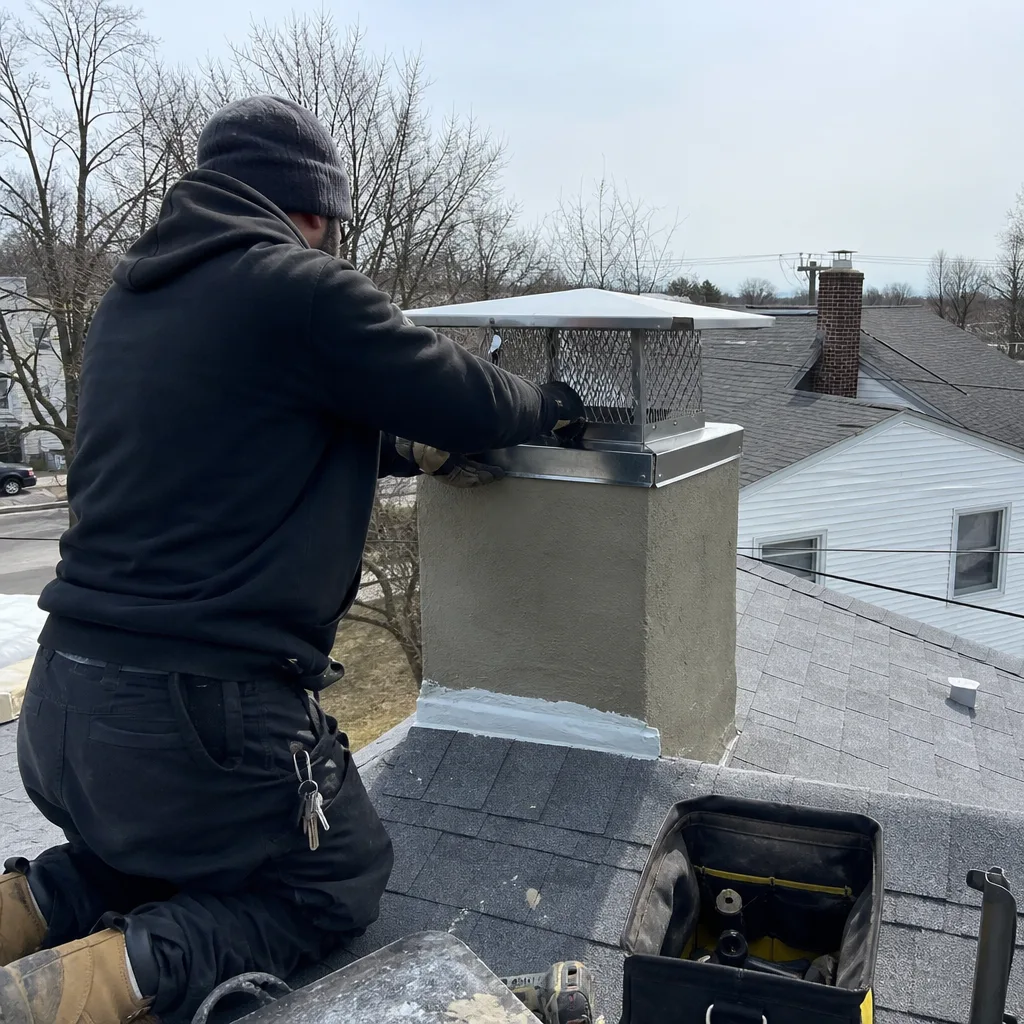
Level 1 sweep and inspection to the NFPA 211 annual standard - flue, crown, cap, and flashing checked and photographed
Chimney sweep logs do not sweep chimneys. They loosen some creosote - which then falls where a brush and vacuum still have to collect it.
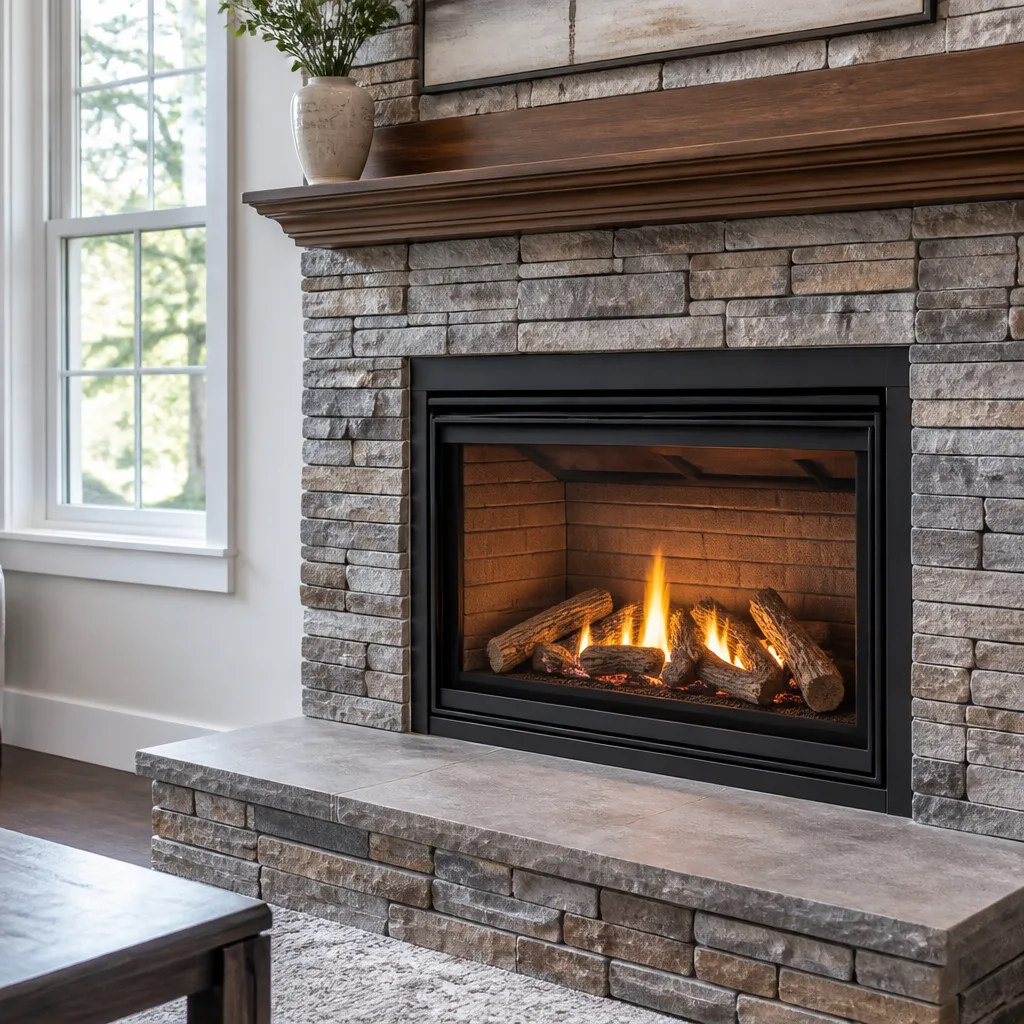
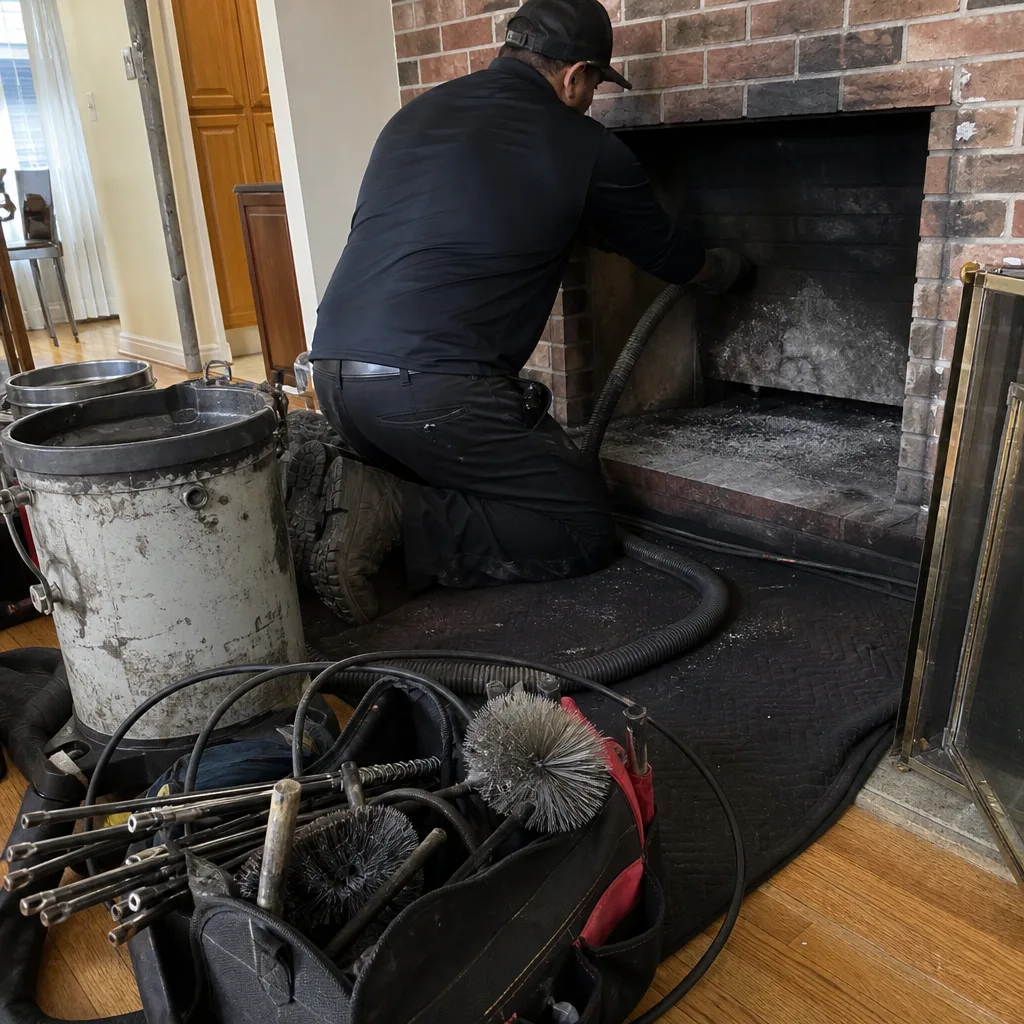 Before
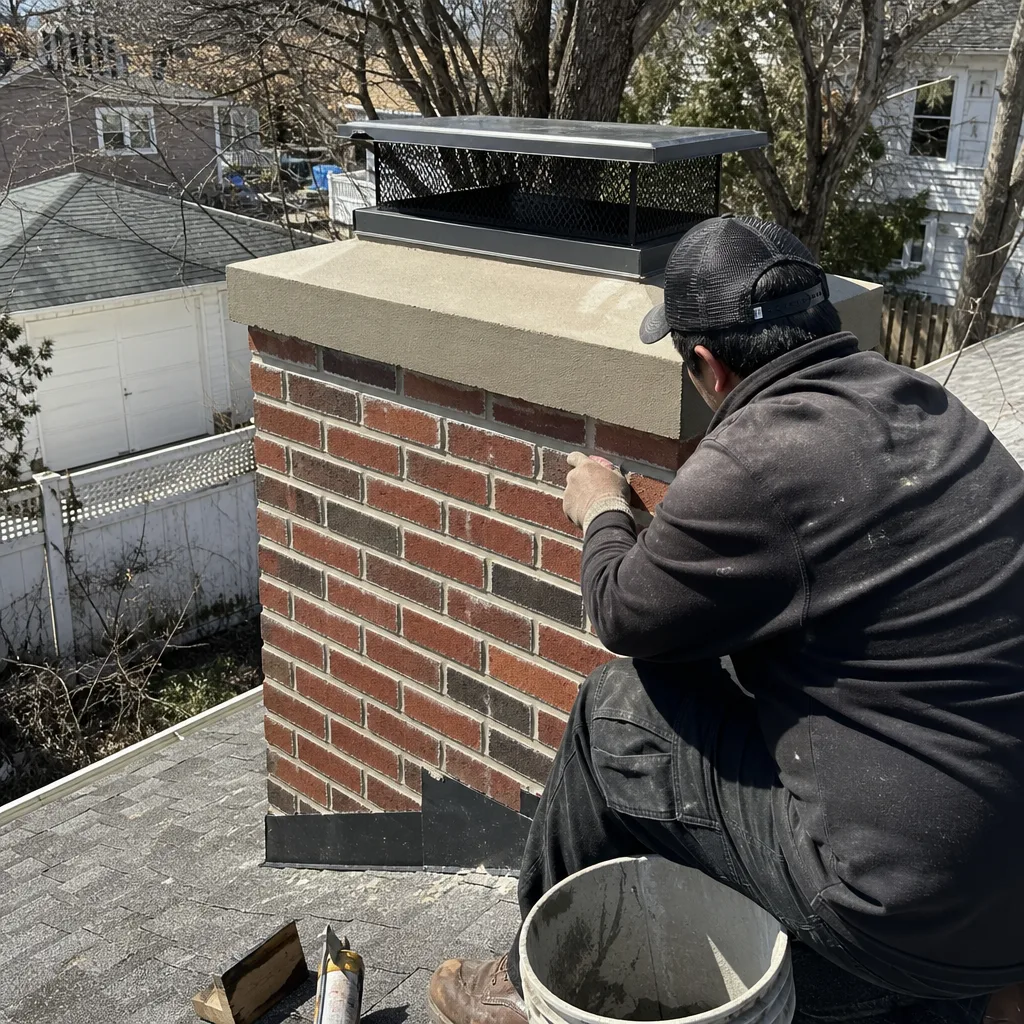 After
After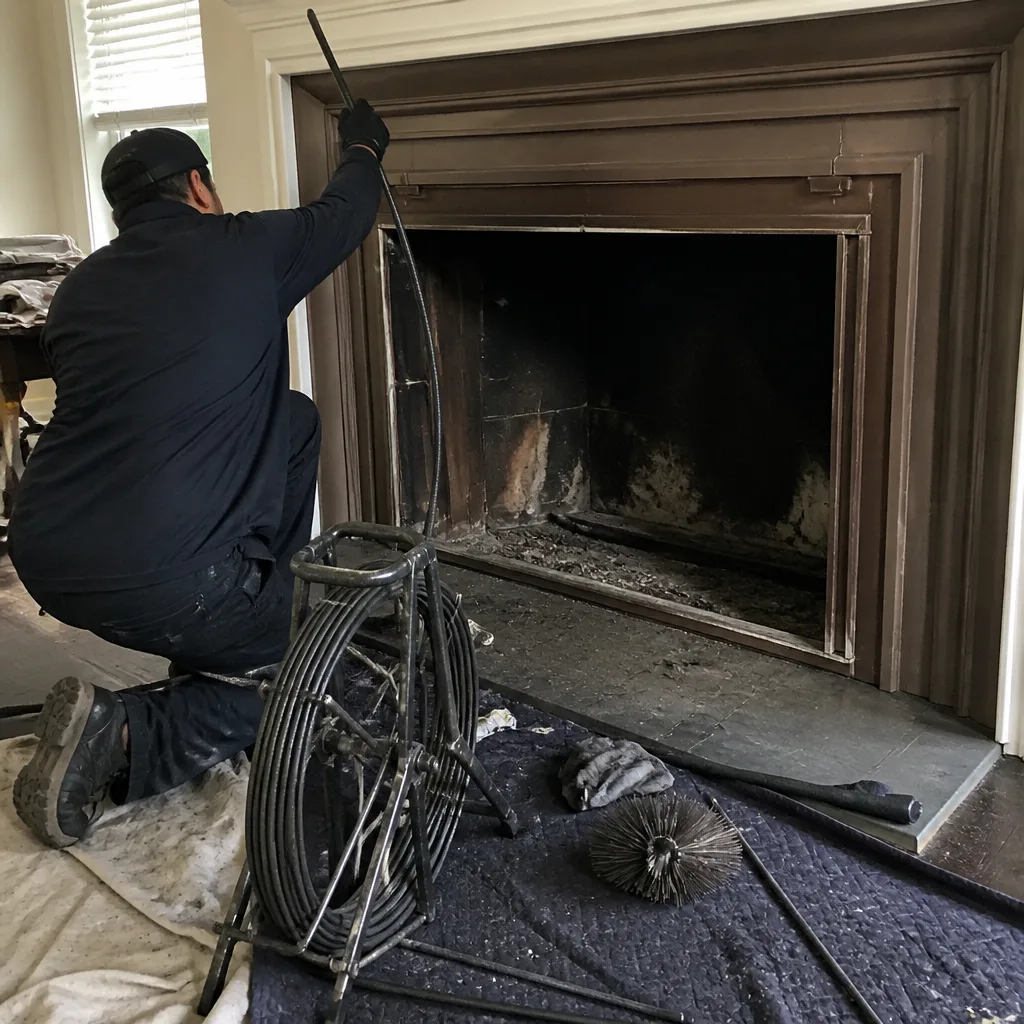 Before
 After
After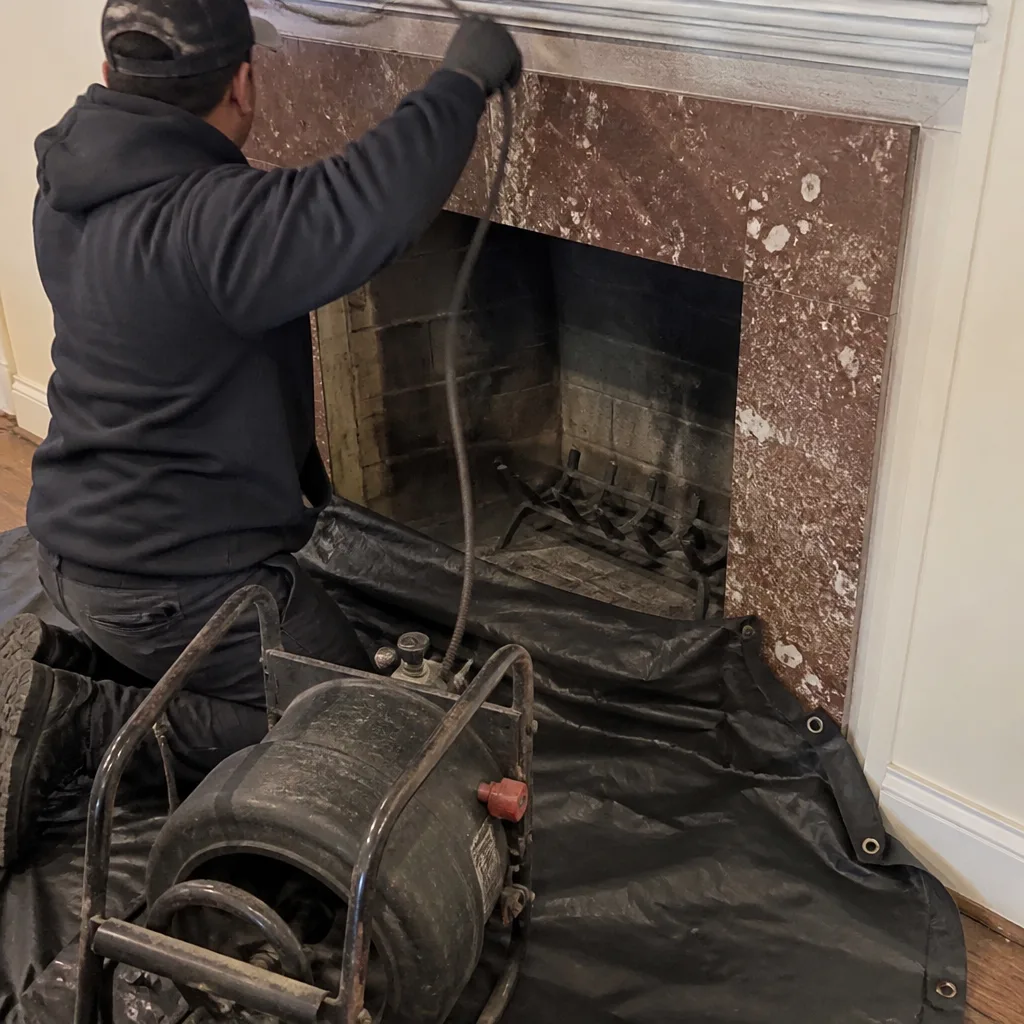 Before
 After
AfterSoot Removal in Flushing, NY
Our How Much Does Chimney Cleaning & Sweep Cost? (2026 Price Guide) - Flushing, NY breaks down why soot removal in Flushing typically runs between $149 and $349, depending on how much has built up, how accessible your flue is, and whether the firebox and smoke chamber need attention alongside the flue liner. Most jobs are completed in a single visit, and you’ll have a written price before anyone touches a brush. If you’re ready to schedule or just want to know what you’re dealing with, call us at (516) 240-9191 – a live person picks up around the clock.
Soot is the black, powdery byproduct of incomplete combustion. It settles on your flue liner, smoke chamber, damper, and firebox walls every time you burn. At low levels it’s mostly cosmetic. At higher accumulations – especially if it starts shifting toward a harder, tar-like consistency – it restricts airflow, degrades masonry, and feeds chimney fires. The distinction between manageable soot and early-stage creosote (Class I or Class II) matters, and it’s a distinction that requires a camera in the flue, not a flashlight at the damper opening.
Level Two Chimney Flushing has performed more than 38,000 chimney inspections and cleanings since 2009, every one of them documented with a photo record and quoted in writing before work started. Our Chimney Cleaning & Sweep in Flushing service covers the full flue system – soot removal is one piece of that – and this page explains exactly what soot removal involves, what it costs in this market, and what you’ll have in hand when we’re done.
When You Need Soot Removal
Soot doesn’t announce itself clearly. Most Flushing homeowners either notice a symptom and don’t connect it to the chimney, or they don’t notice anything at all until we put a camera down the flue. Here are the situations where soot removal is either overdue or coming up fast:
- Black dust or film on the firebox walls and hearth. If you’re wiping a gray-black residue off the firebox interior or finding soot tracked onto the hearth apron, accumulation inside the flue is almost certainly heavier than what you can see. In Flushing’s older Tudor and Colonial-style homes, firebox designs from the 1930s and 1940s often have shallower smoke shelves that trap soot faster than modern proportions.
- A smoky smell when the fireplace isn’t in use. Soot holds combustion odor. In humid stretches – which Flushing gets regularly off Long Island Sound through spring and late summer – that odor gets pushed back into living space by changing air pressure. It’s not a gas smell, but it shouldn’t be there.
- Smoke spilling into the room when you light a fire. A flue that’s partially blocked by soot has reduced draft. You’ll see it immediately when you try to start a fire and smoke rolls forward instead of drawing up.
- It’s been more than a year since the chimney was cleaned. The National Fire Protection Association’s NFPA 211 standard calls for an annual inspection and cleaning for any chimney in active use. If you burned wood, manufactured logs, or even gas logs through the past season, there’s soot to remove.
- You’ve recently moved into or purchased a home in Flushing. Buyers between Murray Hill, Kew Gardens Hills, and Queensboro Hill regularly contact us after closing because the seller’s disclosure said “inspected” but couldn’t produce a written scope or photo record. A camera-scan is the only way to know what you actually inherited.
- Your last sweep didn’t include a camera inspection. Soot removal using only hand tools and brushes without camera confirmation leaves unknowns. You don’t know if a section of the liner is still coated, and you don’t know if that coating is plain soot or transitioning to Class II creosote. We know because the camera shows us.
Our Soot Removal Process
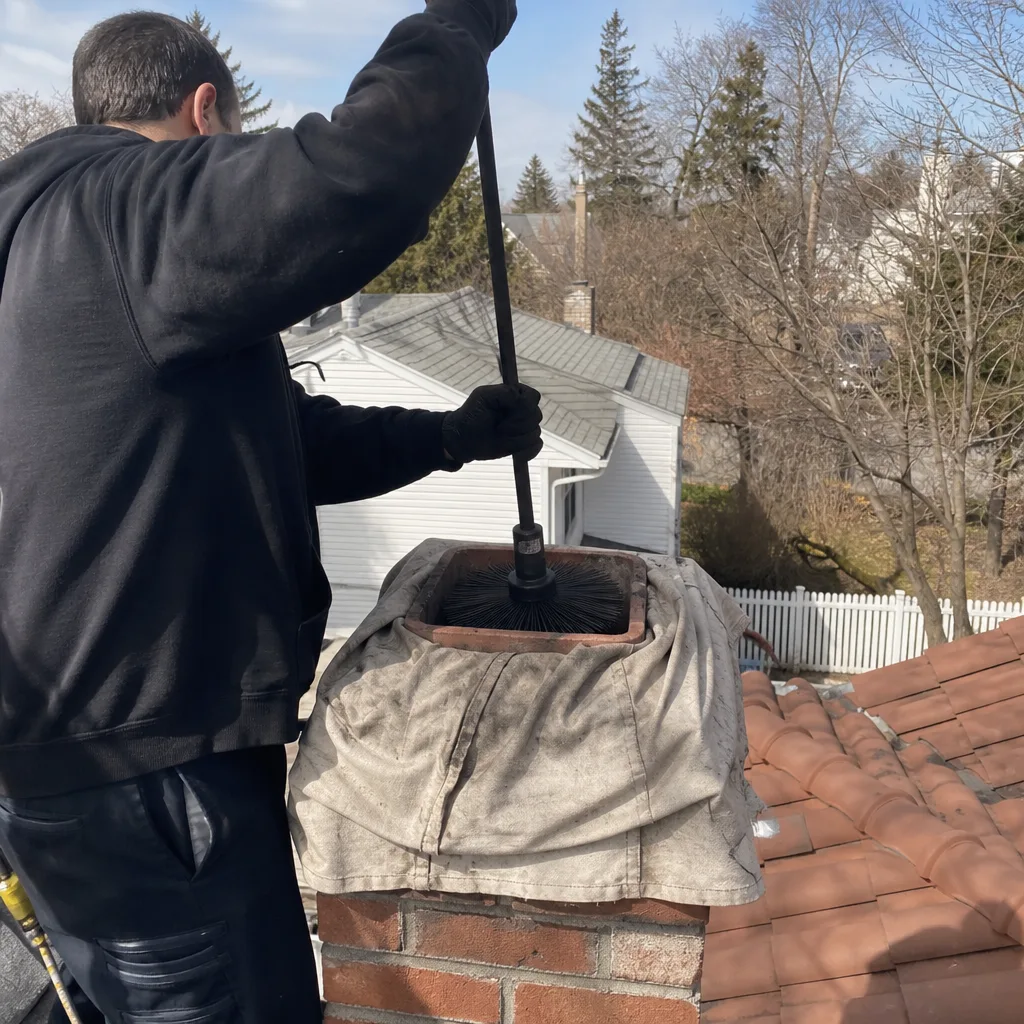
This is what happens on the day we come out. No surprises – the scope is in writing before we start, and you’ll see the before-and-after photo record before we close the job.
- Written price and scope delivered first. Under Haven Standard Clause 1 (H.A.V.E.N. – “Have it in writing”), you receive a written price, written scope of work, and written warranty before anything starts. If the scope changes based on what we find inside the flue, we stop and tell you. Nothing proceeds without your sign-off on updated numbers.
- NFPA 211 Level 2 camera-scan inspection of the full flue. Before any brushes go in, our technician runs a camera from the firebox up through the flue liner to document baseline conditions: liner integrity, soot depth, any early creosote formation, blockages, and crown or cap condition at the top. This isn’t optional – it’s how we know what we’re removing and whether anything else needs attention. The footage and still images become part of your documented photo record (Haven Standard Clause 4).
- Protection of the firebox opening and surrounding area. We seal the firebox opening with a poly barrier and set a HEPA-filtered vacuum system before any brushwork begins. Flushing homes tend toward hardwood floors and plaster walls in the rooms that have working fireplaces – we treat them accordingly.
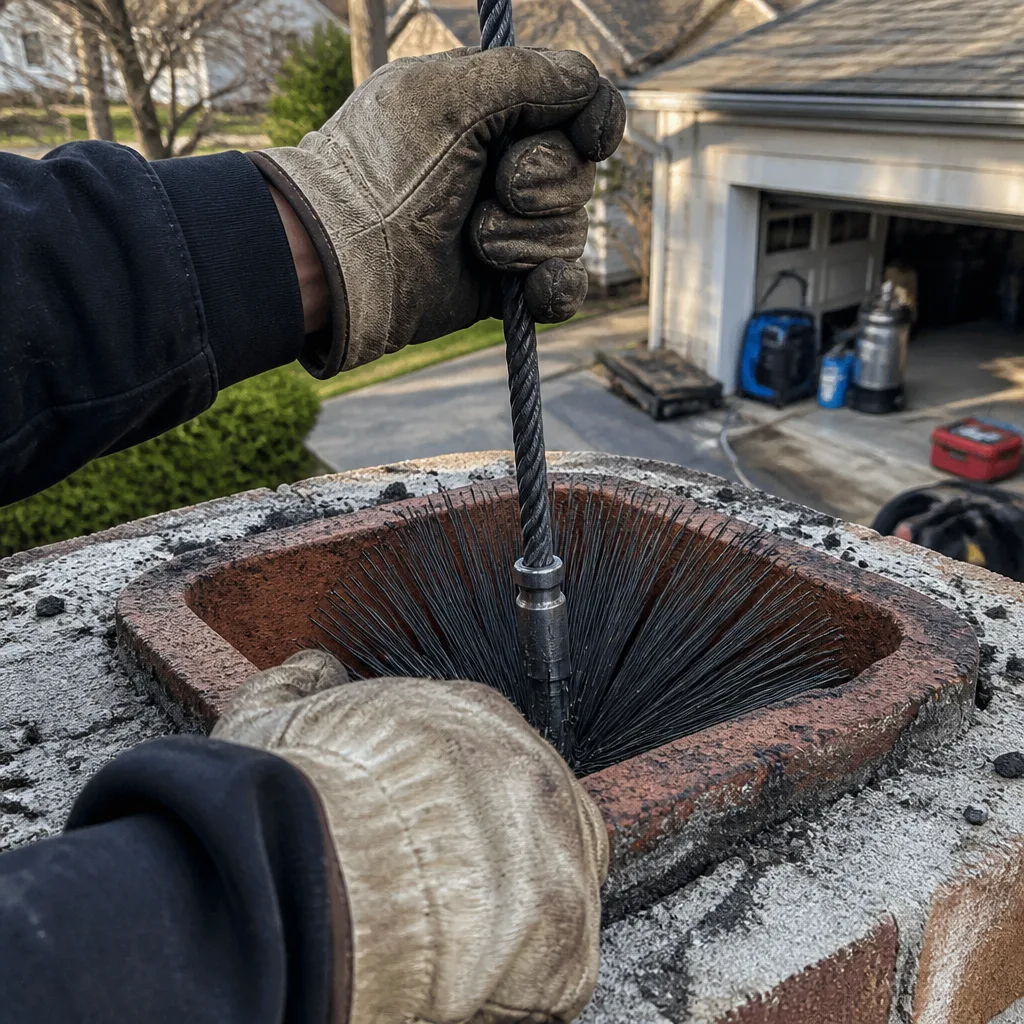
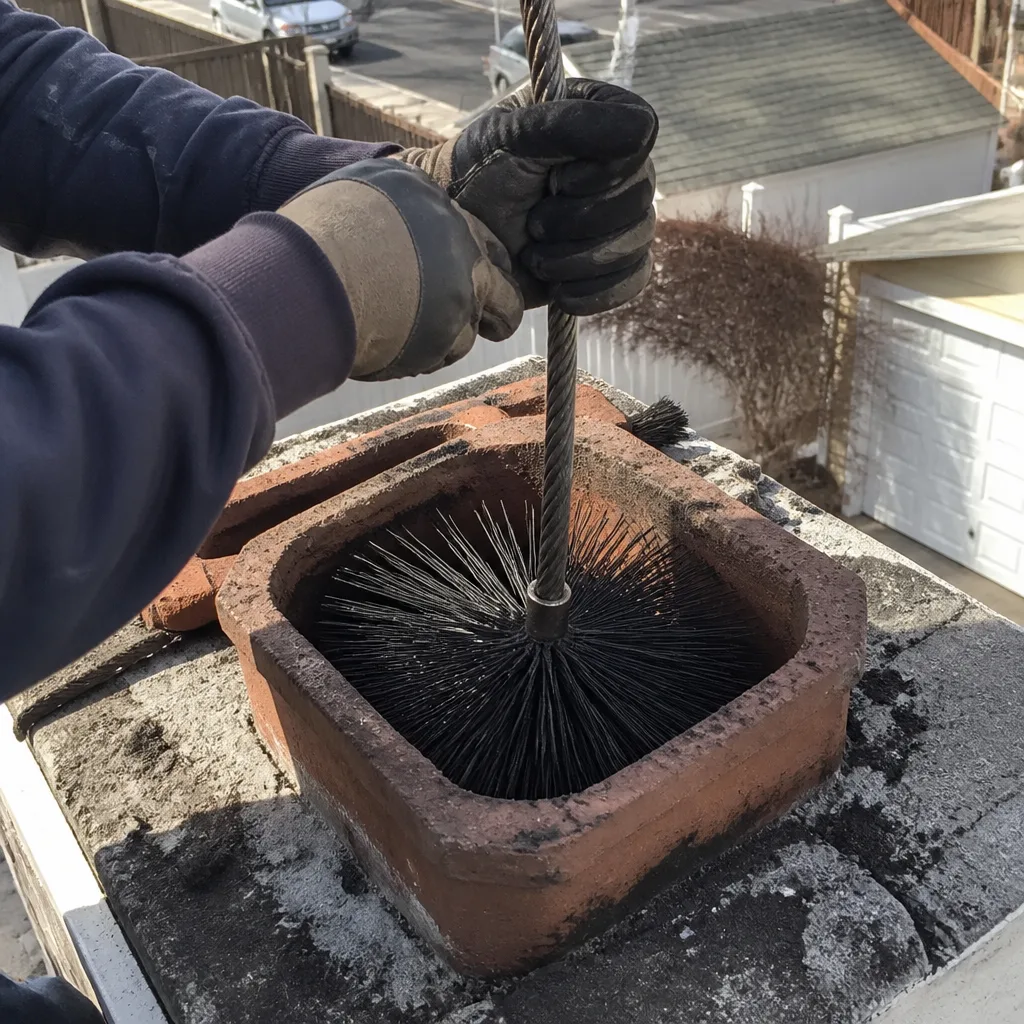
- Rotary brush cleaning of the flue liner, smoke chamber, and firebox. Our technicians work from the top down, using rotary brush systems sized to your flue diameter. Soot from the liner falls into the collection system. The smoke chamber – the funnel-shaped section just above the damper that most companies skip – gets hand-tooled attention because soot packs hard into its corbeled masonry. Olympia Chimney brushes are part of our standard kit for this work.
- Post-clean camera confirmation. The camera goes back down. We’re looking for any sections the initial pass didn’t clear, any liner damage revealed now that the surface coating is gone, and baseline documentation of the cleaned state. If we find anything – a cracked liner tile, a section shifting toward Class II creosote – we note it in writing with the image to back it up. You get an explanation and a written option, not a verbal upsell.
- Documented photo record and written summary left with you. When we close the job, you receive your complete photo record: before images, after images, and any specific notations about liner or crown condition. This is your record for your insurance file, for your next buyer’s disclosure, or simply for your own reference when you book next season’s cleaning.
BeforeAfterSoot Removal Pricing in Flushing
Soot removal in Flushing runs between $149 and $349 for the majority of jobs. The range is real – not a bait-and-switch low end. Here’s what moves the number:
| Scope | Typical Range |
|---|---|
| Single flue, light soot accumulation, clean smoke chamber | $149 – $199 |
| Single flue, moderate accumulation, smoke chamber cleaning included | $199 – $279 |
| Single flue with heavier buildup, soot in firebox walls, extended rotary cleaning | $279 – $349 |
| Two-flue systems (common in Flushing’s larger pre-war colonials) | $299 – $499 |
| Add-on: camera inspection if not yet completed | Included as standard |
What pushes the price higher: flue height (a Flushing rowhouse chimney that runs three stories takes more time than a single-story extension), the presence of a smoke chamber that wasn’t cleaned in prior seasons, or soot that has started transitioning to a harder Class I creosote deposit. If we find Class II or Class III creosote – a tackier, layered, or glazed buildup that brushes alone won’t clear – that’s a different chemical treatment process and a different line item. We’ll tell you what we found and price the correct service, not talk you into a method that doesn’t fit the problem.
A free second opinion on any written estimate is available. If another company handed you a number on paper, bring it to us. We’ll review the scope and price it against ours, in writing, at no charge.
Estimates are free. Call (516) 240-9191 for a written quote – not a ballpark over the phone, but a documented scope and price you can hold us to.
What Makes Soot Different From Creosote – and Why It Matters
This distinction comes up on almost every job in Flushing, so it’s worth explaining clearly.
Soot is the dry, powdery carbon residue that forms when combustion isn’t quite complete. It brushes out cleanly with standard rotary equipment. Left long enough, it can begin absorbing moisture and hardening into Class I creosote – a thin, flaky deposit that still responds to brushwork but is denser than plain soot. If that goes unaddressed through multiple burn seasons, Class I shifts toward Class II (a tar-like, sticky coating) and eventually Class III (a glazed, rock-hard deposit that requires chemical treatment or in extreme cases, liner replacement).
The camera scan tells us which category we’re in. If we’re looking at plain soot, we brush it out and document the clean flue. If we’re seeing early creosote, we’ll tell you exactly which class, show you the image, explain what the treatment options are, and price it before touching anything. That’s not a policy we adopted because it sounds good – it’s been the operating standard at Level Two Chimney since 2009 under the Haven Standard.
In Flushing specifically, homes that burn frequently through November and February – the peak cold months in this part of Queens – and use hardwoods like oak and hickory tend to stay in the soot-to-Class-I range with Annual Sweep cleaning. Homes that burn infrequently, or that use unseasoned wood, tend to accumulate faster and heavier. Manufactured logs (like Duraflame) produce a different residue pattern: lower soot by volume but sometimes a stickier, oil-bearing deposit that responds differently to brushwork. If you burn manufactured logs regularly, mention it when you call – it affects how we approach the job.
Flushing-Specific Factors That Affect Soot Buildup
Flushing isn’t a generic market for chimney work. A few local conditions are worth flagging:
Age of housing stock. The neighborhoods around Downtown Flushing, Murray Hill, and Auburndale include a significant number of pre-war homes – Colonials and Tudors built between the 1920s and 1950s with original clay tile flue liners. These liners are often undersized by modern standards (a 8×8 or 8×12 clay tile flue serving a firebox that was later retrofitted with a larger grate), which concentrates soot buildup faster than a properly-sized liner would. We see this regularly and account for it in how we set up the brush pass.
Urban air quality and particulate load. Flushing sits in a high-traffic corridor along the Van Wyck and Northern Boulevard corridors. External particulate doesn’t technically enter a sealed, drafting chimney – but older, cracked liner tiles and compromised crowns do allow exterior contamination to enter the flue from the top down. Our crown and cap check during the camera scan catches this.
Humidity cycling. Flushing’s proximity to Flushing Bay and the Long Island Sound wetlands means the air carries more moisture cycling than inland Queens neighborhoods. Wet air pulls soot odors back through the flue and into living space, and it accelerates the hardening of any soot deposits that sit uncleaned through the spring and summer.
FAQs – Soot Removal
How much does soot removal cost in Flushing, NY?
Soot removal in Flushing runs $149 to $349 for a single-flue system, depending on accumulation depth, smoke chamber condition, and flue height. Two-flue systems common in larger pre-war homes in Murray Hill and Auburndale typically run $299 to $499. The camera inspection is included as standard – it’s not a separate charge. Call (516) 240-9191 for a written quote with a fixed number before any work starts.
Is soot removal something I can do myself?
The accessible portions of the firebox – the back wall, the side walls down to the smoke shelf – can be wiped with a dry brush and ash vacuum by a homeowner with reasonable comfort around a fireplace. The flue liner itself is a different matter. Cleaning a flue without camera confirmation before and after means you don’t know what you cleared, what you missed, or whether what you’re brushing is plain soot or early creosote that needs a different approach. It’s not that the brushwork is especially dangerous on its own; it’s that the information gap afterward creates a fire risk you can’t see. We’ve seen this result in undetected Class II creosote in Kew Gardens Hills homes where an owner cleaned the visible firebox but hadn’t touched the flue liner in years.
How often should soot be removed from a chimney in Flushing?
Once per year for any chimney in active use is the NFPA 211 recommendation, and it’s a reasonable standard for Flushing’s burn-season pattern. Homes in Queensboro Hill and Flushing proper that burn frequently through November, December, and January may benefit from a mid-season check if they’re running the fireplace three or more times per week. Homes that burned infrequently this season still need the annual camera scan – light use can still produce soot and, depending on the wood and burn habits, early creosote.
What documentation do I get after soot removal?
Every Level Two Chimney job in Flushing closes with a documented photo record: pre-cleaning images from the camera scan, post-cleaning confirmation images, and a written summary of liner condition, smoke chamber condition, and any items noted for future attention. This is Haven Standard Clause 4 – not an optional add-on. The record is yours to keep for your insurance file, your HOA records if applicable, or the buyer’s disclosure packet when you sell.
Key Takeaways
- Soot removal in Flushing costs $149 to $349 for most single-flue jobs – written price delivered before work starts, no exceptions.
- A camera scan is part of every visit. You see what’s in the flue before and after, and you walk away with a photo record.
- Soot and creosote are different materials requiring different approaches. We tell you which you have and price accordingly.
- Flushing’s pre-war housing stock and humidity patterns make annual cleaning more important here than in newer construction markets.
- The 365-Day Done Right Promise covers every job – if the work wasn’t done right, we make it right.
- Free second opinion on any written estimate from another company.
Schedule Soot Removal in Flushing
If your fireplace has been sitting since last season, or if you’ve noticed any of the symptoms above – odor, smoke spillage, visible soot on the firebox walls – search Chimney Cleaning & Sweep Near Me in Flushing, NY or call (516) 240-9191. A live person answers around the clock. We’ll schedule a visit, confirm your tech by name with a text before arrival, and hand you a written price and scope before anyone starts work. The inspection camera goes down first, the written quote follows, and the documented photo record comes home with you when we’re done. That’s the standard on every job Corrine Halstead’s team runs in Flushing – and it has been since we opened in 2009.
For a full picture of what we cover beyond soot removal, visit our home page or read about our complete Chimney Cleaning & Sweep in Flushing service.
Written by Corrine Halstead, Owner at Level Two Chimney Flushing, serving Flushing.