
Last updated September 20, 2026
Level 1 sweep and inspection to the NFPA 211 annual standard - flue, crown, cap, and flashing checked and photographed
Chimney sweep logs do not sweep chimneys. They loosen some creosote - which then falls where a brush and vacuum still have to collect it.
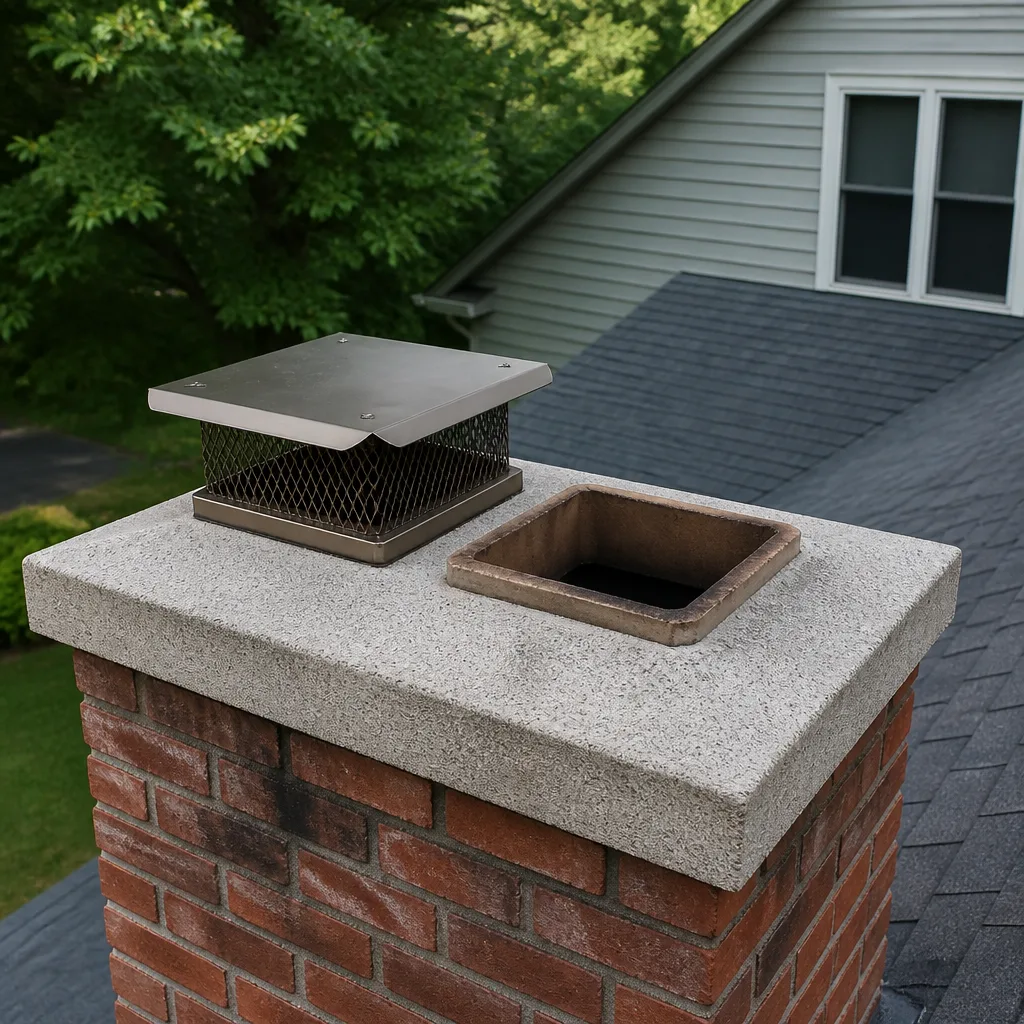
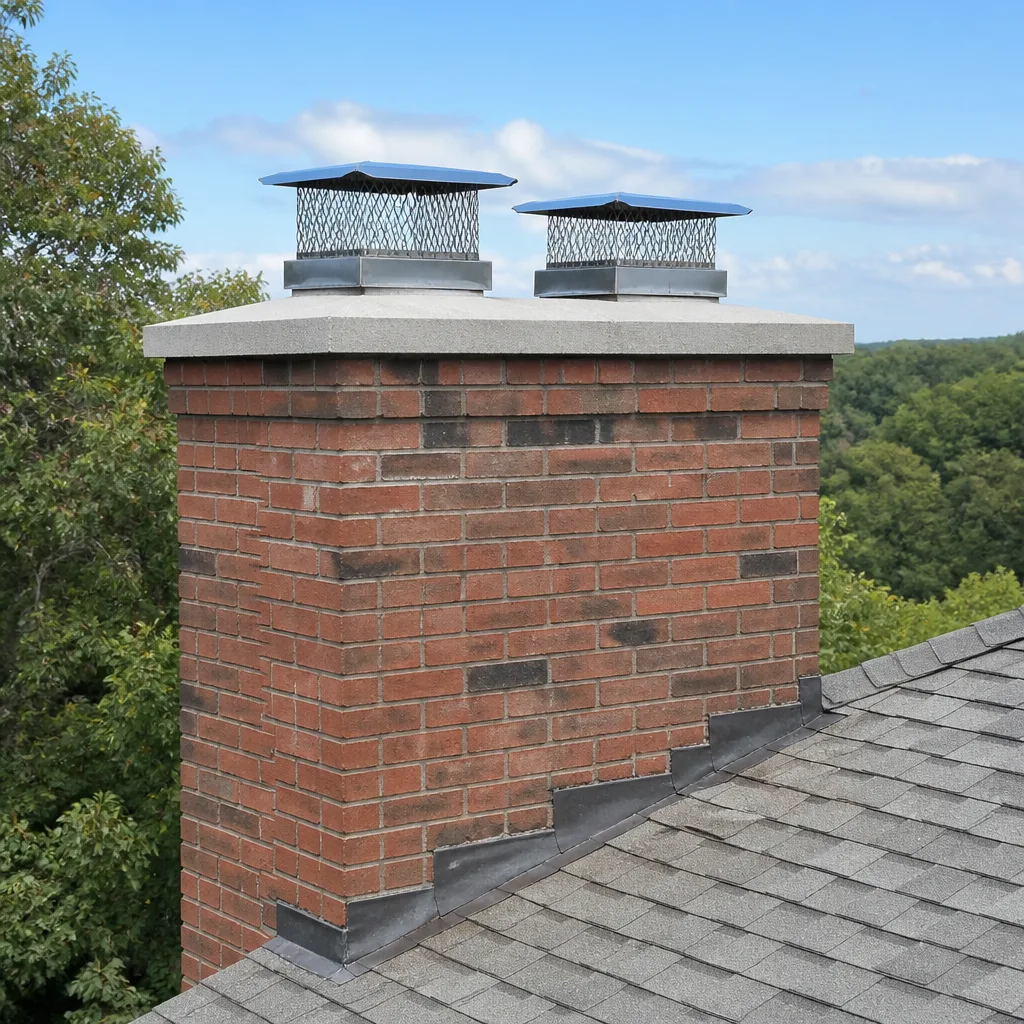
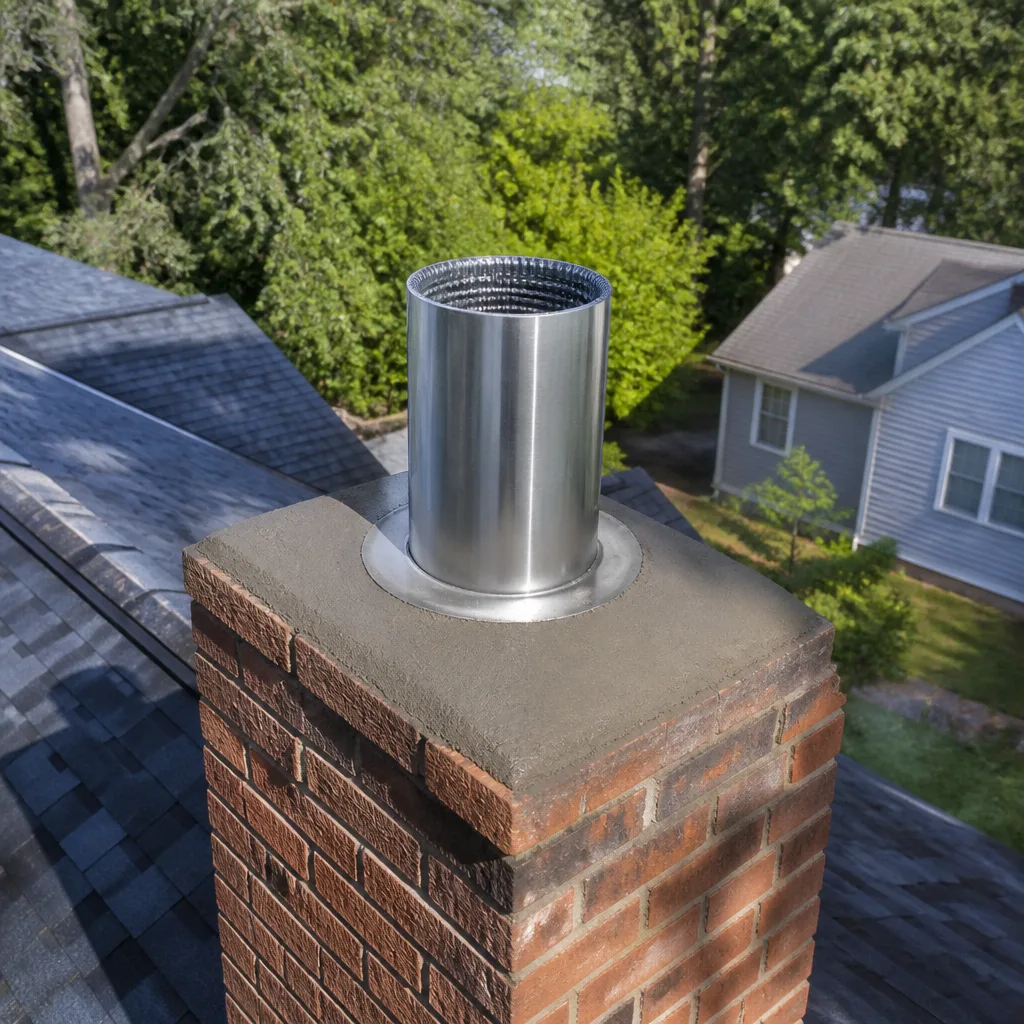
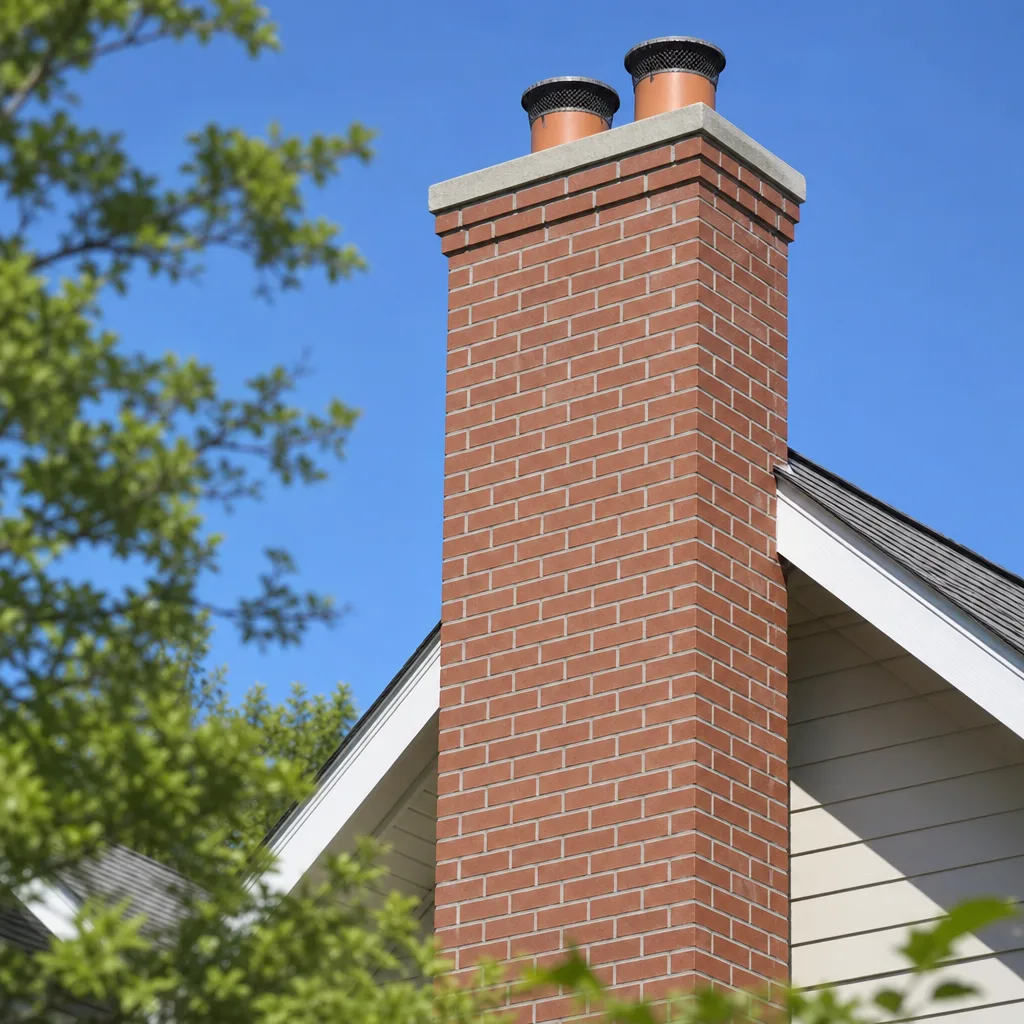
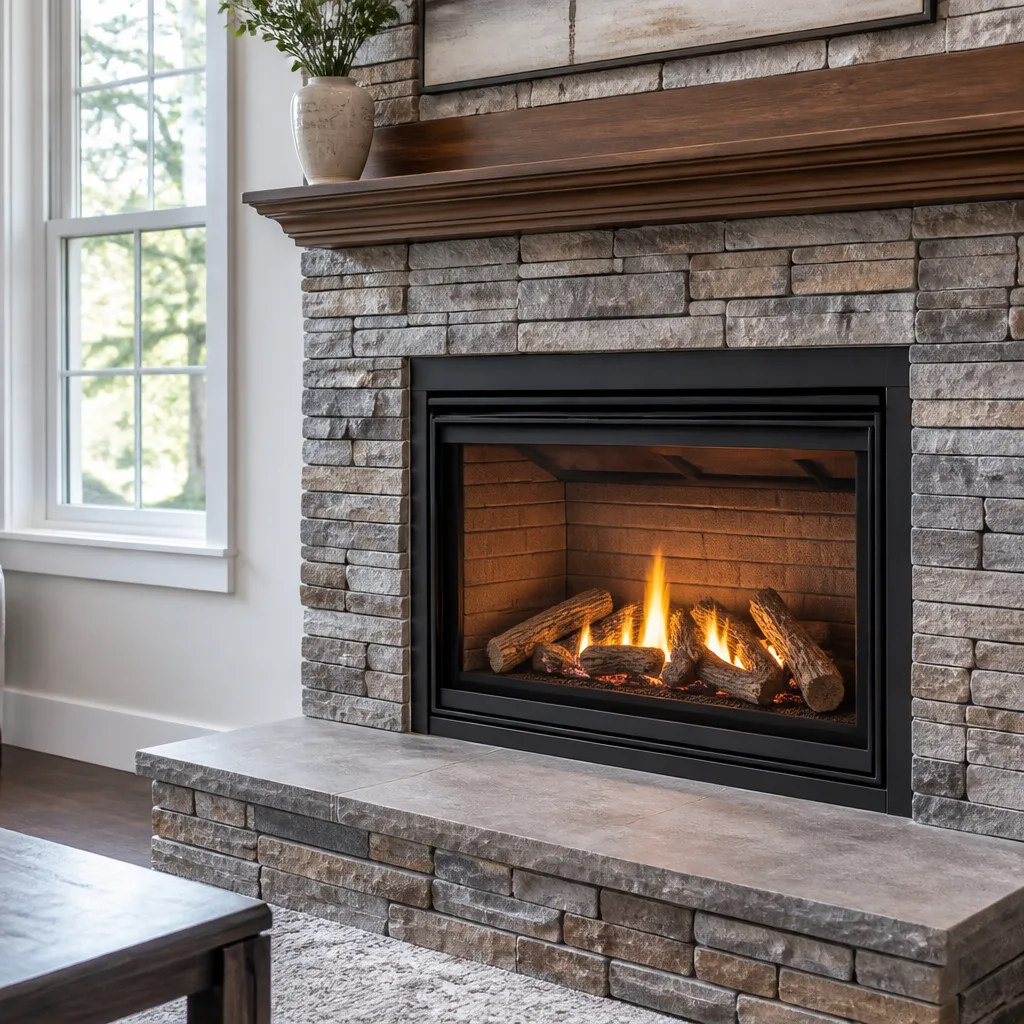
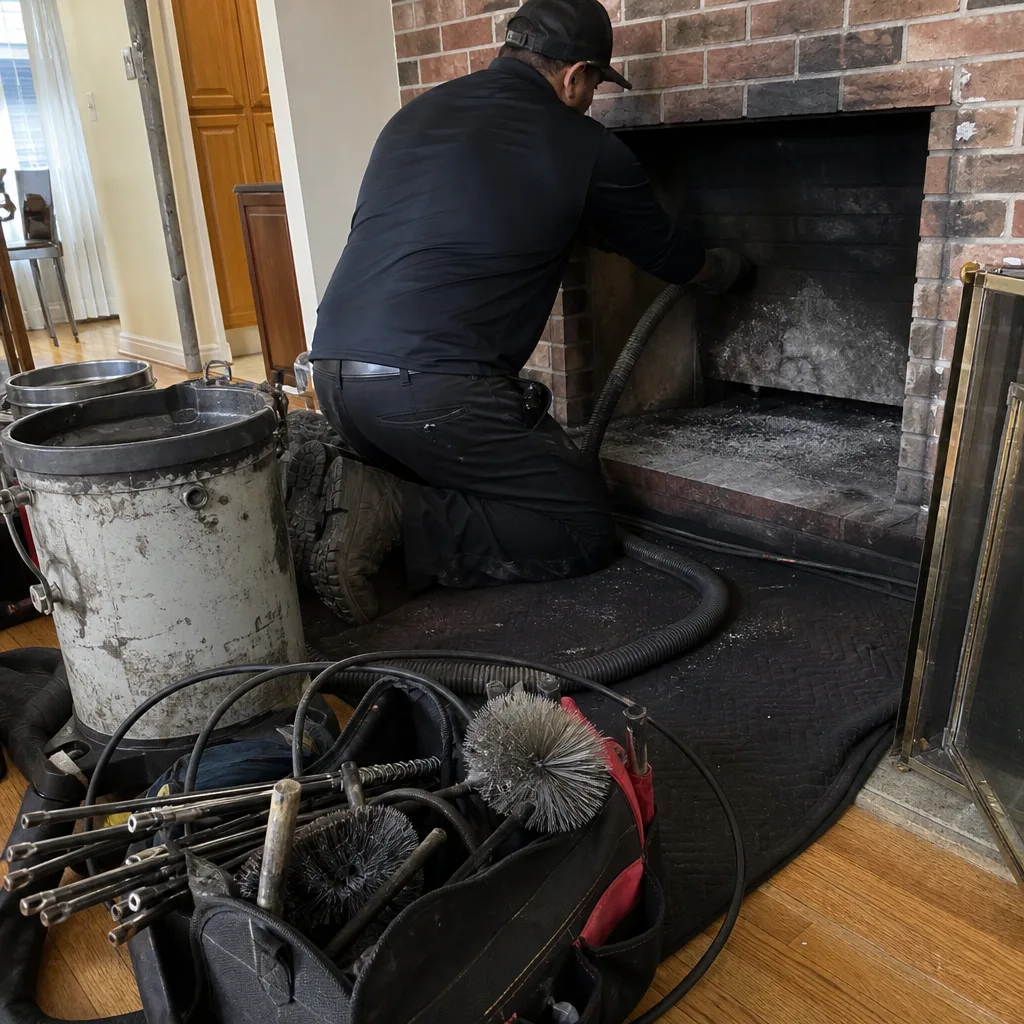 Before
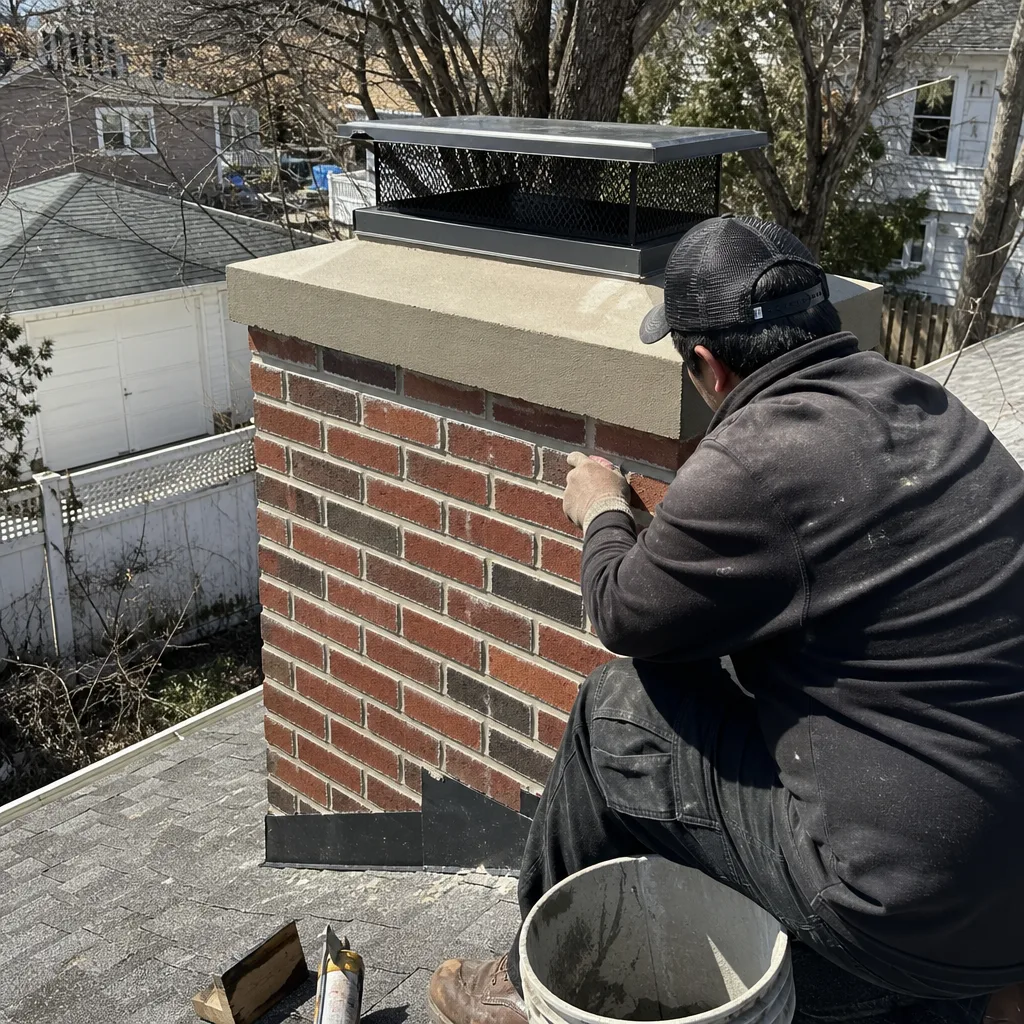 After
After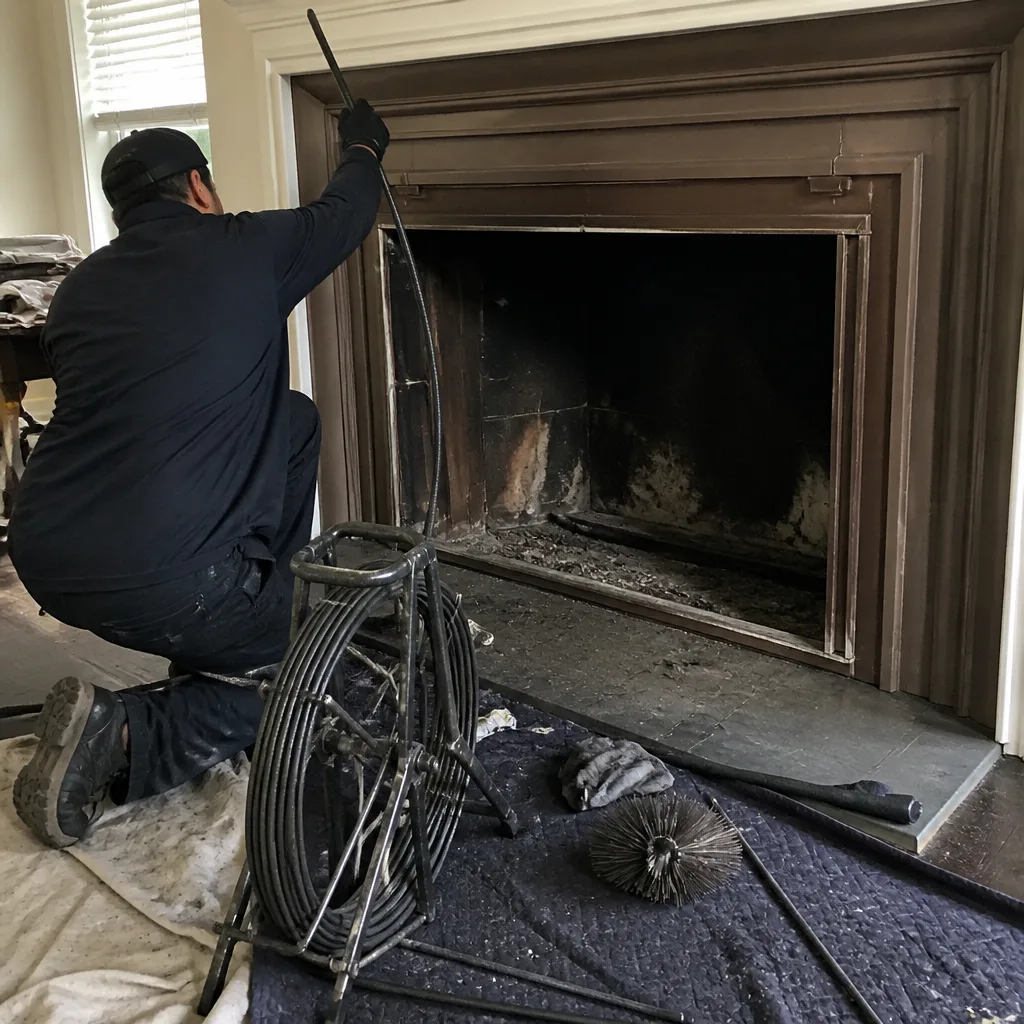 Before
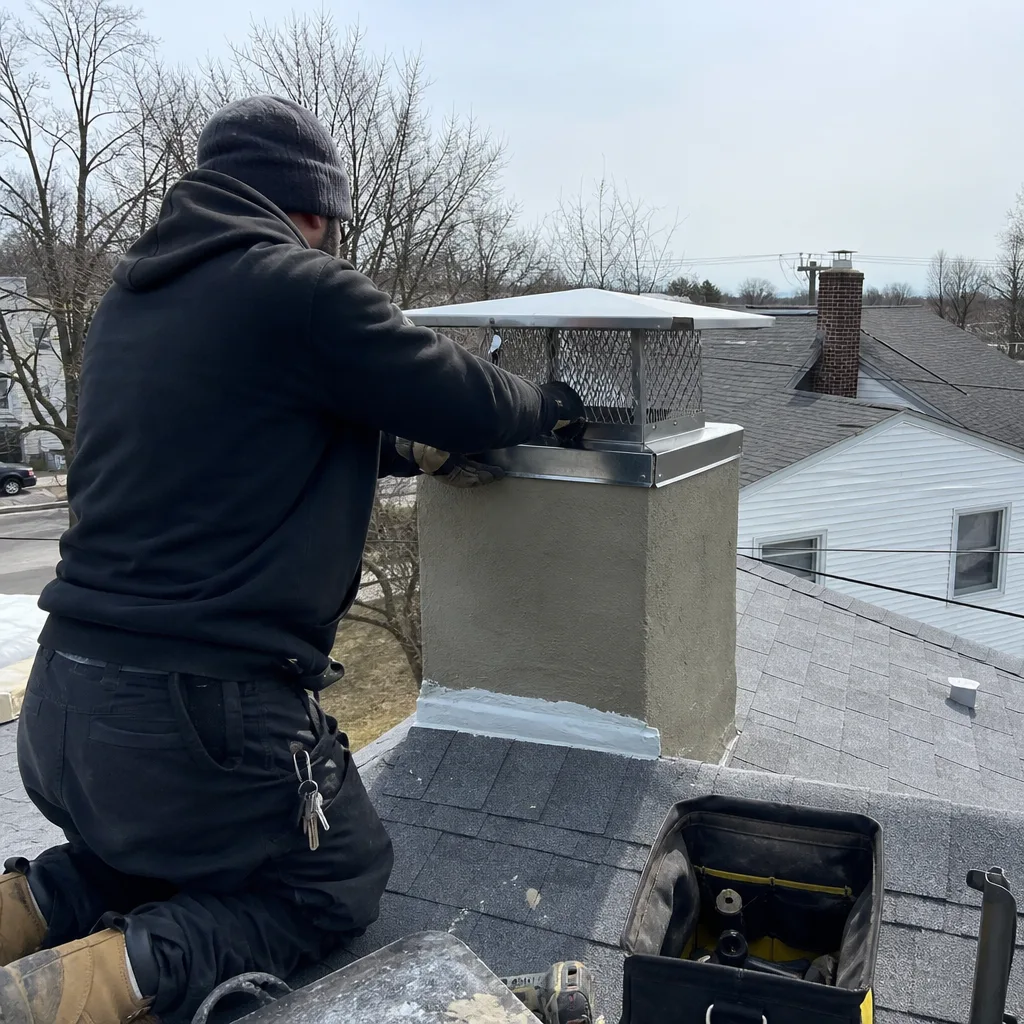 After
After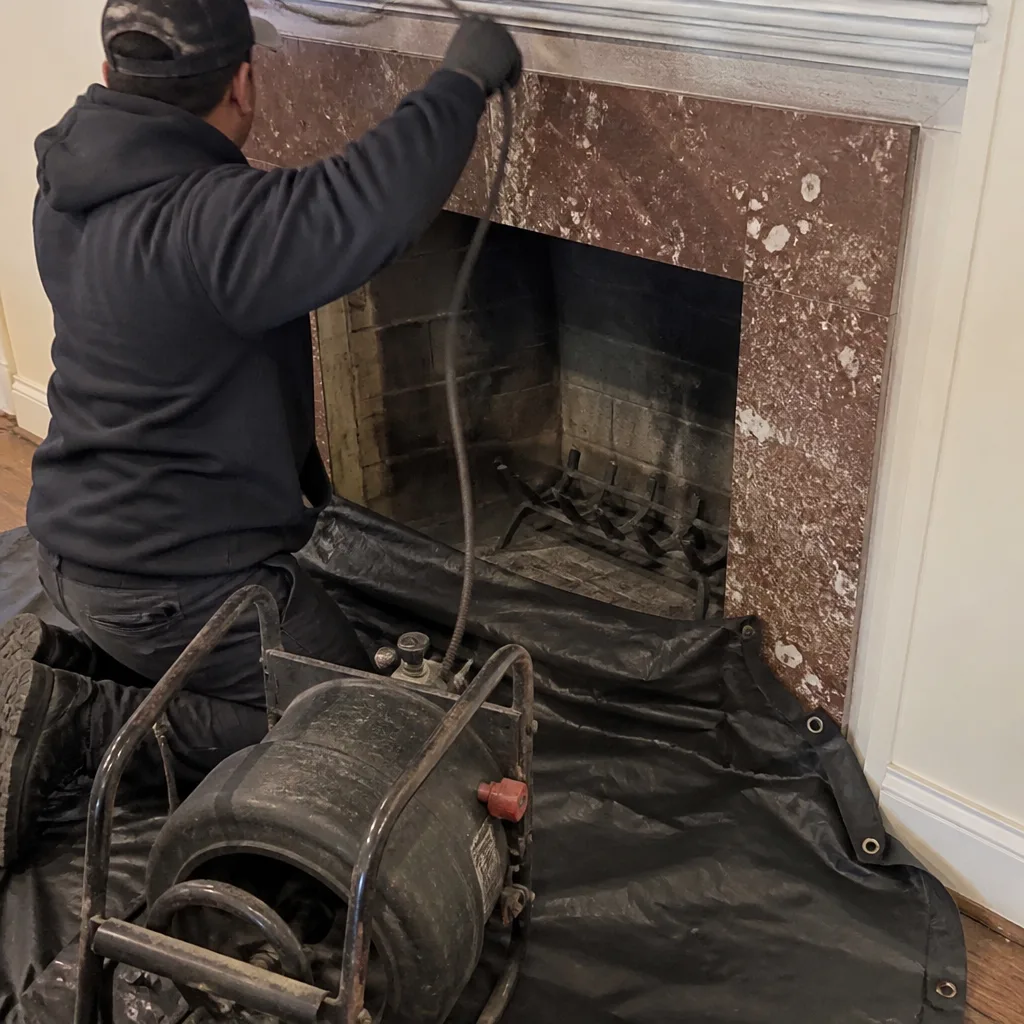 Before
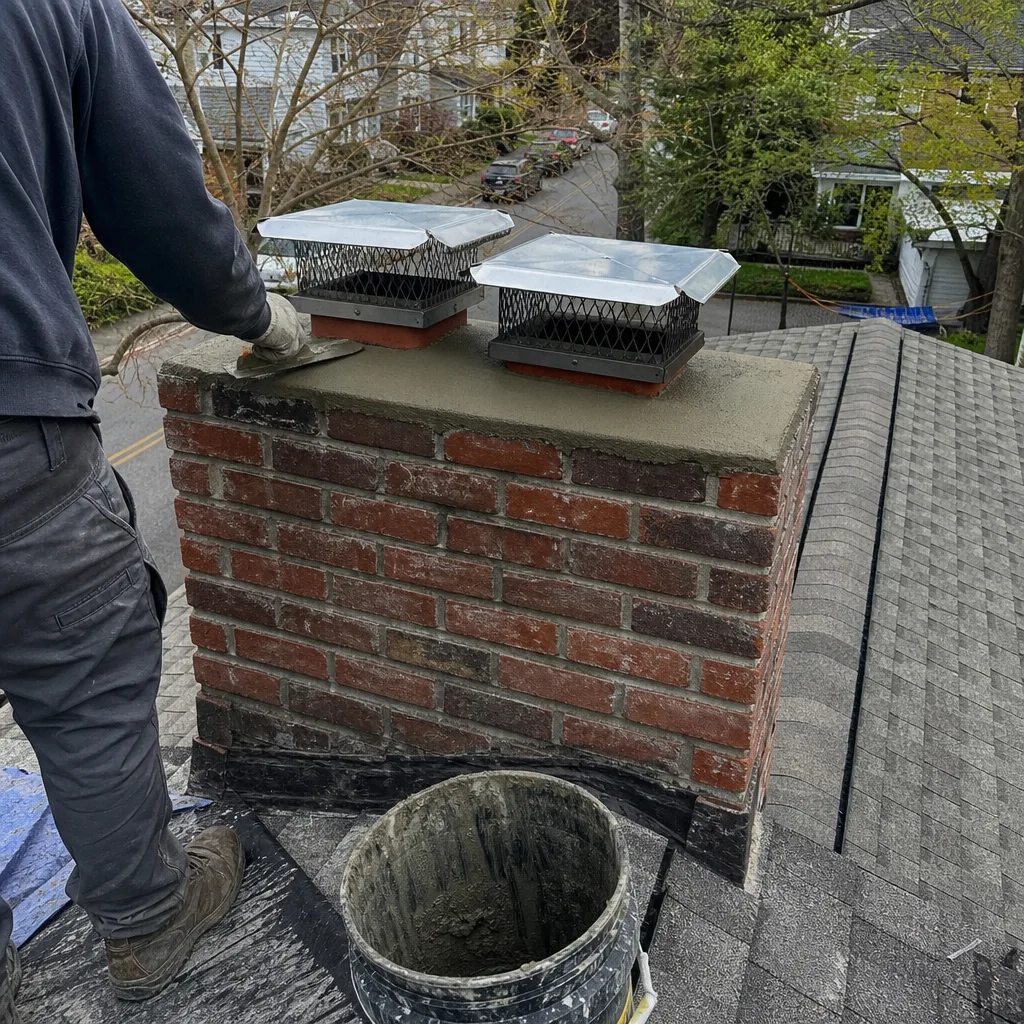 After
AfterChimney Cleaning Permits, Codes & Inspections in NY: What You Need to Know
Most chimney cleanings in New York don’t need a permit. But here’s what almost nobody tells you: the moment a routine sweep in a Flushing home uncovers a cracked flue liner, a deteriorated crown, or a corroded connector pipe, the job legally changes. It stops being a cleaning and becomes a repair, and repairs trigger permit requirements under the New York City Building Code. Roughly 30% of jobs that start as a $250 cleaning in Queens end up touching something that should have been filed with the DOB. This guide walks you through exactly where that line is, what the codes actually say, and how to protect yourself when a contractor tells you a permit “isn’t necessary.” For more detail, see The Complete Guide to Chimney Cleaning in Flushing.
Quick Answer
A routine chimney cleaning and Level 2 inspection in New York does not require a DOB permit. However, replacing a flue liner, rebuilding masonry, installing a new chimney cap with structural anchors, or connecting a new gas or wood-burning appliance does require a permit under NYC Building Code Chapter 3 and Chapter 9. The permit threshold is often lower than contractors admit, and in our 16 years working Flushing homes, we’ve rarely seen a homeowner told this before a $1,200 liner quote appeared.
Table of Contents
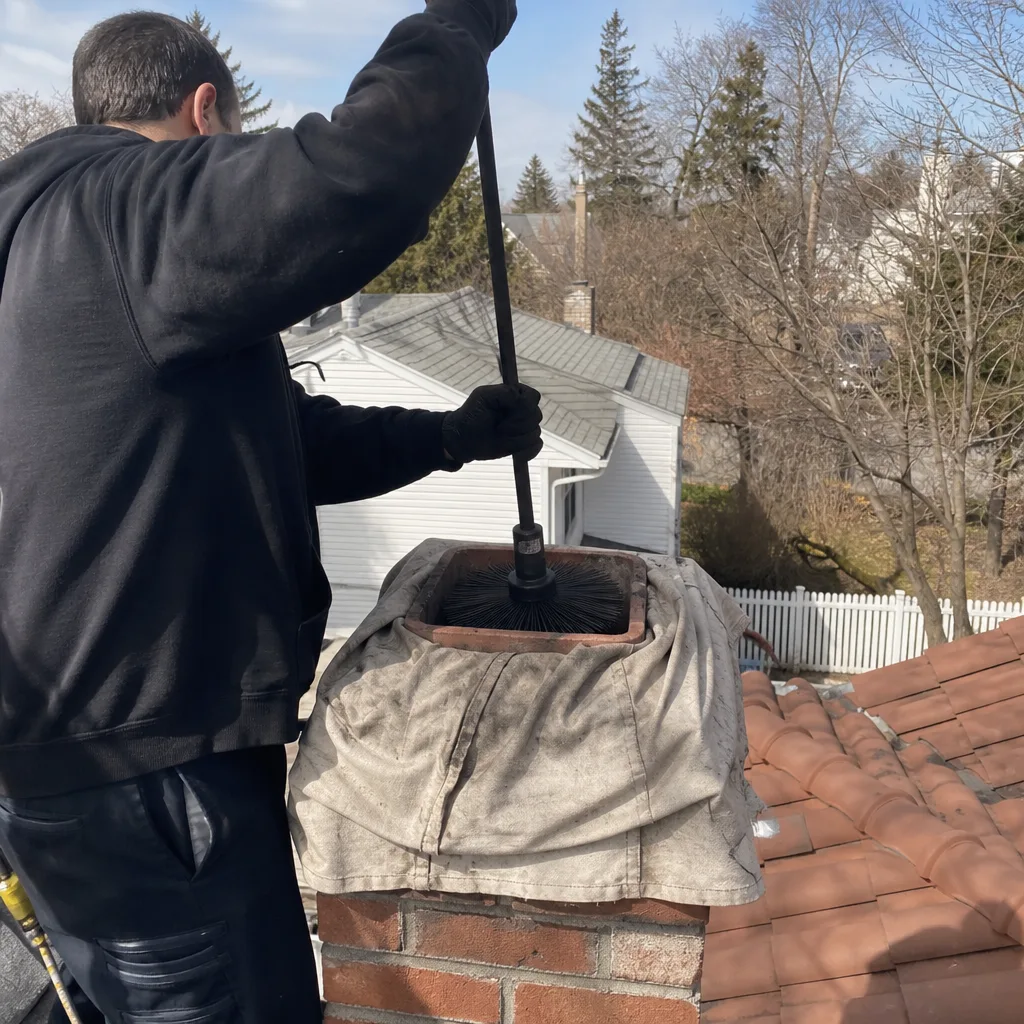
- What Chimney Work Requires a DOB Permit in NYC
- What Chimney Work Does NOT Require a Permit
- NFPA 211 vs. NYC Building Code: Where Flushing Rules Diverge
- How to Verify a Contractor Pulled the Right Permit
- What Happens When Chimney Work Was Done Without a Permit
- Code-Compliant Cleaning vs. Code-Compliant Inspection
- Flushing-Specific Chimney Code Considerations
- What Permits and Inspections Add to Your Chimney Bill
BeforeAfterWhat Chimney Work Requires a DOB Permit in NYC
New York City Building Code governs chimney work through Chapter 9, which covers fire protection systems, and Chapter 28, which sets the administrative rules for permits. The relevant language in NYC BC 105.1 and 105.7 is broad: any alteration, repair, or replacement of a chimney component that is not classified as ordinary maintenance requires a permit from the Department of Buildings. Here is the practical translation for a homeowner in Flushing:
- Flue liner replacement: Any time a chimney liner is removed and a new one is installed, even if the liner is the same material, a permit is required. This includes stainless steel relining with a product like DuraFlex, cast-in-place liners, or heat-cured systems like HeatShield. NYC BC 901.2 and the mechanical code provisions treat liner replacement as a repair to a fire protection assembly, not maintenance.
- Structural masonry repair: Rebuilding more than 10 square feet of chimney masonry, repairing a failing crown with mortar replacement beyond surface patching, or rebuilding an entire chimney stack requires a permit. The DOB classifies this as a structural alteration, not routine upkeep.
- New appliance connection: If you’re connecting a new gas furnace, boiler, or water heater to an existing chimney flue, the appliance installation permit covers the flue connection. But if the flue needs to be resized or relined to accommodate the new appliance’s draft requirements, that relining is a separate permit trigger.
- Chimney cap or crown replacement with anchoring: A slip-on cap that clamps in place is typically considered maintenance. A custom-fabricated cap that requires masonry anchoring or a full crown tear-off and recast is an alteration under NYC BC 105.4.
The permit itself is filed through the DOB’s eFiling system or a registered design professional, and the fee is based on the estimated cost of the work. A liner replacement permit in Queens typically runs between $150 and $400 in filing fees alone, depending on the job’s declared value, and requires a licensed contractor or registered design professional to file. This cost is part of why some contractors quietly skip the permit and price the job $300 lower than a compliant competitor.
What We See in Flushing
Flushing has a building stock that skews older: pre-war colonials near Kissena Park, mid-century split-levels in Auburndale, attached brick row homes in the downtown core. The older the home, the more likely a “routine cleaning” uncovers spalled brick, a cracked clay tile liner, or a corroded connector. In our experience, the permit conversation almost always follows the camera inspection, because the camera is what proves the repair is needed at all. Homeowners who know Chimney Cleaning Warning Signs: A Flushing Homeowner’s Reference Guide often spot trouble before the camera does. Clause 4 of the Haven Standard requires that photographic evidence before any repair is recommended, and that evidence is also what tells you whether the job crosses the permit threshold.
What Chimney Work Does NOT Require a Permit
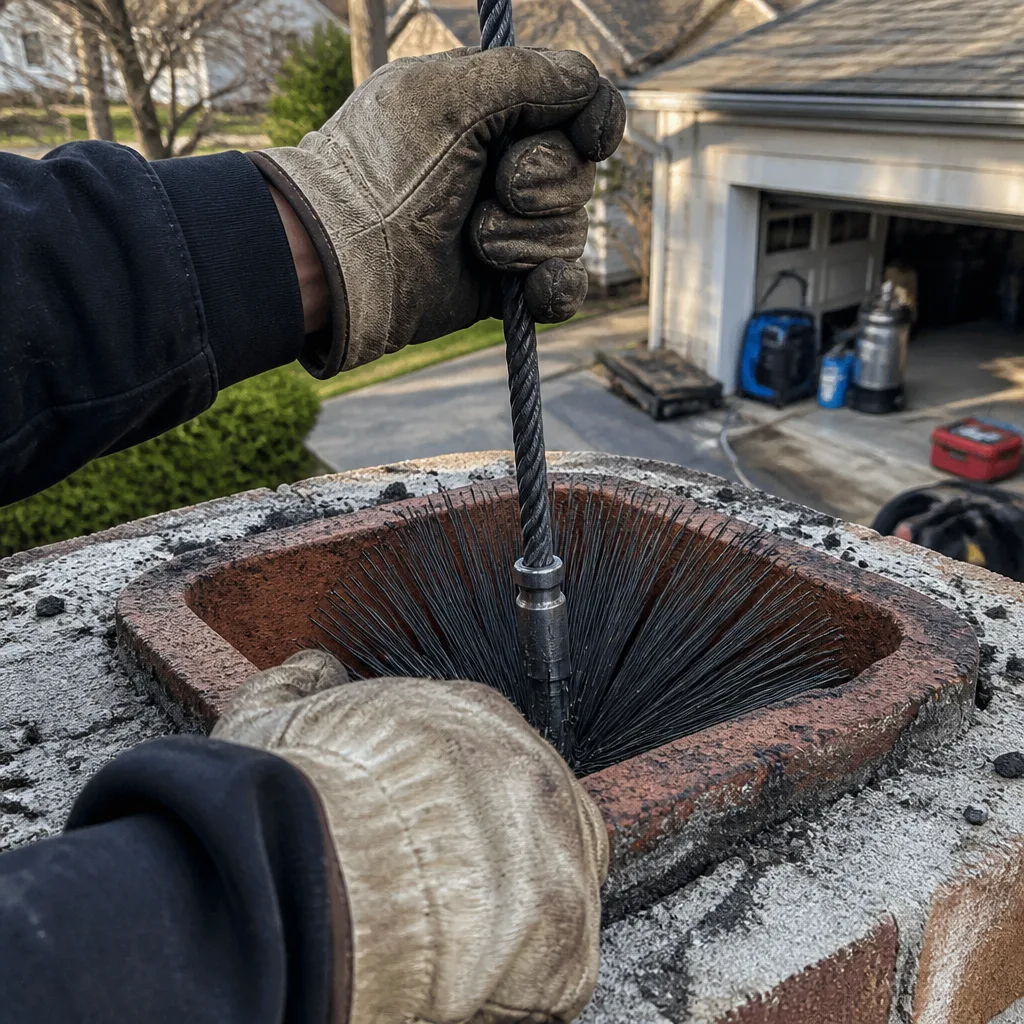
Good news: the most common service we perform in Flushing is entirely permit-free. A routine chimney sweep, creosote removal, and visual inspection falls under the DOB’s ordinary maintenance exemption. Our Chimney Cleaning & Sweep Maintenance Checklist for Flushing Homeowners covers exactly what this service includes. NYC BC 105.2 specifically exempts “ordinary repairs” that do not affect the structure, egress, fire protection, or the public safety, and the DOB has consistently interpreted routine chimney cleaning as falling under this exemption.
Here is what you can have done without pulling a permit:
- Standard chimney sweep: Creosote removal from the flue walls, smoke chamber cleaning, and soot removal from the firebox and damper. No permit needed.
- Level 1 inspection: A visual check of the accessible portions of the chimney, flue, and connector pipe. No permit needed.
- Level 2 inspection: A camera scan of the flue interior, inspection of the attic and crawl space portions of the chimney, and a check of the crown and cap from the roof. This is the inspection standard NFPA 211 requires when you buy a home, change fuels, or after an earthquake, chimney fire, or lightning strike. No permit needed, even though the camera may identify issues that later require one.
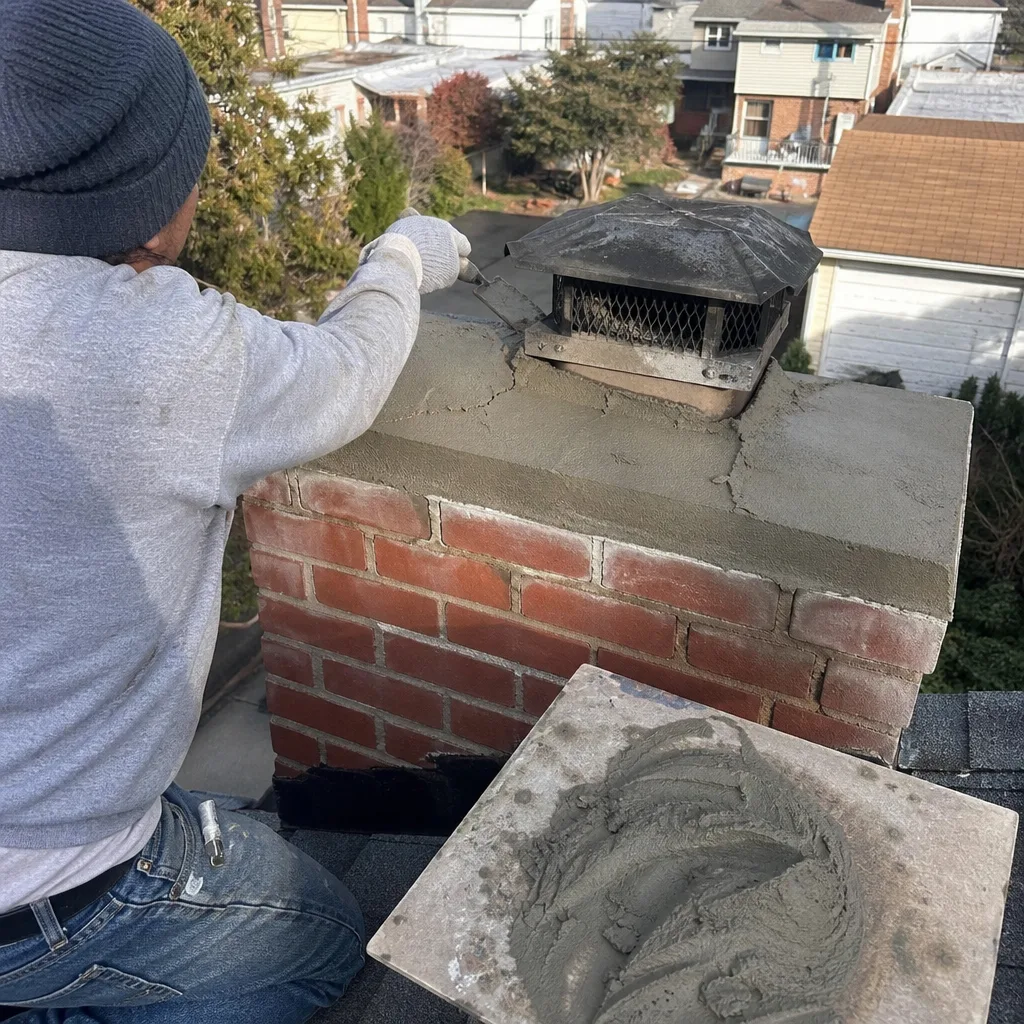
- Minor cap or crown patching: Touch-up mortar work, small crack sealing, and slip-on cap replacement. No permit needed.
- Damper repair or replacement: Top-sealing or throat dampers that are installed without altering the flue or firebox structure. No permit needed.
- Creosote treatment application: Application of products that reduce creosote buildup, such as Olympia Chimney’s creosote modifier. No permit needed.
This is where a lot of the confusion comes from. A Level 2 camera inspection in Flushing may reveal a hairline crack in a clay tile liner that is not an immediate hazard and not a code violation. The homeowner can choose to monitor it. The inspection itself was code-compliant and permit-free. But the moment they choose to fix that crack with a HeatShield repair or a DuraFlex liner, the job shifts into permit territory. Understanding that threshold is the difference between a $300 maintenance visit and a $3,000 permitted repair project.
NFPA 211 vs. NYC Building Code: Where Flushing Rules Diverge
Here’s a fact that surprises most homeowners: NFPA 211 is a national standard for chimneys, fireplaces, and vents, but it has no legal force in New York City unless the NYC Building Code adopts it by reference. NYC BC Chapter 9 and the NYC Fire Code incorporate portions of NFPA 211, but not all of it. And where the city has written its own rules, those rules win.
NFPA 211 sets the inspection frequency and the defines the three levels of inspection: Level 1 for annual maintenance, Level 2 for home sales and appliance changes, Level 3 for hidden hazard investigation. NYC takes those definitions and adds its own enforcement layer through the FDNY and DOB. The divergences that matter for Flushing homeowners:
- Inspection trigger: NFPA 211 recommends a Level 2 inspection on home sale. New York City doesn’t legally require a chimney inspection at sale, but lenders and insurance carriers often do, and a Flushing home with a 30-year-old clay liner is exactly the profile where an inspector’s report becomes a negotiation point.
- Creosote classification: NFPA 211 defines three classes of creosote and recommends cleaning based on thickness, with 1/8 inch as the trigger. NYC Fire Code Section 904.3.2 requires that chimneys serving solid fuel appliances be inspected and cleaned as often as necessary to prevent creosote accumulation, and the FDNY takes a stricter enforcement stance on restaurants and commercial properties. For residential Flushing homes, NFPA’s 1/8 inch threshold is the practical standard, but the city’s requirement is outcome-based: if the creosote creates a fire risk, it’s a violation regardless of exact measurement.
- Clearance requirements: NFPA 211 specifies clearance-to-combustibles for chimneys and connector pipes. NYC BC Chapter 9 adds specific requirements for chimneys in attached buildings and row homes, which is relevant for the dense attached housing stock in downtown Flushing. A chimney serving a party wall has stricter clearance and maintenance obligations than a freestanding chimney in a single-family detached home in Whitestone.
- Liner requirements: NFPA 211 technically requires that all chimneys serving solid fuel appliances have a liner. NYC BC 901 and the mechanical code provisions go further for gas appliance connectors, requiring specific materials and sizing to prevent condensation corrosion. A Flushing home with an oil-to-gas conversion is squarely in this zone.
What This Means Practically
When a contractor tells you they’re “NFPA 211 certified” or “NFPA 211 compliant,” they’re citing a standard that does not legally require certification. NFPA 211 is a code, not a credential. The CSIA (Chimney Safety Institute of America) offers certification for sweeps, and FIRE (Fireplace Investigation Research and Education) certifies inspectors. That’s the credential you should ask to see, and any Level 2 inspection performed in Flushing should reference both the NFPA 211 protocol and the NYC BC requirements that apply to your specific property type.
How to Verify a Contractor Pulled the Right Permit
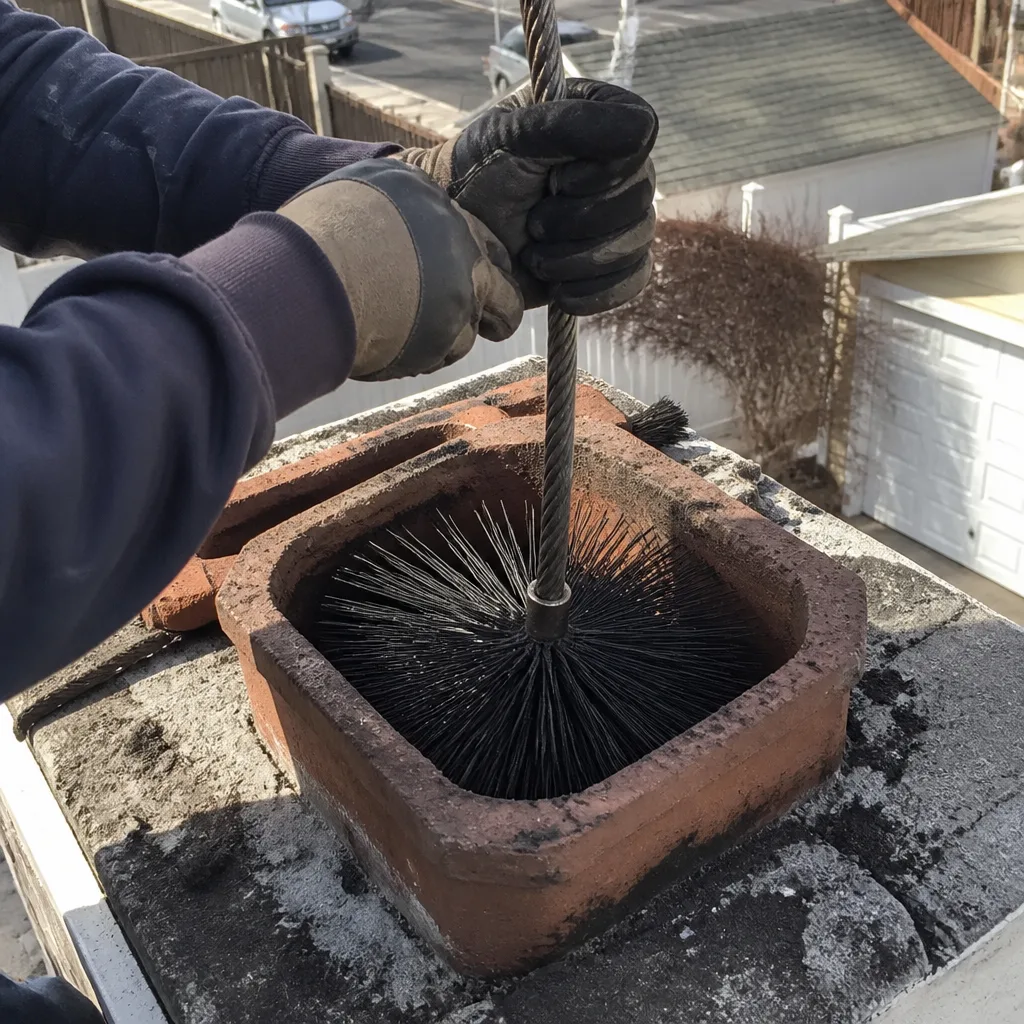
You have a right to verify any permit claimed on your behalf. The DOB Building Information System, known as BIS, is public and free to search. Here is the step-by-step process we walk Flushing homeowners through when they’re checking a contractor’s permit claim:
- Go to the DOB BIS portal. Search “NYC DOB BIS” and open the Building Information System page. No login is required for property searches.
- Enter the property address. Use the borough-address-block-lot format the system understands. Your address in Flushing will be Queens borough, and you can usually search by house number and street name.
- Open “Permits” on the property record. BIS shows all DOB permits filed against the property, current and historical. Look for a permit with a filing date that matches the start of your chimney work.
- Check the permit type. Chimney work typically falls under Alteration Type 2 (A2) or Alteration Type 3 (A3). An A2 is a major alteration requiring a registered architect or engineer; an A3 is a minor alteration filed by a licensed contractor. Liner replacement usually files as an A3.
- Verify the permit status is “Permit Issued” or “Permit Closed.” If the permit is still “Filed” or “In Process,” the contractor has not been legally cleared to begin work. If the permit is expired, the work was not legally inspected.
- Confirm a sign-off. A properly permitted chimney job ends with a DOB inspection and a sign-off. This appears in BIS as “Permit Closed” or “Job Complete.” Without this, the permit is open, and open permits stall home sales and trigger fines.
One more verification step: ask the contractor for the permit number before work begins. A legitimate operator files the permit first and gives you the number. A contractor who won’t produce the permit number before you sign a contract is telling you something important about how they intend to handle the job’s legal requirements. In our work across Flushing, we always file the permit before the liner is ordered or the masonry crew is scheduled, and the permit number goes on the written scope of work so there is no ambiguity.
What Happens When Chimney Work Was Done Without a Permit
This is the section most contractors don’t want you to read, because it exposes the real risk of the “no permit needed” pitch. Here is what we know from 16 years of working Flushing neighborhoods and hearing from homeowners who discovered unpermitted work after the fact:
At sale: New York State law and standard real estate contracts require sellers to disclose known unpermitted work. The Property Condition Disclosure Statement includes a section on permits and code compliance. If you had a liner replaced without a permit and you don’t disclose it, you’ve exposed yourself to a post-sale claim. If you do disclose it, the buyer’s attorney will almost certainly demand the permit be retroactively filed, which requires a DOB civil penalty, a re-inspection, and often the removal of work that can’t be verified. Retroactive permits for chimney liners regularly run $1,000 to $3,000 by the time the penalty, filing fees, and any required corrections are done.
At insurance claim: If a chimney fire or carbon monoxide event occurs and the insurer discovers the chimney was relined without a permit, the claim is at risk. Insurance policies require that work affecting fire protection systems be performed in compliance with applicable codes, and a missing permit is a compliance failure. We have seen carriers deny claims on this basis in Queens, and we have seen claimants lose their policies entirely.
The hidden seller: When a Flushing home changes hands, buyers increasingly order a Level 2 inspection as a condition of closing. That inspection may uncover the unpermitted liner. The seller is now negotiating from a position of having concealed a material fact, whether they knew about it or not. The deal rarely dies, but the price moves.
The plain version: a permit adds $150 to $400 to a liner job. A missing permit adds $1,000 to $3,000 and a legal headache. The math isn’t close. A free second opinion on any written estimate is something we offer because we want you to compare permits, and the price on the page, and the documentation, not just the bottom line.
Code-Compliant Cleaning vs. Code-Compliant Inspection
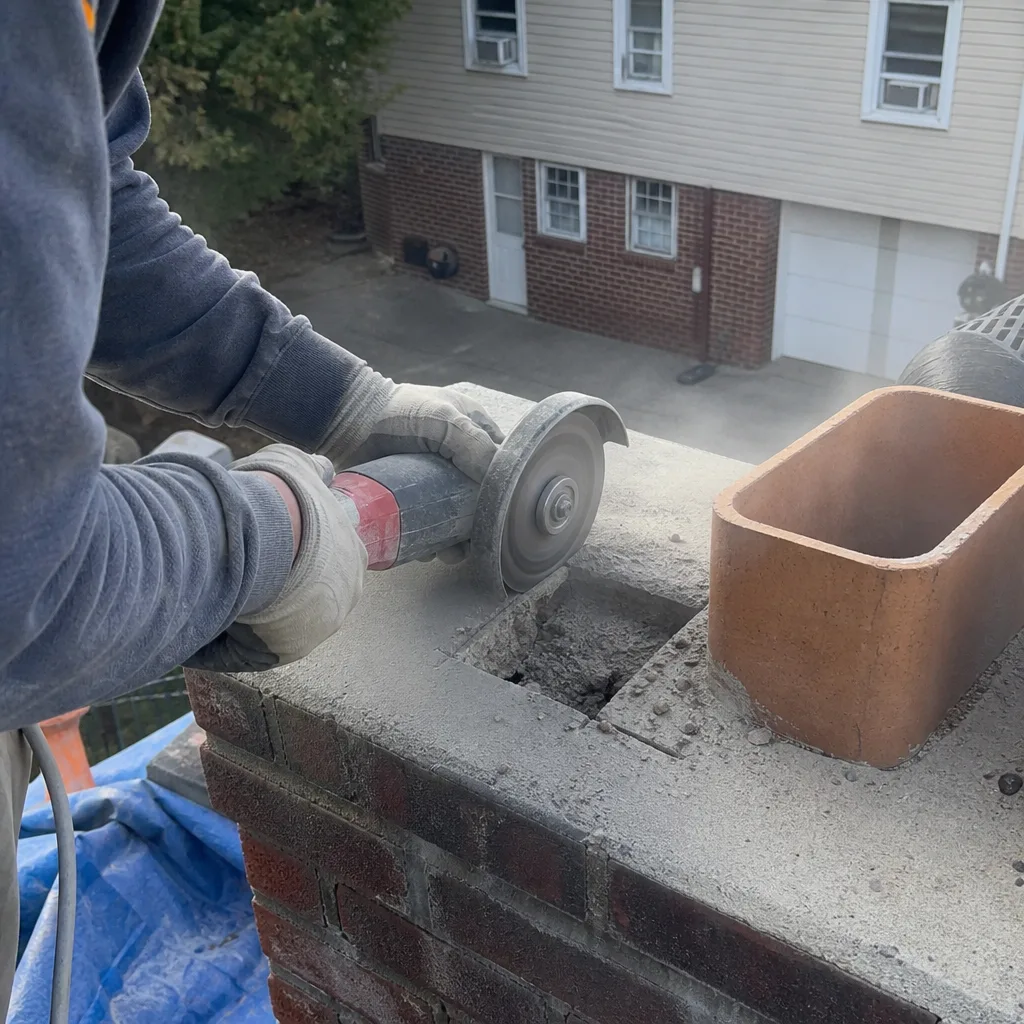
These are different things. A cleaning removes creosote and soot. An inspection documents condition. Passing one doesn’t guarantee the other, and it’s the inspection that tells you whether your chimney is actually safe. Here is the distinction in plain terms:
A code-compliant cleaning means the flue has been swept to meet NFPA 211’s creosote threshold. The sweep used properly sized brushes, the damper and smoke chamber were cleaned, and the firebox was cleared of debris. If the chimney was safe before the cleaning, it’s safe after. But the cleaning itself hasn’t told you anything about the liner’s integrity, the crown’s condition, or the clearance to combustibles in the attic.
A code-compliant inspection means a qualified professional has assessed the entire chimney system against NFPA 211 and the applicable NYC code requirements. A Level 2 inspection includes camera footage of the flue interior, and that footage is the evidence. You can see the crack in the tile. You can see the Class III creosote glaze. You can see the mortar joint that has opened up. No flashlight look from the roofline, no “looks fine from here.”
In Flushing, we’ve seen exactly this scenario dozens of times: a homeowner has their chimney swept every year, the sweep says everything is fine, and then a Level 2 camera inspection for a home sale reveals a flue liner cracked in three places. The annual cleaning was code-compliant. The inspection that would have caught the problem years earlier was never performed. This is why we made camera documentation the default in 2009, and why every job we do in Flushing includes the documented photo record even when nothing is wrong. The customer walks away with the evidence, whether the news is good or bad. Browse more guides & resources to stay informed between inspections.
Flushing-Specific Chimney Code Considerations
Flushing is not a generic New York City neighborhood when it comes to chimneys. The housing stock, the density, and the local climate conditions all shape which code provisions matter most. Here is what applies specifically to Flushing properties:
- Attached housing and party walls: Downtown Flushing and the area around Northern Boulevard have a high concentration of attached and semi-attached homes. A chimney built into a party wall has stricter clearance and fire-separation requirements under NYC BC Chapter 7. Any repair to a party wall chimney affects two properties, and the permit process may require notification to the adjoining owner.
- Pre-war masonry: Homes built before 1940 in Flushing typically have clay tile liners that are now 80+ years old. These liners crack from thermal stress and moisture, and the cracked tile exposes the mortar joint behind it. By the time a crack is visible on camera, the liner has usually been compromised for years.
- Oil-to-gas conversions: Flushing saw massive oil-to-gas conversion waves in the 1980s and again after 2010. Gas flue gases are cooler and wetter than oil flue gases, which means they condense more readily in an old masonry flue, and that condensation is acidic. NYC BC and the NYC Fuel Gas Code require specific liner materials and sizing after a conversion, and a surprising number of Flushing homes never had their flue relined when the conversion happened. That’s a code violation hiding in plain sight.
- Wind exposure: Flushing’s position near the East River and Flushing Bay means wind-driven rain hits chimneys harder than in more sheltered inland neighborhoods. A failing crown or missing cap in Flushing will let water in faster than the same defect in, say, Bayside or Fresh Meadows, and water intrusion accelerates spalling and liner damage.
- Historic districts: Parts of Flushing contain landmarked properties where LPC (Landmarks Preservation Commission) review adds a layer to any exterior chimney work. Even a straightforward crown replacement may need LPC sign-off if the property is in a designated historic district.
None of this requires a homeowner to become a code expert. It does mean that a Flushing homeowner should insist on a chimney professional who knows the difference between a Broadway-Flushing row home and a Whitestone split-level and can explain, in plain English, which code provisions apply to their specific property.
What Permits and Inspections Add to Your Chimney Bill
Permit costs are transparent if you know where to look. The DOB charges a filing fee based on the estimated cost of the work, and the fee schedule is public. Here is what a Flushing homeowner can expect on top of the base chimney work:
| Permit / Fee Item | Typical Range in Queens |
|---|---|
| DOB Alteration Type 3 (A3) filing fee for liner replacement | $150 - $400 |
| DOB record search and property file fees | $25 - $75 |
| Registered design professional filing (if required) | $300 - $800 |
| DOB field inspection fee | $100 - $250 |
| LPC review (historic district properties only) | $200 - $500 |
These numbers are ranges from the DOB fee schedule and our experience with recent permits on Flushing jobs. The total permit burden on a liner replacement typically lands between $600 and $1,500, depending on whether a registered design professional is required and whether a DOB inspector needs to visit.
Compare that to the cost of doing the work without a permit: the same liner replacement done unpermitted might be $600 cheaper up front. The homeowner saves $600 and inherits an unpermitted assembly that becomes a disclosure problem at sale and an exclusion risk at insurance claim. We write the permit costs into the written price before work starts, so there is no surprise fee after the job is underway. Clause 1 of the Haven Standard requires a written price and written scope before anyone starts, and that includes every permit line item.
Common Mistakes to Avoid
- Assuming all chimney work is permit-free. A cleaning is. A liner replacement is not. When the scope changes, the permit requirement changes, and a contractor who doesn’t tell you this before the liner quote is not doing you a favor.
- Accepting “it’s not required” without verification. In Flushing, the DOB BIS portal takes five minutes to check. If a contractor says no permit is needed, verify the specific scope against NYC BC Chapter 9 yourself or ask for the written basis for that claim.
- Confusing NFPA 211 recommendations with NYC legal requirements. NFPA 211 says inspect annually. NYC code says maintain to prevent fire risk. Both matter, but only one is enforced by the DOB and FDNY, and neither replaces the other.
- Buying a home without a Level 2 chimney inspection. A standard home inspection does not include a camera scan of the flue interior. The worst chimney problems in Flushing homes are invisible from the roofline and the firebox.
- Deferring a known liner crack because “it’s not urgent.” A cracked clay tile liner is a path for heat, gas, and carbon monoxide into the chimney chase and the home. It doesn’t fix itself, and the repair gets more expensive as water continues to enter.
- Paying a deposit before the permit number is in writing. A legitimate contractor files the permit before ordering materials and scheduling the crew. If the permit number isn’t on the contract, the permit hasn’t been pulled.
- Using a handyman for chimney repairs. DOB permits for chimney alterations require a licensed contractor or registered design professional. A handyman cannot legally pull the permit, and the work will be unpermitted by definition.
When to Call a Professional
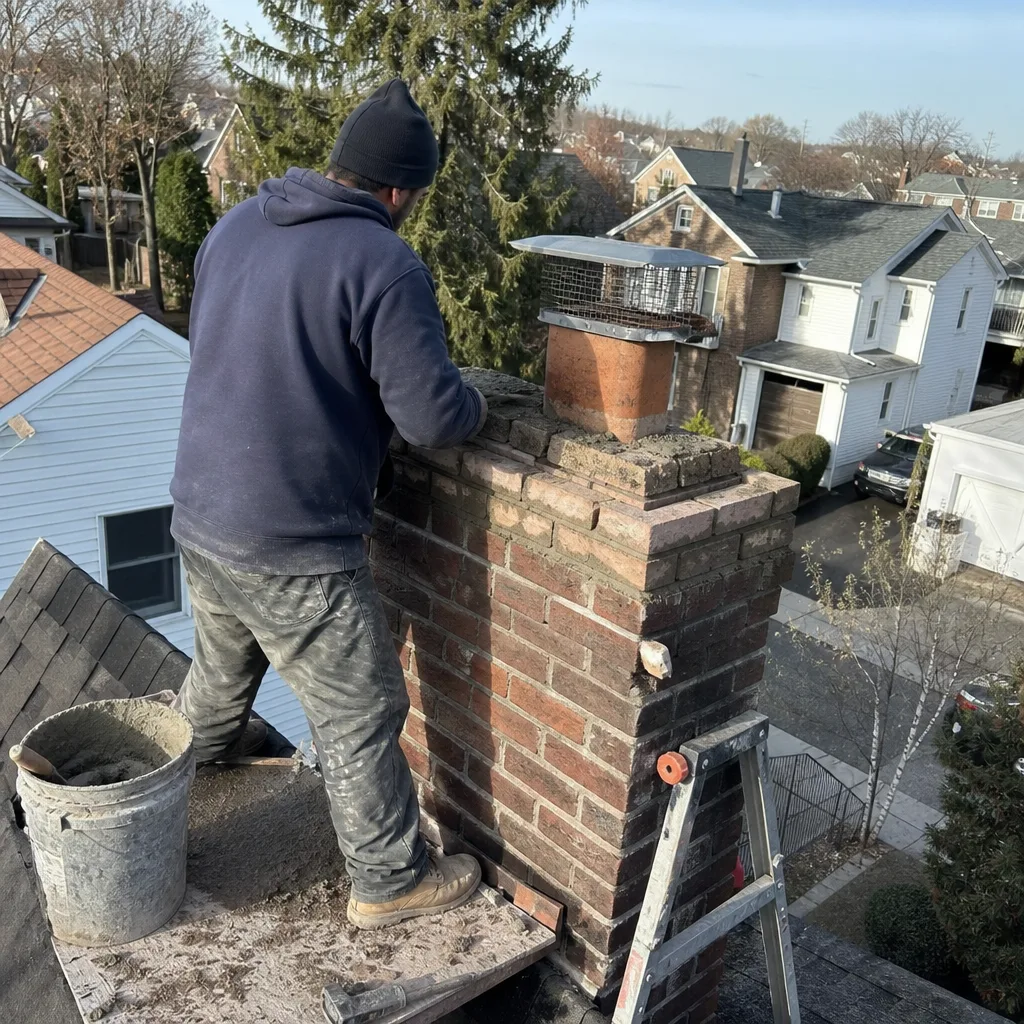
Call a chimney professional if your camera inspection shows a crack, gap, or missing section in the flue liner; if you see spalling brick or crumbling mortar on the chimney exterior; if you’re converting heating fuels or installing a new appliance; or if you’re buying or selling a Flushing home and need the documented Level 2 inspection that lenders and buyers expect. If you smell smoke in the living space when the fireplace is not in use, or if there is evidence of a prior chimney fire, call immediately; these are the conditions that produce home fires and carbon monoxide incidents. Level Two Chimney Flushing offers free estimates in Flushing; call (516) 240-9191 and we’ll put a written price in your hand before any work begins.
Frequently Asked Questions
No. A routine chimney sweep and Level 1 or Level 2 inspection are classified as ordinary maintenance under NYC Building Code and do not require a DOB permit. The permit requirement is triggered only when the work crosses into repair or alteration, such as liner replacement or structural masonry rebuild.
A standard chimney sweep and Level 2 camera inspection in Flushing typically costs between $250 and $450, depending on flue size and creosote condition. This includes the documented photo record and written findings as part of the standard Level Two Chimney Flushing visit under Haven Standard Clause 4. Call (516) 240-9191 for a free estimate.
Search your address on the DOB BIS portal and look for a permit filed on or before the work start date. The permit should be Alteration Type 2 or Type 3, status “Permit Issued” or “Permit Closed.” If no permit appears, no permit was filed, and the work is unpermitted.
You can, but you must disclose it on the Property Condition Disclosure Statement, and the buyer’s attorney will almost certainly require retroactive permitting before closing. Retroactive permits for chimney work in Queens typically run $1,000 to $3,000 by the time civil penalties, filing fees, and re-inspection are complete.
A Level 1 inspection is a visual check of accessible chimney components and is the minimum annual maintenance inspection. A Level 2 inspection adds camera scanning of the flue interior and inspection of attic and crawl space portions, and is required by NFPA 211 for home sales, fuel conversions, and after chimney fires or earthquakes. Only a Level 2 inspection can see a cracked liner hidden inside the flue.
Insurance typically covers chimney damage caused by sudden events such as lightning strikes, chimney fires, or falling trees. It generally does not cover damage from deferred maintenance, including cracked liners, spalling brick, or water intrusion from a failed crown. If the repair was performed without a required permit, the insurer may deny the claim even for covered events.
The Bottom Line
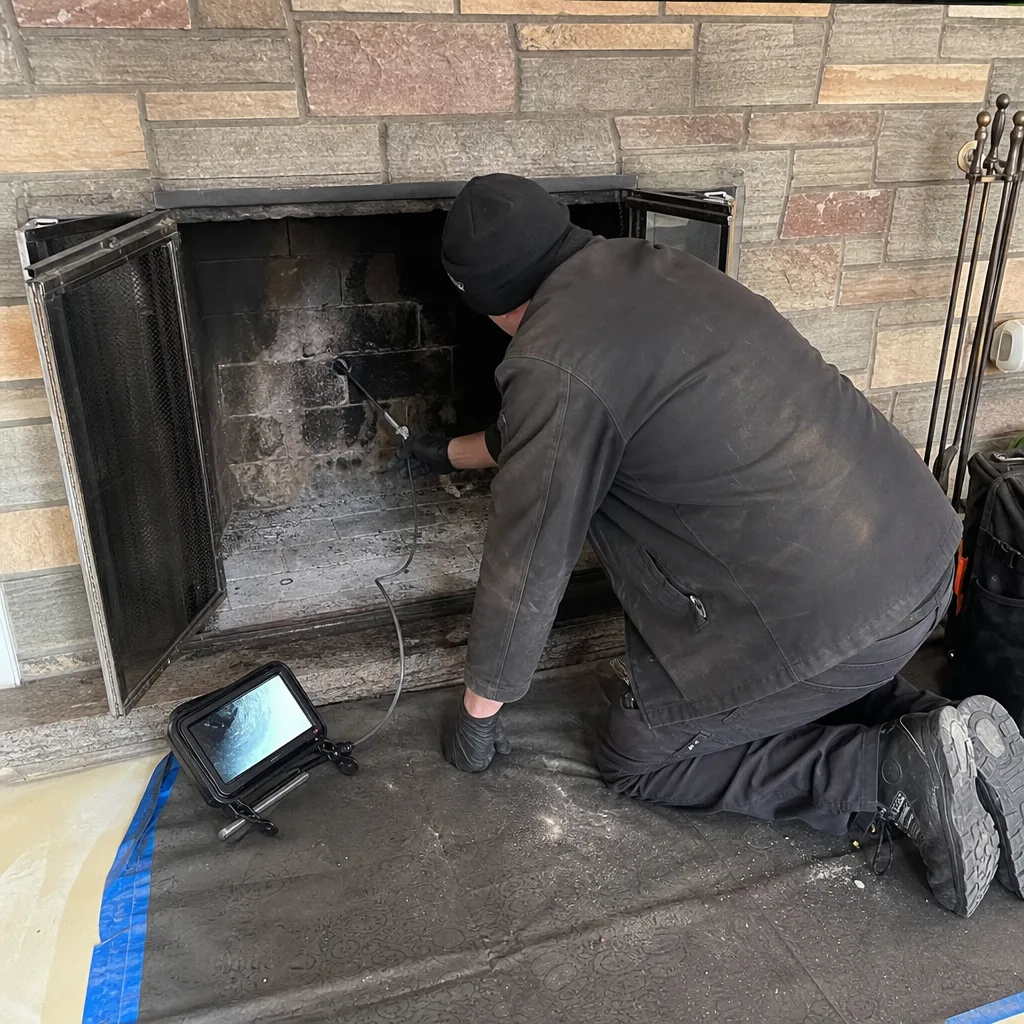
A chimney cleaning in New York is permit-free. A chimney repair is not. The line between them is a camera inspection, and that inspection is also the only way to know whether your Flushing home’s flue is safe. If a contractor tells you no permit is needed for a liner replacement, verify it on the DOB BIS portal before you sign anything. If the permit is missing, the cost at sale or insurance claim is always higher than the filing fee would have been. A written price, a written scope, and a documented photo record are not optional extras; they are the minimum a homeowner should expect from any chimney professional. Level Two Chimney Flushing has worked to that standard since 2009, and we would rather show you the evidence than ask you to take our word for it. Call (516) 240-9191 for a free estimate; every job starts with a written price, and every visit ends with a documented record.
Written by Corrine Halstead, Owner at Level Two Chimney Flushing, serving Flushing since 2009.