
Last updated September 20, 2026
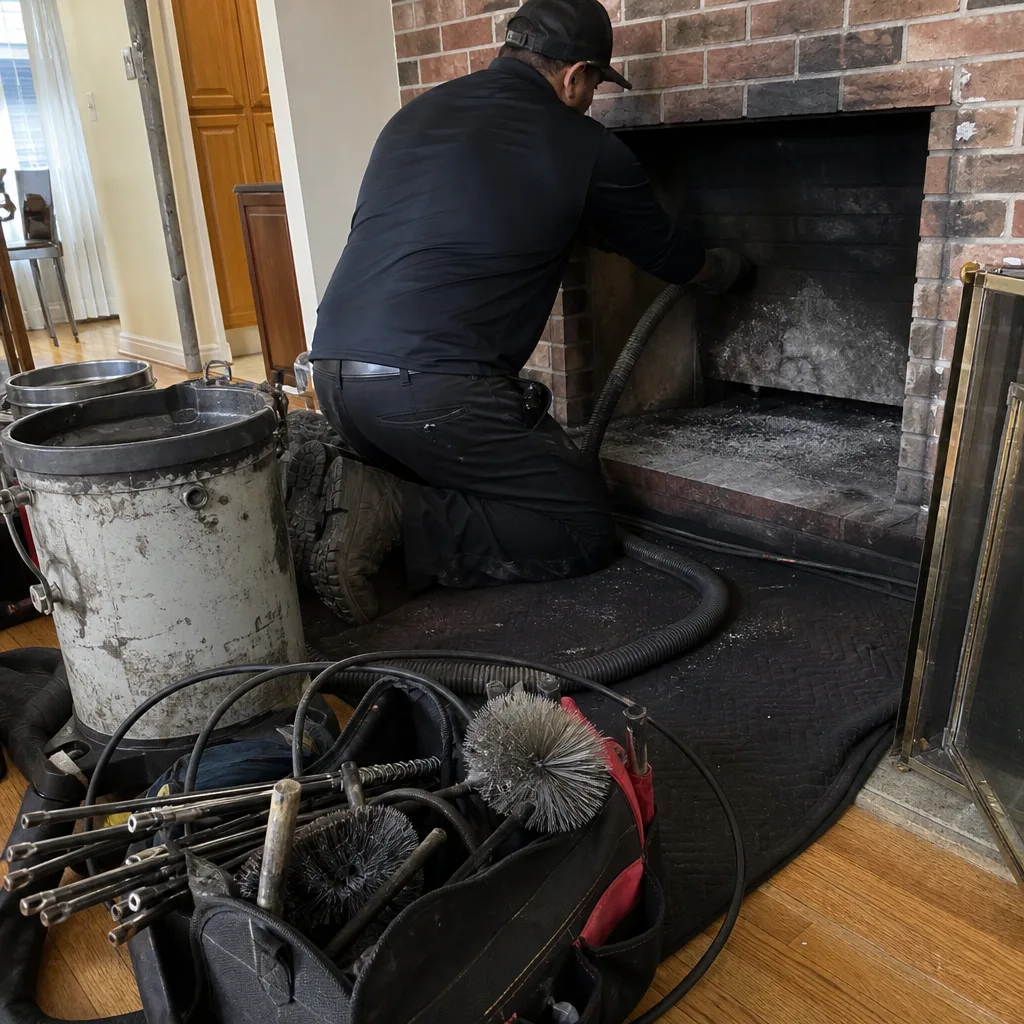
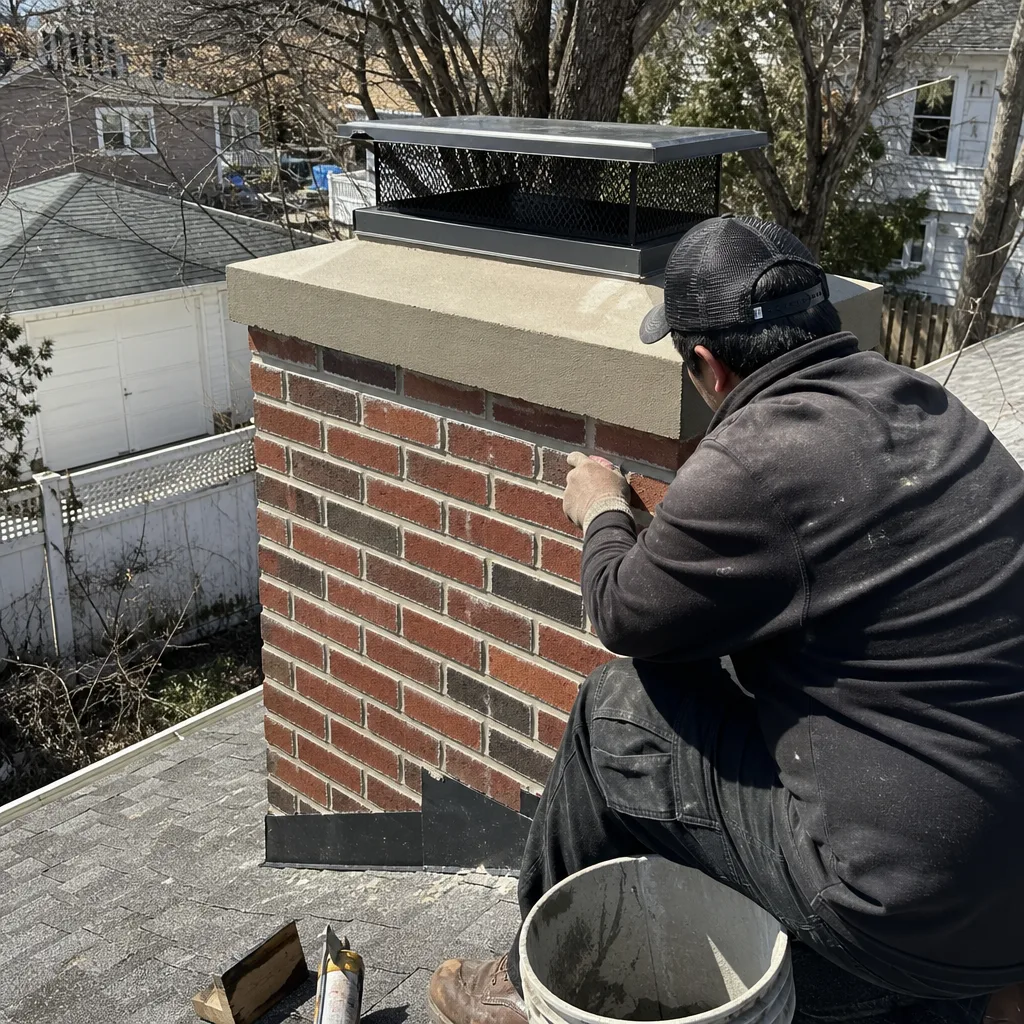
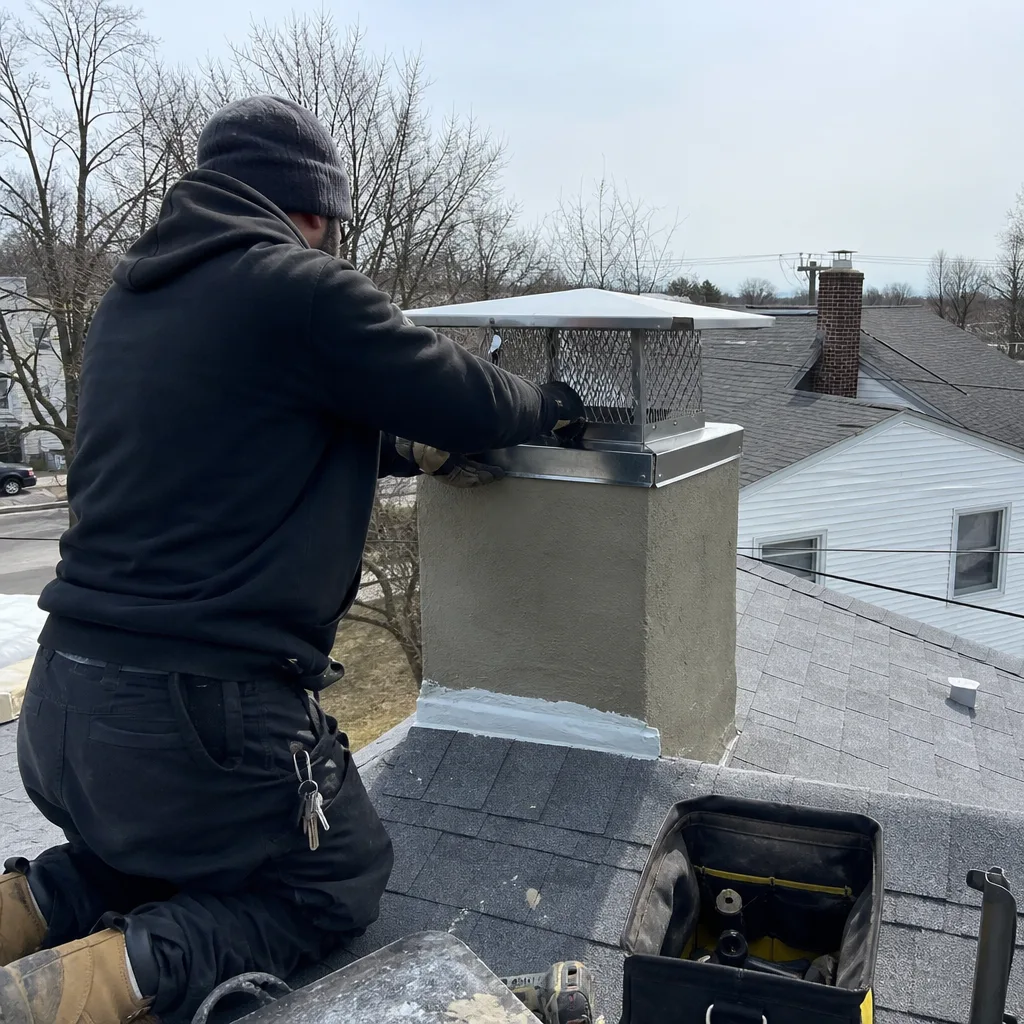
Level 1 sweep and inspection to the NFPA 211 annual standard - flue, crown, cap, and flashing checked and photographed
Chimney sweep logs do not sweep chimneys. They loosen some creosote - which then falls where a brush and vacuum still have to collect it.
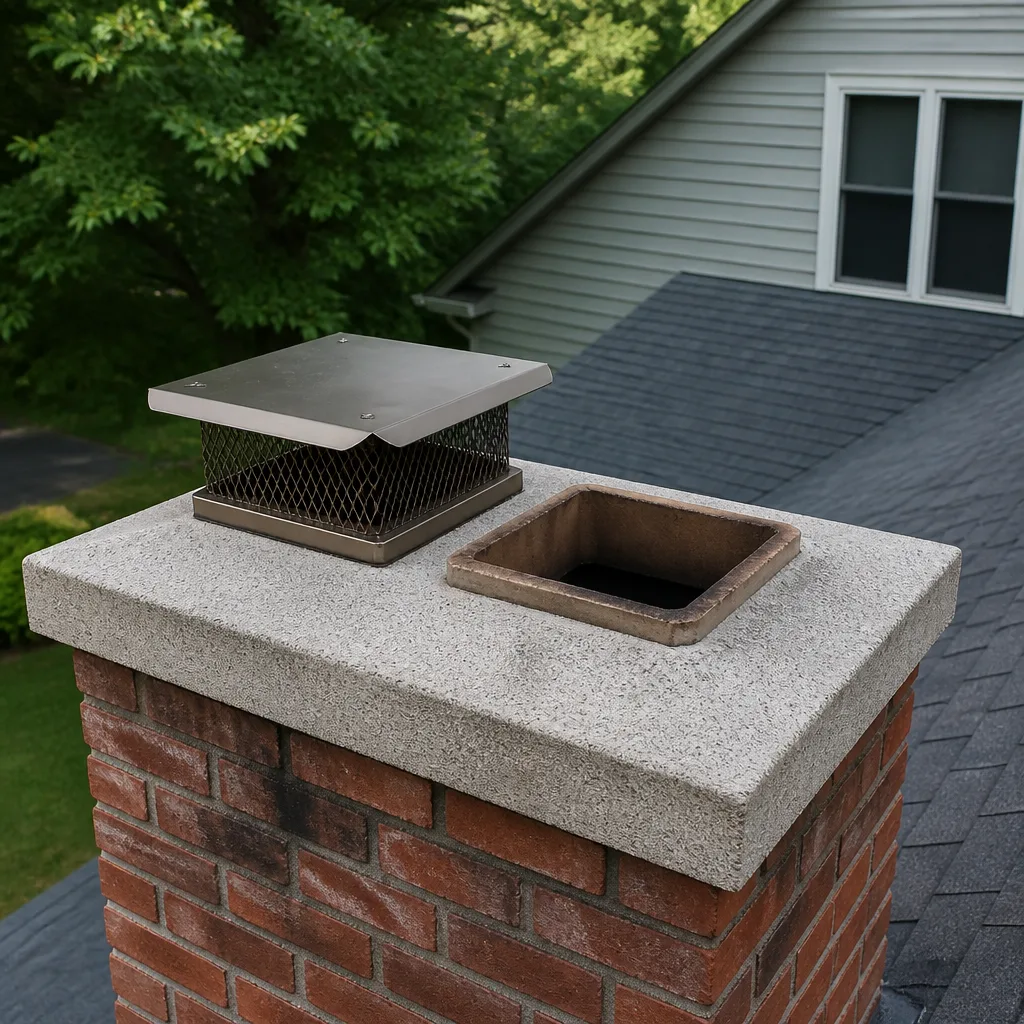
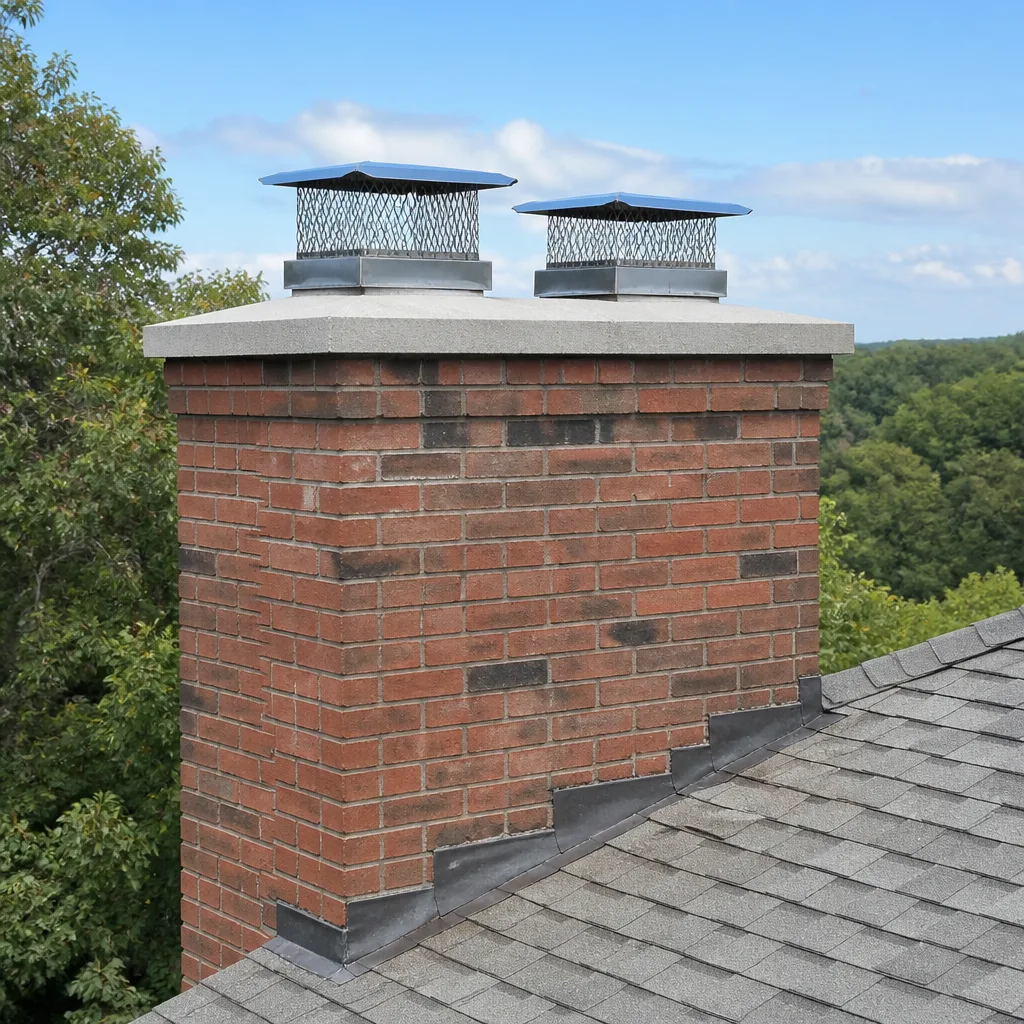
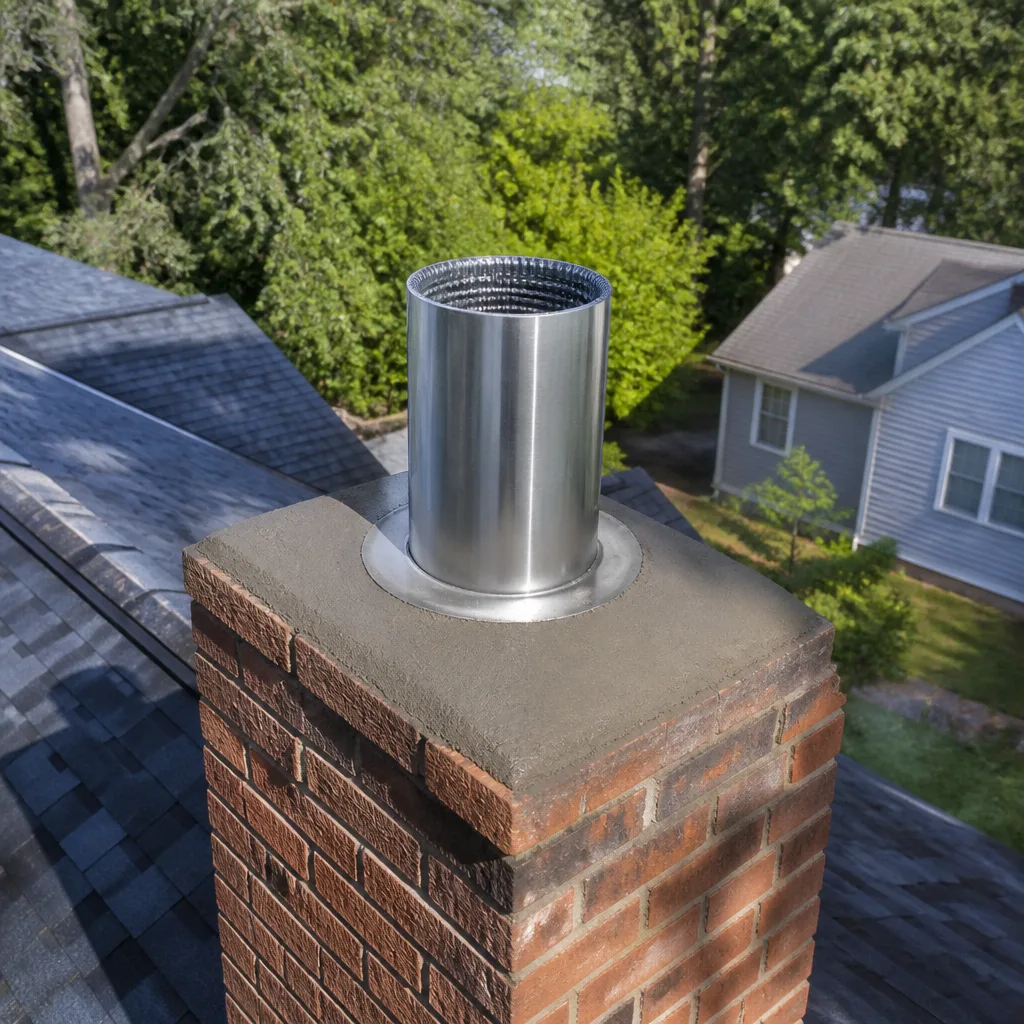
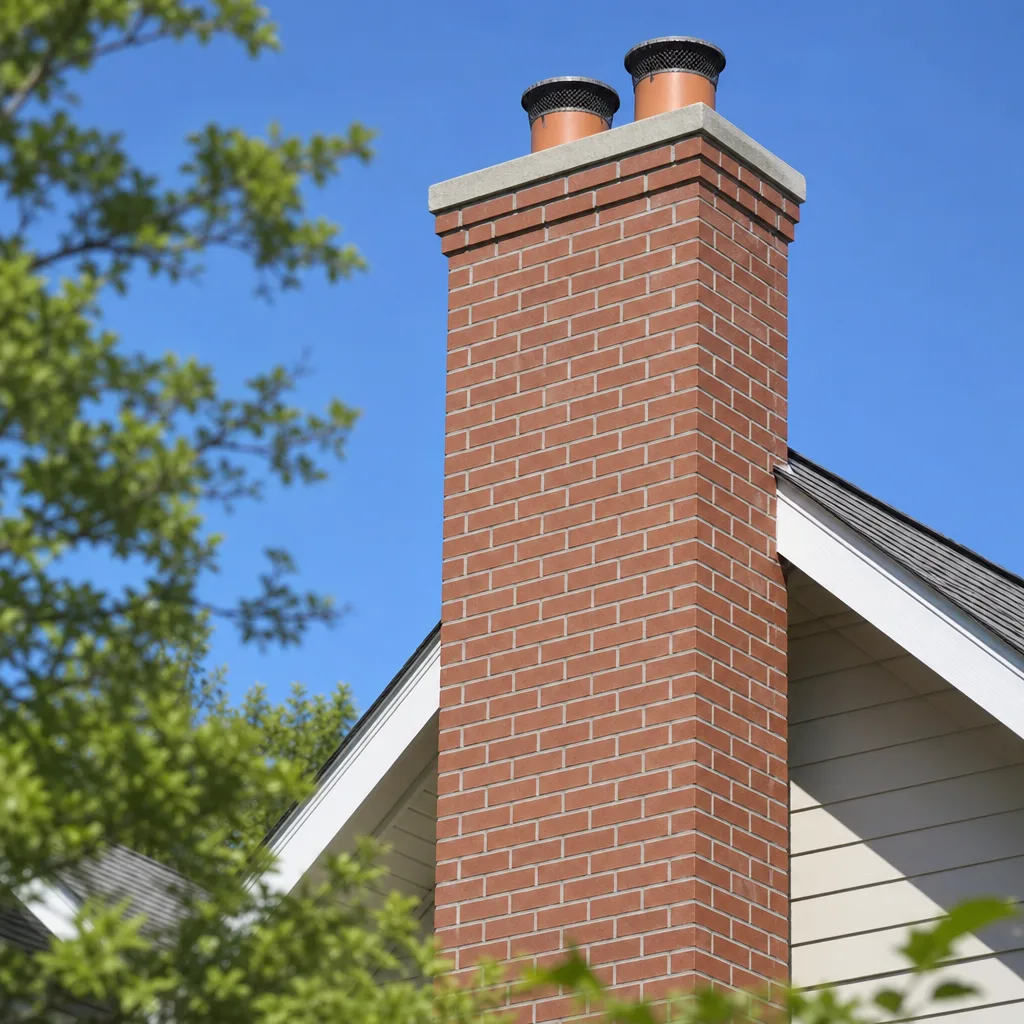
 Before
 After
After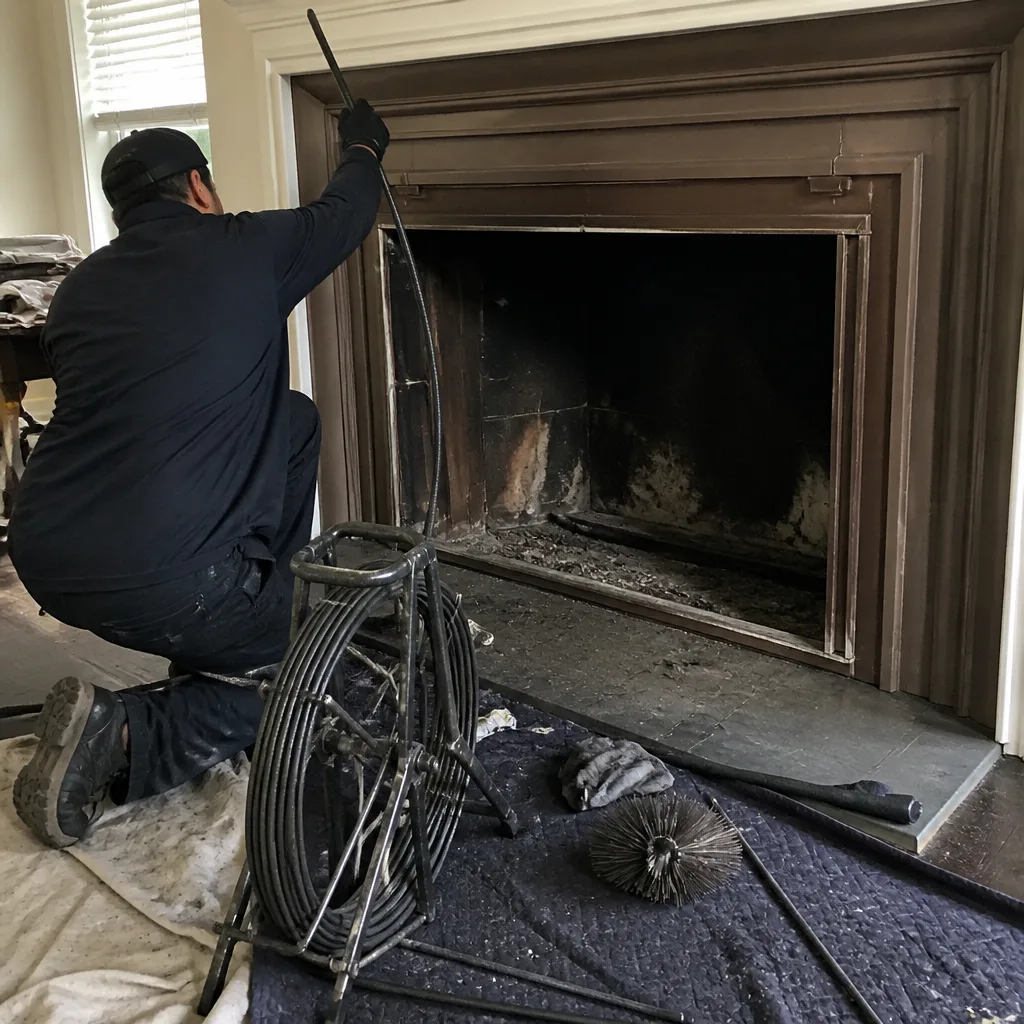 Before
 After
After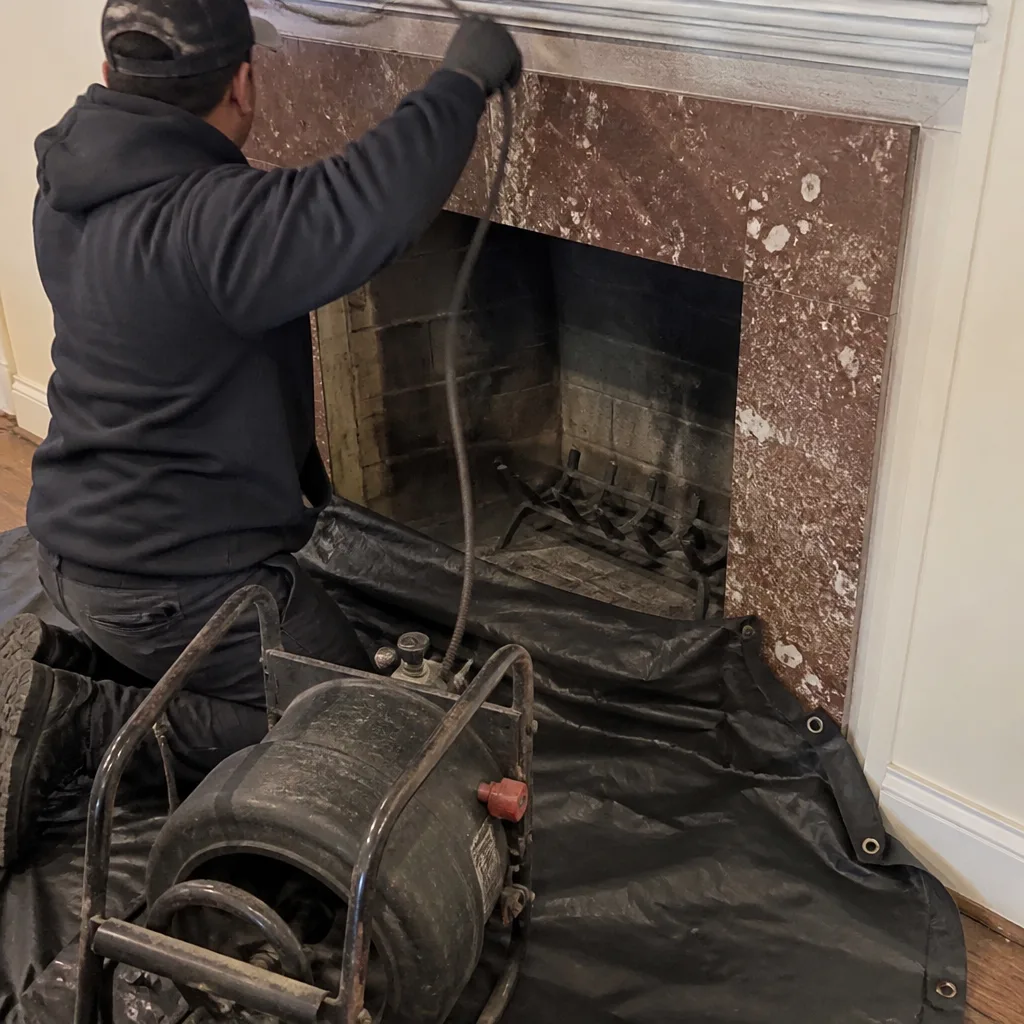 Before
 After
AfterChimney Cleaning Cost Breakdown: The Flushing Homeowner’s Reference for 2026
The $89 chimney cleaning special and the $389 chimney cleaning quoted by a different company may differ by exactly one thing: whether a camera goes down the flue and whether you get the images. Everything else on both invoices is the same brush, the same vacuum, and the same hour of labor. We wrote this guide because Flushing homeowners ask us the same question every week: why does the price swing by several hundred dollars for what sounds like the same job? For more guides & resources, see our blog. The answer is never the brush. It’s the scope, the documentation, and what the company is quietly assuming about your house. Here’s the full breakdown for 2026, line by line, so you can compare quotes on substance rather than a number on a flyer.
Quick Answer
A standard chimney sweep in Flushing costs $189 to $269 in 2026, while a full NFPA 211 Level 2 inspection with camera documentation runs $269 to $389. The difference between cheap and comprehensive is almost always whether a camera goes down the flue and whether you receive written documentation afterward. Most Flushing homes with regular wood-burning fireplaces should budget $220 to $320 annually for a proper cleaning and inspection.
Table of Contents
- Line-Item Cost Breakdown: What You’re Actually Paying For in 2026
- What Drives Price Variation in Flushing Specifically
- How to Read a Written Estimate for Hidden Scope Gaps
- The True Cost of the Cheap Inspection
- Three Price Tiers Compared: Matching Scope to Your Situation
- Common Repair Triggers Found During Flushing Cleanings
- How Often Should You Sweep? Flushing Climate and Usage Factors
- What Documentation You Should Walk Away With
BeforeAfterLine-Item Cost Breakdown: What You’re Actually Paying For in 2026
Every chimney cleaning invoice in Flushing, whether it’s $89 or $489, contains the same four or five component services. The price difference comes from whether each item is actually performed, documented, or skipped. Here is the 2026 Flushing market breakdown:
| Line Item | 2026 Flushing Price Range | What It Actually Includes |
|---|---|---|
| Standard sweep (brush + vacuum) | $149-$199 | Mechanical brushing of the flue, vacuum removal of debris, basic visual check of the firebox |
| NFPA 211 Level 1 inspection | $75-$120 (often bundled) | Visual inspection of accessible areas: firebox, damper, flue interior where visible, exterior chimney structure from ground level |
| Level 2 inspection with camera scan | $180-$280 added | Closed-circuit camera run the full flue length; detects cracks, gaps, improper liner material, hidden blockages; required after property transfer, chimney fire, or system change |
| Written report with photo documentation | $0-$75 | Some companies include it, some charge separately, some don’t offer it at all. This is the line item that separates documented sweeps from cash calls. |
| Creosote treatment (Stage 3 glazed) | $80-$150 | Chemical treatment applied when creosote has hardened to a tar-like glaze that brushing alone can’t remove |
| Chimney cap replacement | $175-$350 installed | Full cap with screen, stainless or galvanized, often detected as missing or rusted during the sweep |
| Damper repair or replacement | $150-$400 | Top-sealing dampers run higher; cast-iron throat dampers are on the lower end |
| Flue liner repair (minor) | $400-$900 | Resurfacing or refractory caulking for small cracks; does not include full reline |
At Level Two Chimney Flushing, a camera-scan inspection with written photo documentation has been the default on every visit since 2009, not an add-on you have to ask about. That means our price you see includes the documentation line item, not a “call for details” asterisk.
Here’s the structure in plain terms: a sweep clears combustion byproducts from the flue. An inspection documents the condition of that flue after it’s clean. A cheap sweep-only call does the first and skips the second, and you can’t evaluate what you can’t see. Clause 4 of the Haven Standard requires a photo record on every job, and that record is what you’ll use if you ever sell the house or file an insurance claim.
What Drives Price Variation in Flushing Specifically
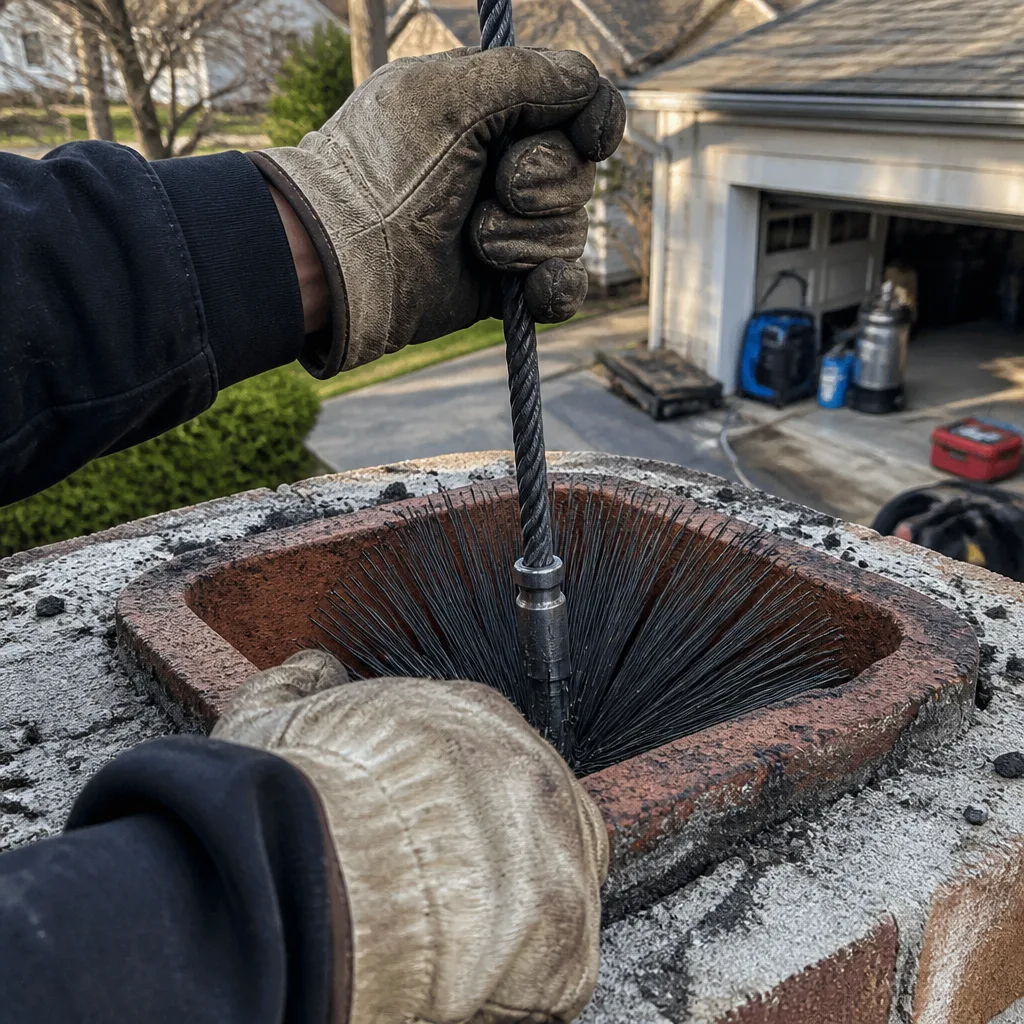
Flushing’s housing stock creates cost variables that don’t appear on national pricing guides. If you live in a detached single-family home in Queensboro Hill or a semi-attached house in Auburndale, your access and liner conditions will differ from a homeowner in Murray Hill or a co-op unit near Flushing’s downtown core. Here’s what actually moves the number:
- Roof pitch and access difficulty: Homes in Flushing with steep rooflines, especially older pre-war construction in the north end of the neighborhood, require more labor to access the crown and flue top. Add $40-$80 for steep-pitch surcharges when they apply.
- Liner material: Older Flushing homes frequently have original clay tile liners, which crack under decades of freeze-thaw cycles. A stainless steel reline (DuraFlex systems are common in this market) runs $2,500-$5,000, and that’s a repair, not a maintenance cost. The cleaning price itself doesn’t change, but the probability of the fix being flagged does.
- Multi-flue systems: Attached homes often share a chimney structure with two or three separate flues serving different floors or fireplaces. Each flue must be swept independently. A two-flue sweep in Flushing runs $229-$329 versus $189-$269 for a single flue.
- Creosote grade: Flushing’s humid summers and cold winters create ideal conditions for Stage 2 and Stage 3 creosote buildup, especially in homes burning soft woods or unseasoned wood. Chemical treatment for glazed creosote adds $80-$150 and takes an extra visit in some cases.
- Townhome and co-op rules: Some Flushing co-ops and HOAs require specific documentation after any chimney work, including a written report with photos. If your building asks for this, you’ll want a company whose standard service includes it, because otherwise you’ll pay for a second visit.
One more Flushing-specific factor: many homes in the neighborhood date from the 1920s through 1950s, and unlined flues are not rare. If your home was built before 1940 and has never had a liner installed, flag that when you book the appointment. It changes what the technician looks for and what documentation matters.
How to Read a Written Estimate for Hidden Scope Gaps
The single most useful skill for a Flushing homeowner comparing chimney quotes is this: look for what the written estimate does not say. A verbal quote means nothing. A one-line invoice that says “chimney cleaning” with a number next to it is not a scope of work. Here’s how to read between the lines:
- Look for the word “sweep” versus “cleaning.” A sweep is a mechanical brushing of the flue. A “firebox cleaning” is just the part you can see from the living room. If the estimate doesn’t say “flue brushing” or “mechanical sweep,” assume the flue isn’t being touched.
- Ask where the inspection is in the scope. If an estimate says “inspection included,” ask which level. NFPA 211 defines Level 1 as a visual check of accessible areas. Level 2 includes camera access to the full flue interior and is what’s required after a property changes hands. If the written estimate doesn’t say “Level 2” or “camera scan,” it’s a Level 1.
- Check the documentation line. Does the estimate say anything about a written report or photo record? If not, you’re paying for someone’s eyes and not getting the evidence. We’ve had customers come to us with a competitor’s invoice that was just a credit card receipt. That’s not documentation.
- Look at what the warranty excludes. A “lifetime warranty” on a liner is standard from manufacturers like DuraFlex and Olympia Chimney, but the labor warranty is what matters. If the written warranty doesn’t specify who covers labor in year three, assume it’s not covered.
- Count the access line. If the estimate references “roof access,” does it specify roof type? A written scope should always state how the technician reaches the flue top. In Flushing, that’s usually a ladder to the roof or through a rooftop hatch for co-ops. If access isn’t stated, access isn’t priced, and surprise charges follow.
Haven Standard Clause 1 requires a written price, written scope, and written warranty before work begins. That’s not a customer-service nice-to-have. It’s the only way you can compare one company’s $189 to another company’s $389 and know whether the difference is real. If a company won’t put the scope on paper before the work starts, walk.
The True Cost of the Cheap Inspection
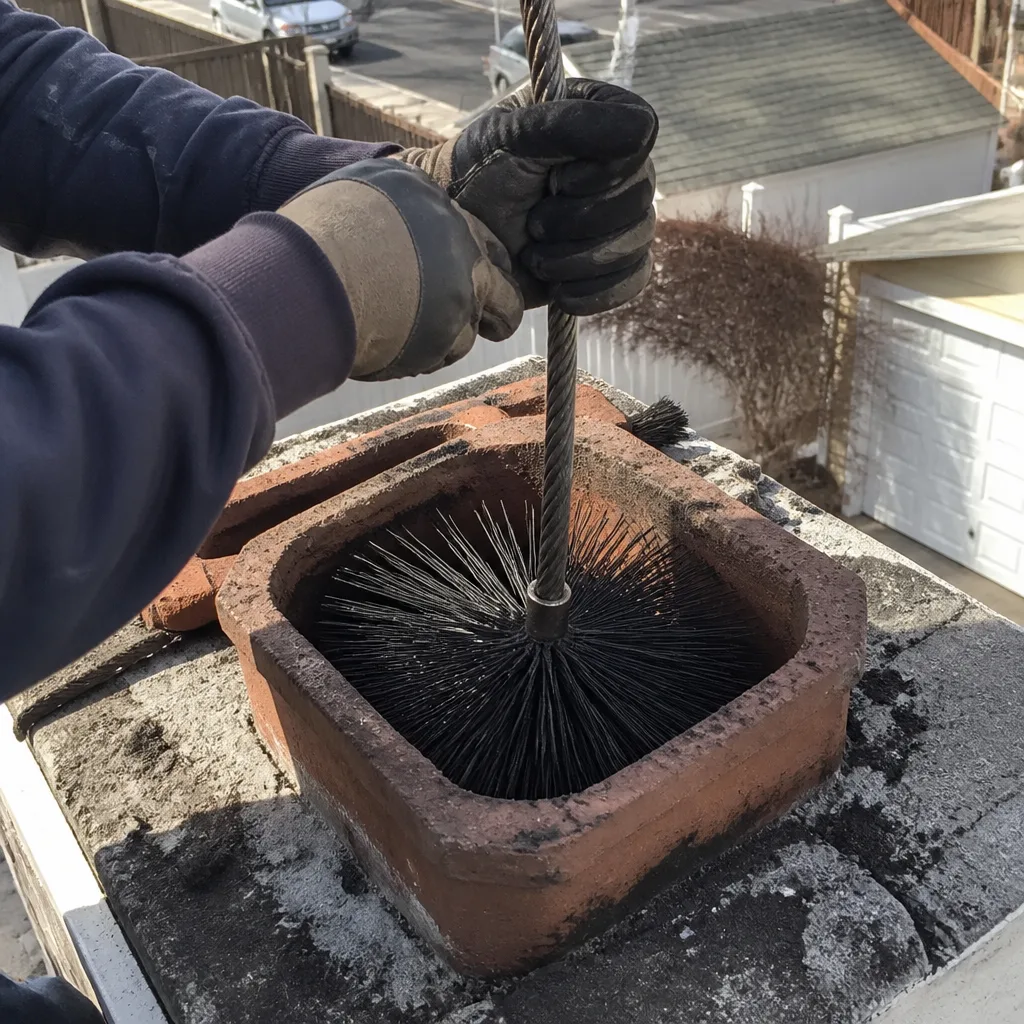
Here’s the pattern we see at our Level Two Chimney Flushing home team’s calls: a Flushing homeowner skips the camera documentation for two or three years, then calls us because smoke is backing into the living room or a neighbor mentioned water staining on the party wall. The camera goes down, and what we find is not a maintenance issue anymore. It’s a repair.
Undetected liner cracks are the most expensive silent failure. A cracked flue liner lets heat and carbon monoxide migrate into the interstitial spaces of an attached home, and the repair cost after years of neglect is not $300. It’s $4,000 to $6,000 for a stainless reline between the party walls, sometimes with masonry work added on. The same crack caught in year one would have been a $400-$900 surface repair using a HeatShield resurfacing product.
Missing chimney caps are another pattern. A cap costs $175 to $350 installed. Without one, Flushing rain and snow enter the flue, deteriorate the mortar joints, and cause spalling on the interior brick. By the third winter, you’re looking at a partial rebuild of the flue interior, which starts around $1,200 and climbs from there.
The average Flushing homeowner who skipped camera documentation over a 36-month window ends up paying $1,200 to $2,800 in repairs that would have been either prevented or caught at a smaller stage. That’s not a scare number. It’s the arithmetic of delayed visibility. When we can show you the crack on the screen during the visit, you’ll make a different decision than when a technician says “looks fine from down here.”
Three Price Tiers Compared: Matching Scope to Your Situation
Flushing quotes cluster into three tiers, and each tier is right for a different homeowner. The mistake is defaulting to the lowest number without understanding what tier you’re buying.
Tier 1: The Sweep-Only ($89-$149)
- Mechanical brushing of the flue
- Firebox vacuum
- No camera scan
- No written report or photo record
- Usually cash or check preferred
Right for: A homeowner in a newer Flushing condo building where the HOA handles structural chimney maintenance and you just need the annual accumulation cleared before a season of use. If you own the chimney, this tier is insufficient.
Tier 2: The Standard Sweep + Inspection ($189-$269)
- Everything in Tier 1
- NFPA 211 Level 1 visual inspection
- Basic written summary of findings
- Cap and damper check
- Creosote grade noted
Right for: A homeowner who uses the fireplace fewer than 15 times per year and has maintained a consistent annual sweep schedule. Level 1 is sufficient when you have a documented baseline from a recent Level 2.
Tier 3: Full Level 2 with Camera Documentation ($269-$389)
- Everything in Tier 2
- Closed-circuit camera scan of the full flue interior
- Photo record delivered with the written report
- Written scope and written warranty before work starts
- Documentation accepted by insurers and real estate transactions
Right for: Anyone who just bought a Flushing home, anyone who hasn’t had the chimney inspected in two or more years, anyone planning to sell within 24 months, and anyone who burns wood more than twice a month during heating season. This is the standard we’ve operated under since 2009, and it’s the only tier where you can see what we see. Check our Chimney Cleaning & Sweep in Flushing page for the current flat rate.
Common Repair Triggers Found During Flushing Cleanings
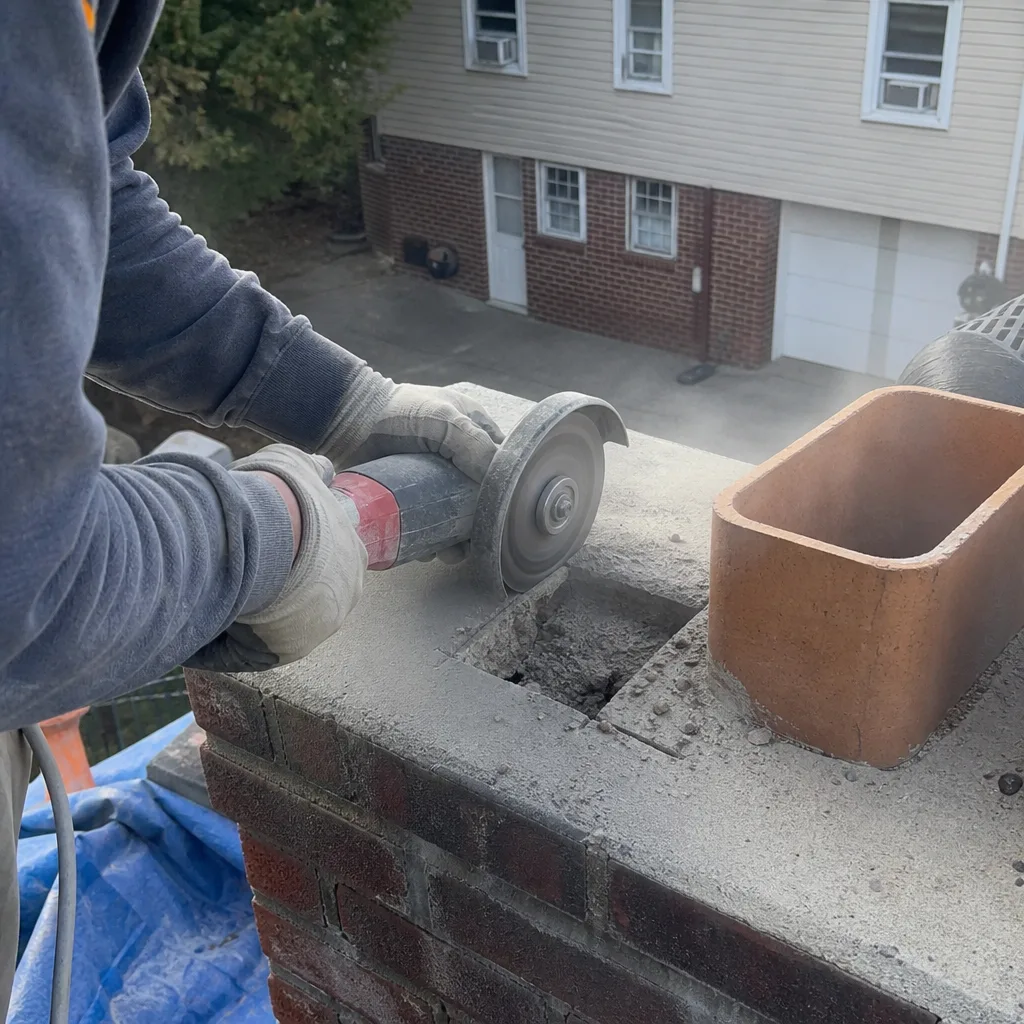
A cleaning is often where larger problems first surface, and Flushing’s housing conditions make certain findings more likely than elsewhere. Learn the Chimney Cleaning Warning Signs: A Flushing Homeowner’s Reference Guide for what to watch for. Here’s what our technicians encounter most frequently in the neighborhood’s older housing stock:
- Spalled brick at the crown and wash: Flushing’s freeze-thaw cycles cause the concrete crown to crack, water enters the masonry, and brick faces pop off. Crown repair runs $800-$1,500. A full chimney crown rebuild with proper overhang runs $1,500-$2,500. Caught early, a waterproofing treatment runs $300-$500.
- Deteriorated clay tile liner: Original clay liners in 1920s-1950s construction crack under thermal stress. Minor resurfacing with HeatShield runs $900-$1,500. Full stainless reline with a Famco or Olympia Chimney liner starts at $2,500 and runs higher for multi-story attached homes.
- Missing or rusted damper components: Cast-iron dampers in older Flushing homes warp after years of heat exposure. Replacement with a top-sealing damper runs $350-$700 installed, and it also cuts energy loss through the flue in winter.
- Improper cricket installation on roof-side chimneys: Chimneys wider than 30 inches where they penetrate the roof require a cricket, a small peaked saddle that diverts water around the structure. We find missing crickets regularly in Flushing’s older attached homes, and water migration follows. Cricket fabrication and installation runs $600-$1,200.
- Flashing failures: Galvanized flashing corrodes, especially on north-facing Flushing exposures. Replacement with copper flashing runs $500-$900 for a standard single-chimney installation.
None of these repairs is urgent the day it’s found, with one exception: a cracked liner in an active wood-burning fireplace should be addressed before the next season of use. Everything else can be planned. A Chimney Repair in Flushing quote is always written and itemized, and you’ll have the camera images to show any contractor you want a second opinion from.
How Often Should You Sweep? Flushing Climate and Usage Factors
The national recommendation is one sweep per year for wood-burning fireplaces in active use. Flushing’s specific conditions argue for the same or slightly more, depending on your burn rate and wood type. Follow our Chimney Cleaning & Sweep Maintenance Checklist for Flushing Homeowners for the practical guidance:
- Burning more than one cord per season: Sweep twice per season, once before the first fire in autumn and once mid-season around January. Creosote accumulates fastest in cold, slow-burning fires, exactly what Flushing’s January temperatures produce.
- Occasional use, under 15 fires per year: Annual sweep and Level 1 inspection is sufficient, with a Level 2 every three years to maintain a documented baseline.
- Gas fireplace only: Sweeping is not required annually, but an annual safety check of the venting and a period cleaning of the logs and burner assembly is wise. Our Fireplace Services in Flushing team handles gas and wood-burning units.
- New home purchase in Flushing: NFPA 211 requires a Level 2 inspection after any property transfer, regardless of what the seller or agent says. If you closed on a Flushing home and didn’t get one, schedule it before your first burn.
Skipping a sweep is not a neutral decision. One season of creosote accumulation is manageable. Two seasons creates Stage 2 creosote, which is harder to remove and increases chimney fire risk. Three seasons is where we find glazed creosote, the tar-like coating that requires chemical treatment and sometimes multiple visits. The $220 annual sweep is cheaper than the $500 Stage 3 remediation, and a fraction of what a chimney fire costs whether the fire department comes or not.
What Documentation You Should Walk Away With
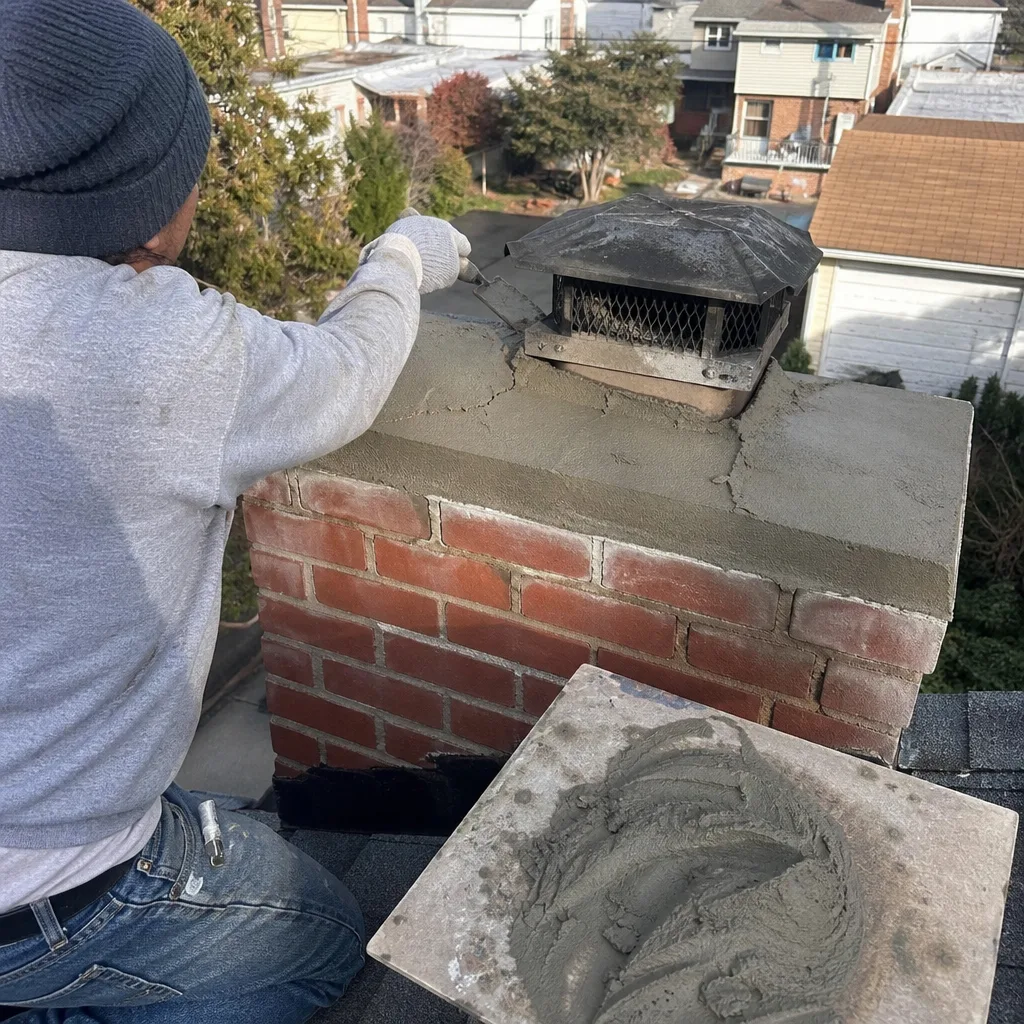
After any chimney service in Flushing, you should have these four items in hand before the technician leaves the property:
- Written scope of work completed: Not a verbal summary. A written list of what was swept, what was inspected, and what was found.
- Photo record: At minimum, images of the flue interior before and after cleaning, plus any defects found. Clause 4 of the Haven Standard has required this on every job since 2009. If a company offers you a camera scan but no images afterward, ask why the images exist only for their eyes.
- Written price that matches the quoted price: No surprise line items added after the work is done. The written estimate you approved should match the invoice line for line.
- Written warranty on any repair work: Using Olympia Chimney or Famco components, manufacturer warranties apply, but the installer’s labor warranty is separate. If labor warranty isn’t written, it’s a risk you’re carrying indirectly.
This documentation is not just for your own records. Flushing co-op boards, insurance adjusters, and home inspectors all accept a documented photo record as evidence of chimney condition. Without it, you’re in a he-said-she-said position. With it, you’re in a position to make decisions.
Common Mistakes to Avoid
- Choosing the sweep based on the flyer under your windshield wiper. The $89 special does not include an inspection, documentation, or often even the flue brushing. The price is the scope, and the scope is thin.
- Assuming your home inspector’s “chimney looks fine” note was an inspection. Home inspectors are generalists. A Level 2 camera scan goes where no home inspection goes.
- Waiting for a smell or a smoke problem before calling anyone. By the time symptoms show, the repair has usually been developing for two to three seasons. You want the camera before the symptom.
- Not knowing what kind of liner your Flushing home has. If you burn wood and don’t know whether your flue is clay, stainless, or unlined, you don’t know the risk profile of your own house. A Level 2 inspection answers this in 20 minutes.
- Accepting a verbal quote. In any trade, a verbal quote is not a quote. If it’s not written, it didn’t happen.
- Choosing a contractor without checking if they’re licensed and insured for chimney work in New York. Ask for the license number. It should be on their page and on your written estimate.
- Neglecting the cap because “the last owner never had one.” The last owner also sold you the house. A missing cap is a $200 problem turning into a $2,000 problem on a Flushing weather schedule.
When to Call a Professional
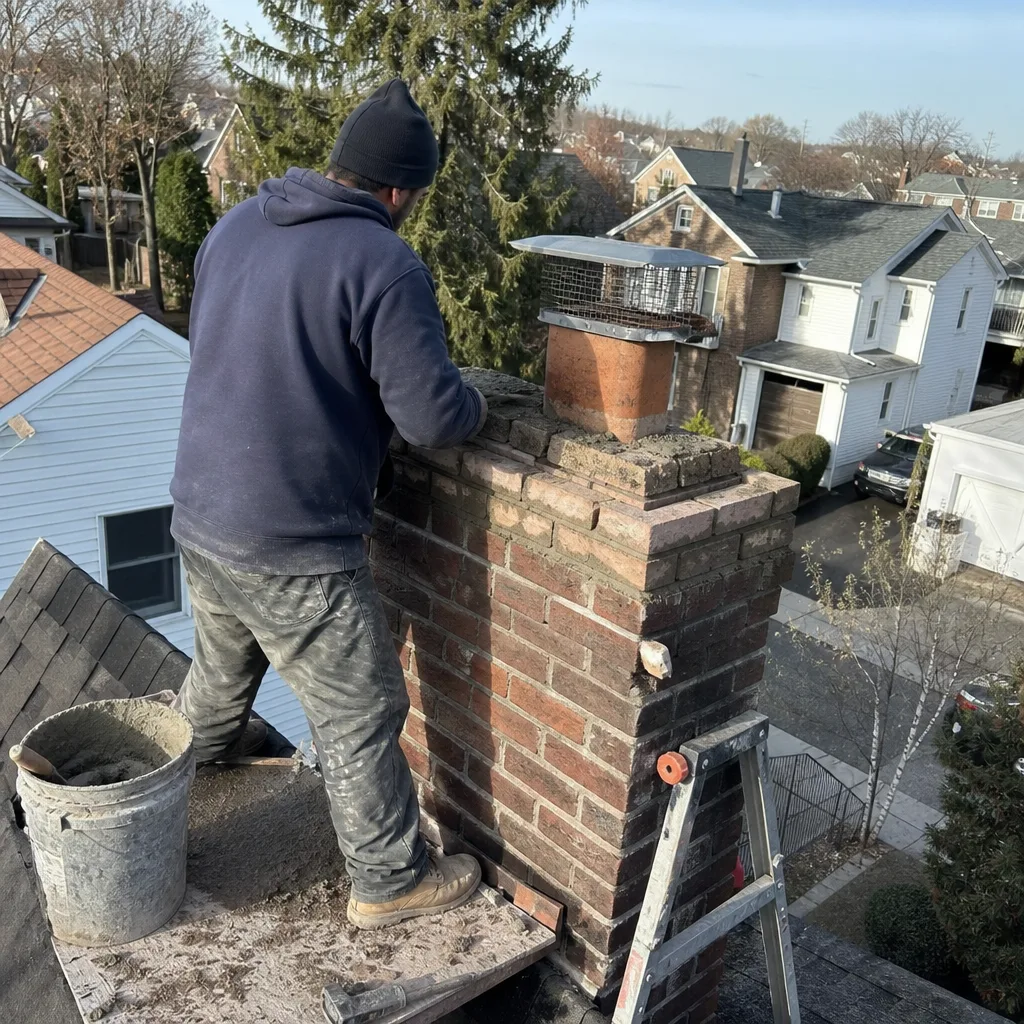
Call a professional if you’ve lived in your Flushing home for more than two years without a chimney inspection, if you just closed on a property and the seller couldn’t produce a documented chimney report, if you can see spalled brick or missing mortar from the ground, if you smell a wood-fire odor when the fireplace hasn’t been used in days, or if your energy bills climb noticeably in winter with no other explanation. For regulatory details, see Chimney Cleaning Permits, Codes & Inspections in NY: What You Need to Know. These are not DIY diagnostics. Chimney work involves heights, masonry, and combustion byproducts, and a trained technician with a camera sees what you can’t from a ladder in the living room. Level Two Chimney Flushing offers free estimates in Flushing - call (516) 240-9191.
Frequently Asked Questions
A standard chimney sweep in Flushing costs $189 to $269 in 2026, and a full Level 2 inspection with camera documentation runs $269 to $389. The price range exists because some quotes include documentation and some don’t. If you need an exact quote for your home, call (516) 240-9191 and we’ll give you a written price.
Annually for wood-burning fireplaces in active use, and twice per season if you burn more than a cord of wood between October and March. Flushing’s cold, damp winters create faster creosote accumulation than drier climates. If you use the fireplace only occasionally, an annual sweep with a Level 1 inspection and a Level 2 every three years is a reasonable schedule.
A Level 1 inspection is a visual check of accessible areas: the firebox, damper, and visible flue interior. A Level 2 inspection includes a closed-circuit camera run the full flue length and is what’s required after a property transfer or any system change. The camera is what finds hidden liner cracks, and it’s included as standard on every Level Two Chimney Flushing visit.
Yes, if your Flushing home doesn’t have one, water is entering the flue every time it rains, and freeze-thaw cycles will do the damage silently over several seasons. A chimney cap runs $175 to $350 installed. A spalled flue interior from years of water entry costs several thousand to repair.
The creosote advances from Stage 1 to Stage 2 and eventually Stage 3 glazed creosote, which requires chemical treatment and is a serious chimney fire risk. Every skipped year makes the eventual cleaning more difficult and more expensive, and the hidden structural problems that a camera would have caught get another year to deepen. Call (516) 240-9191 for an estimate and we’ll tell you what we find.
Most policies cover sudden events like a chimney fire or lightning strike, but exclude gradual deterioration like spalling, flashing failure, or liner cracks. That’s why the documented photo record matters: a written record of annual maintenance supports an insurance claim when something sudden does occur. If your insurer asks for proof of regular maintenance, a Level 2 report with images is what you’ll want.
The Bottom Line
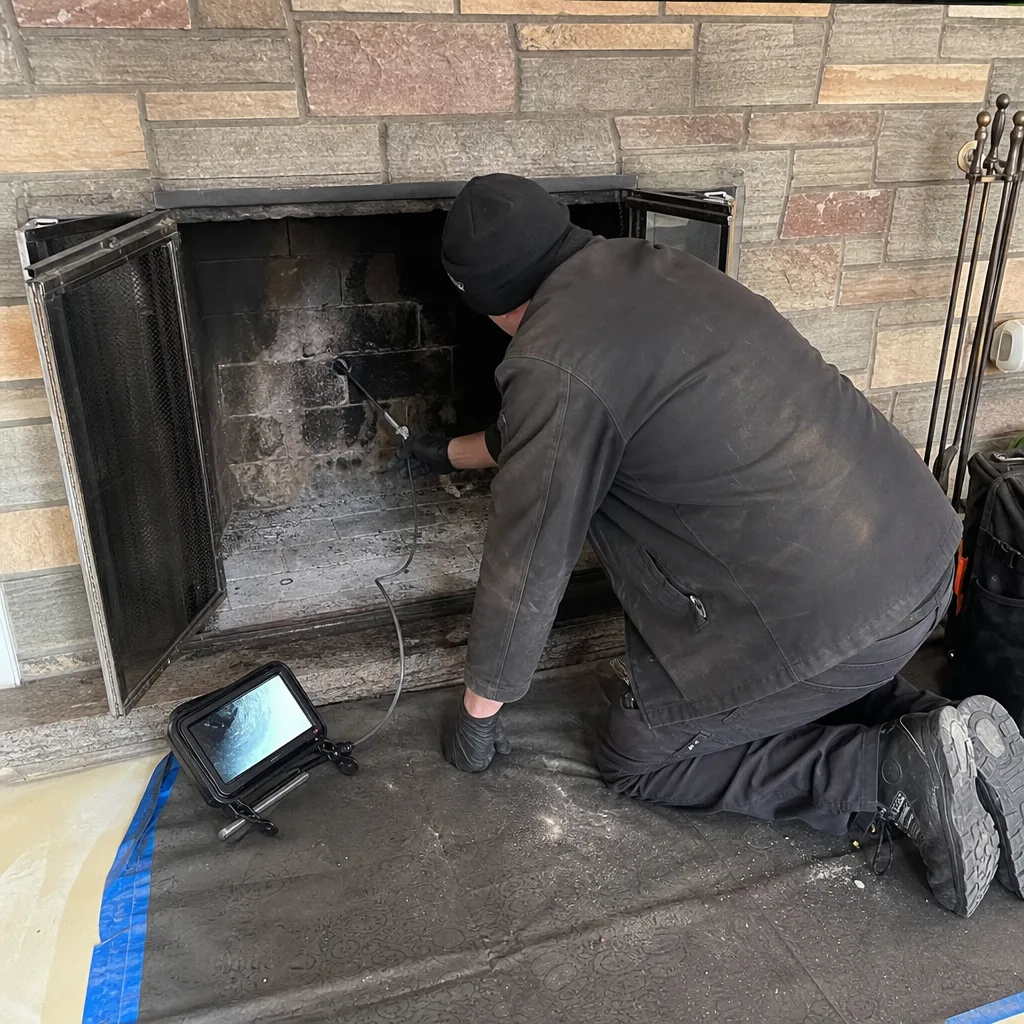
Chimney cleaning prices in Flushing vary by $300 or more because the scope of what’s included is never defined in the advertised number. The difference between a $99 flyer special and a $389 documented Level 2 inspection is the camera, the written report, and the photo record you keep for insurance and resale. You don’t have to guess. Ask for a written scope before anyone starts, keep the documentation, and schedule the sweep before burning season, not after. Level Two Chimney Flushing has operated under the Haven Standard since 2009 with over 38,000 chimneys inspected and cleaned, every one with a written price before work started and a documented record when it was done. We’ll put everything in writing, you decide with evidence.
Call (516) 240-9191 for a free estimate, or bring us any competitor’s written quote for a free second opinion.
Written by Corrine Halstead, Owner at Level Two Chimney Flushing, serving Flushing since 2009.