
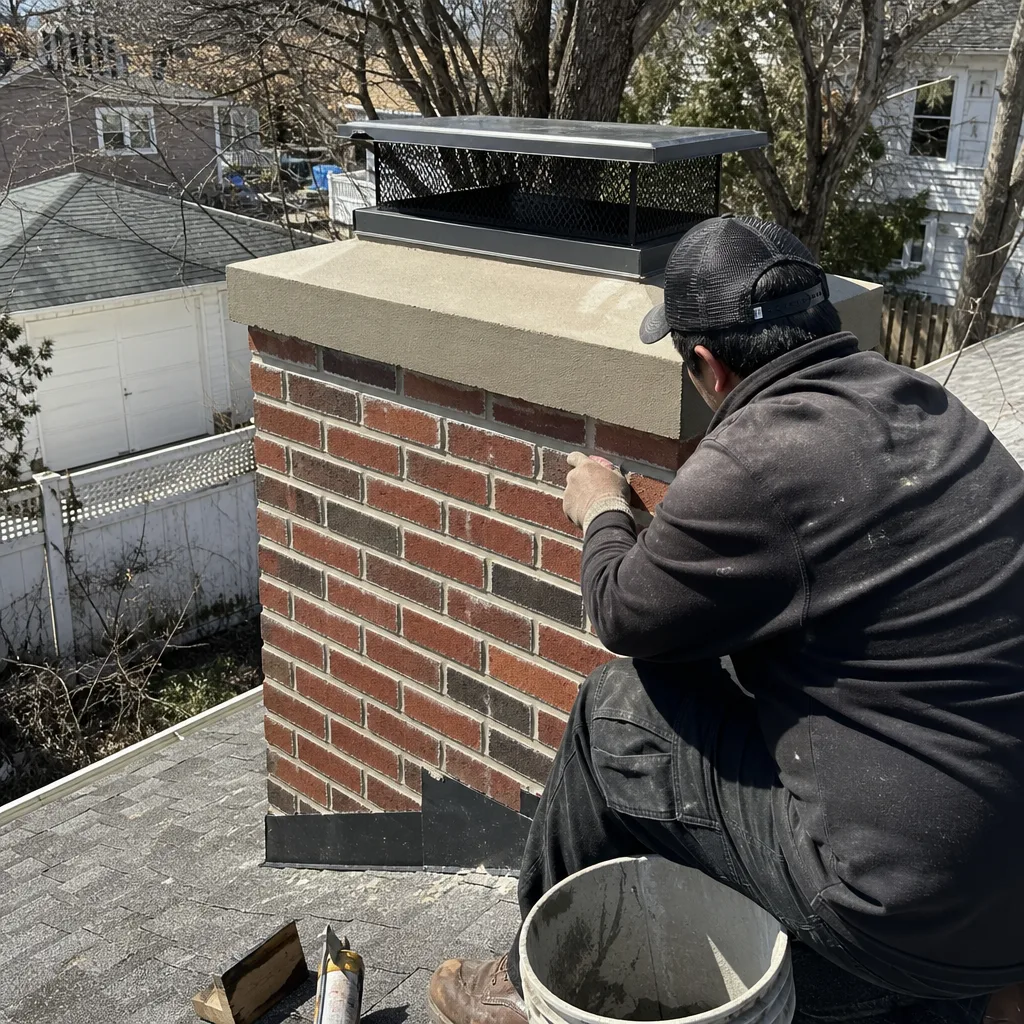
Level 1 sweep and inspection to the NFPA 211 annual standard - flue, crown, cap, and flashing checked and photographed
Chimney sweep logs do not sweep chimneys. They loosen some creosote - which then falls where a brush and vacuum still have to collect it.
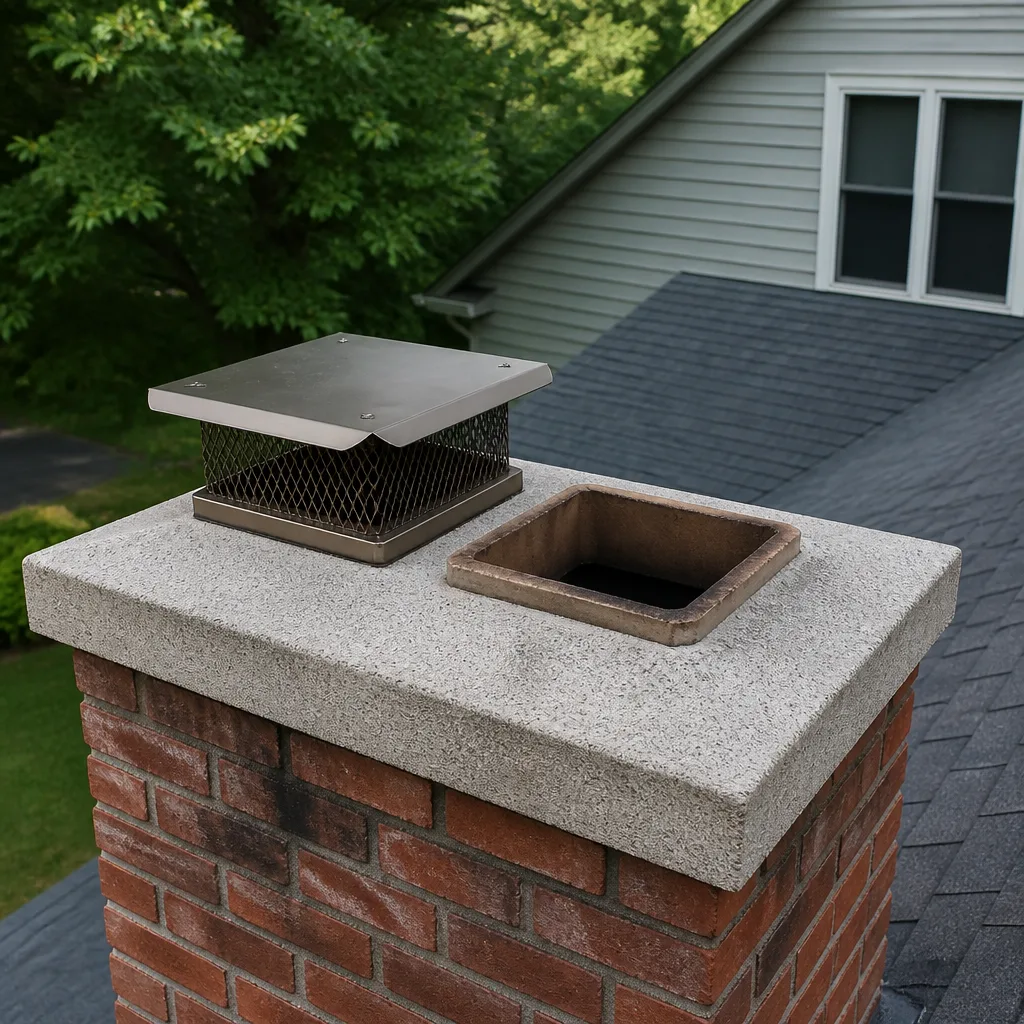
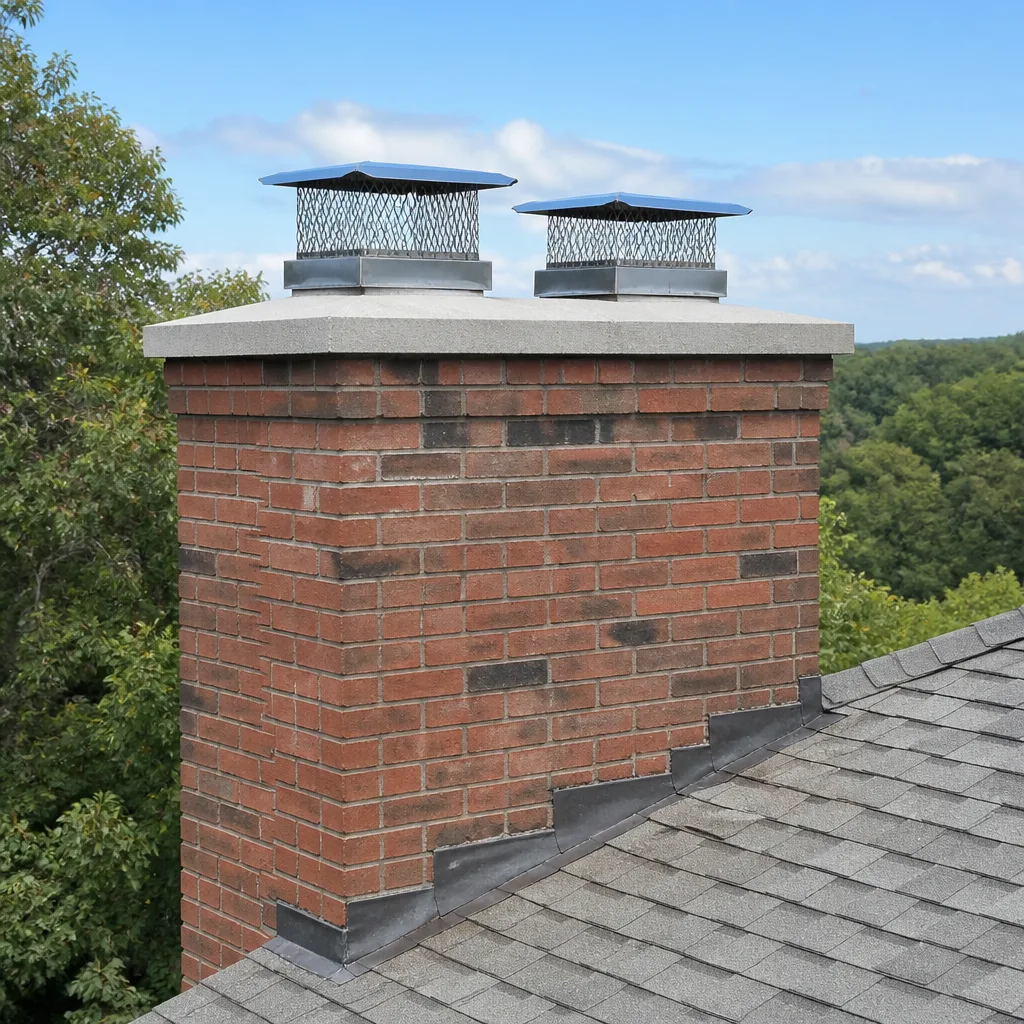
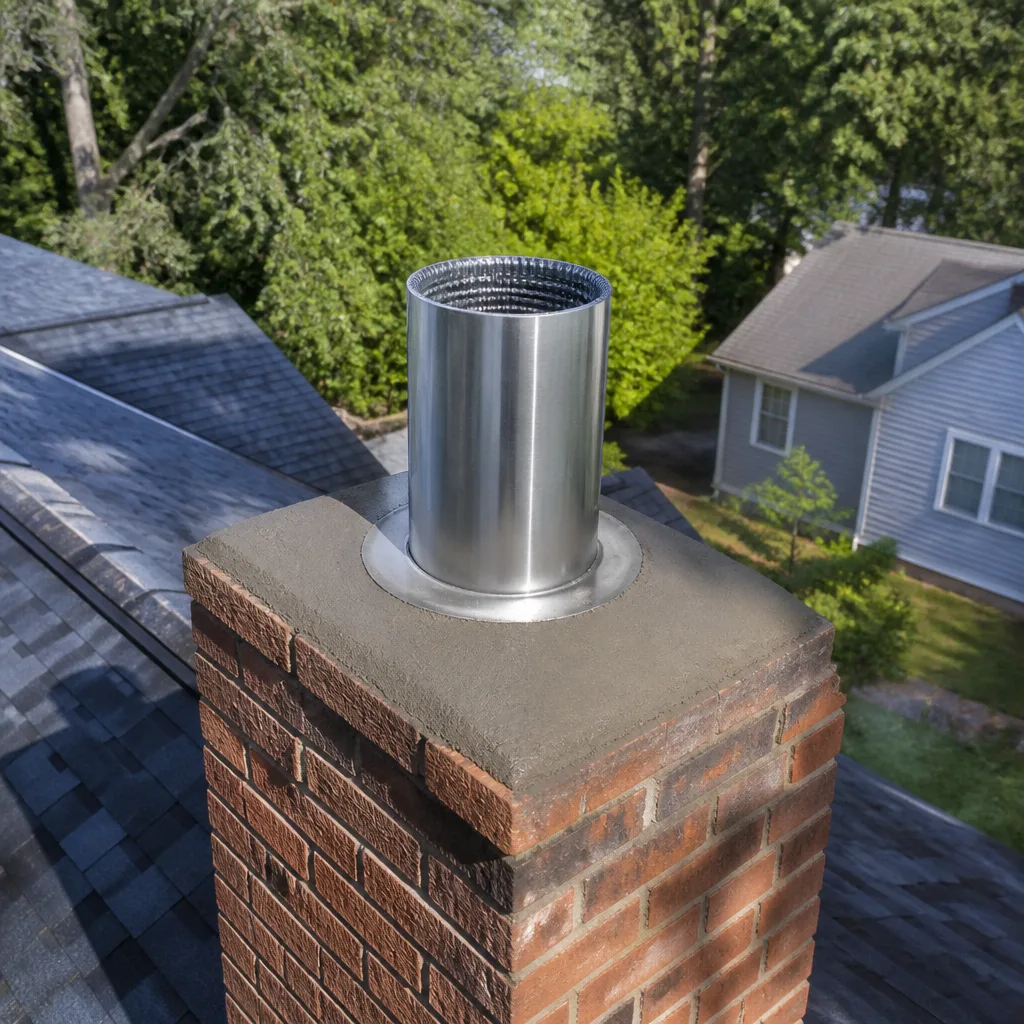
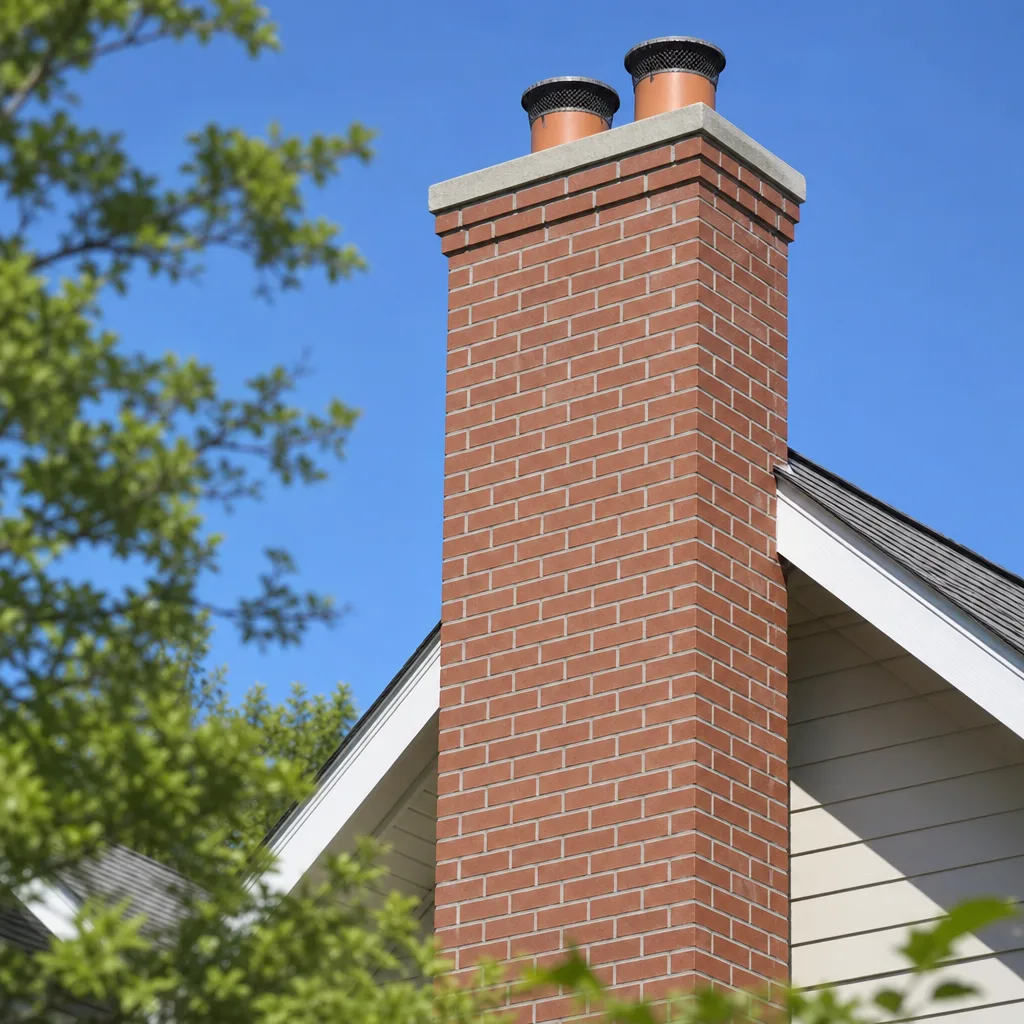
 Before
 After
After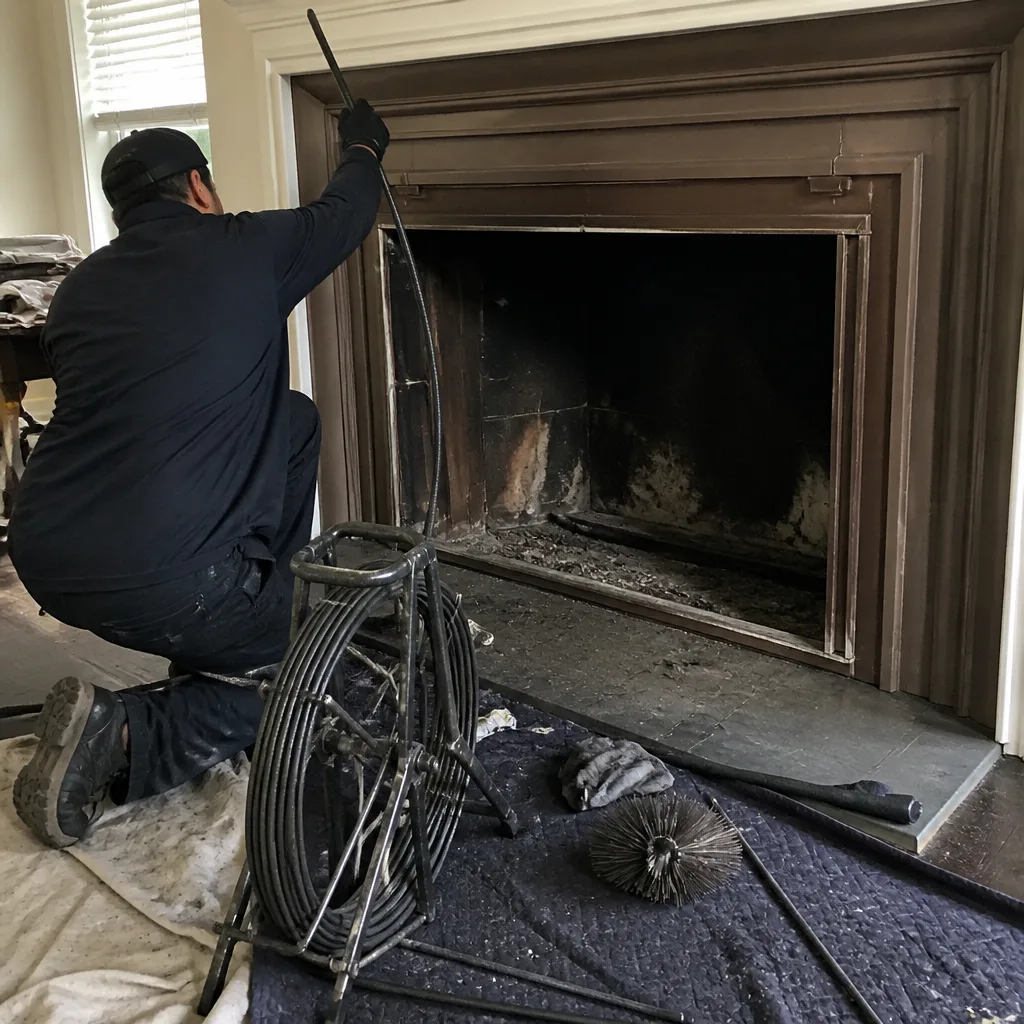 Before
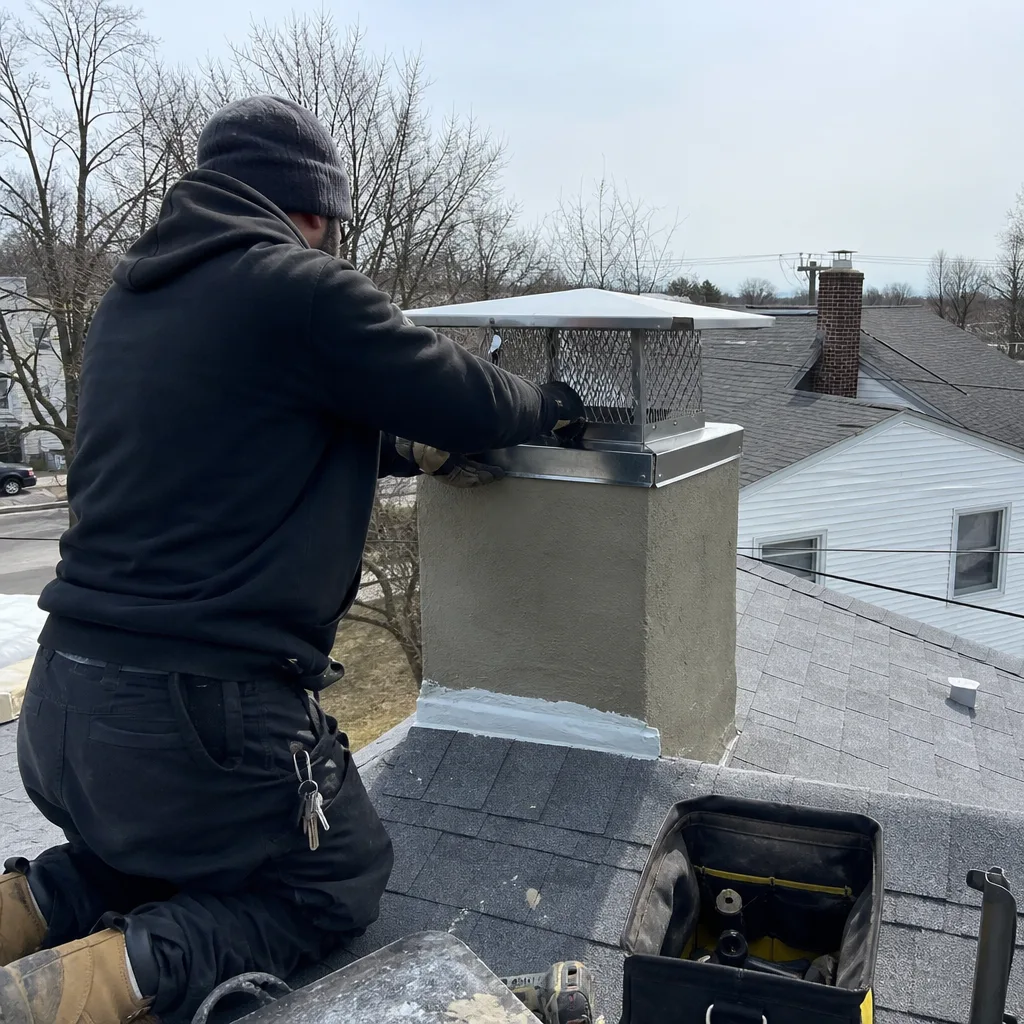 After
After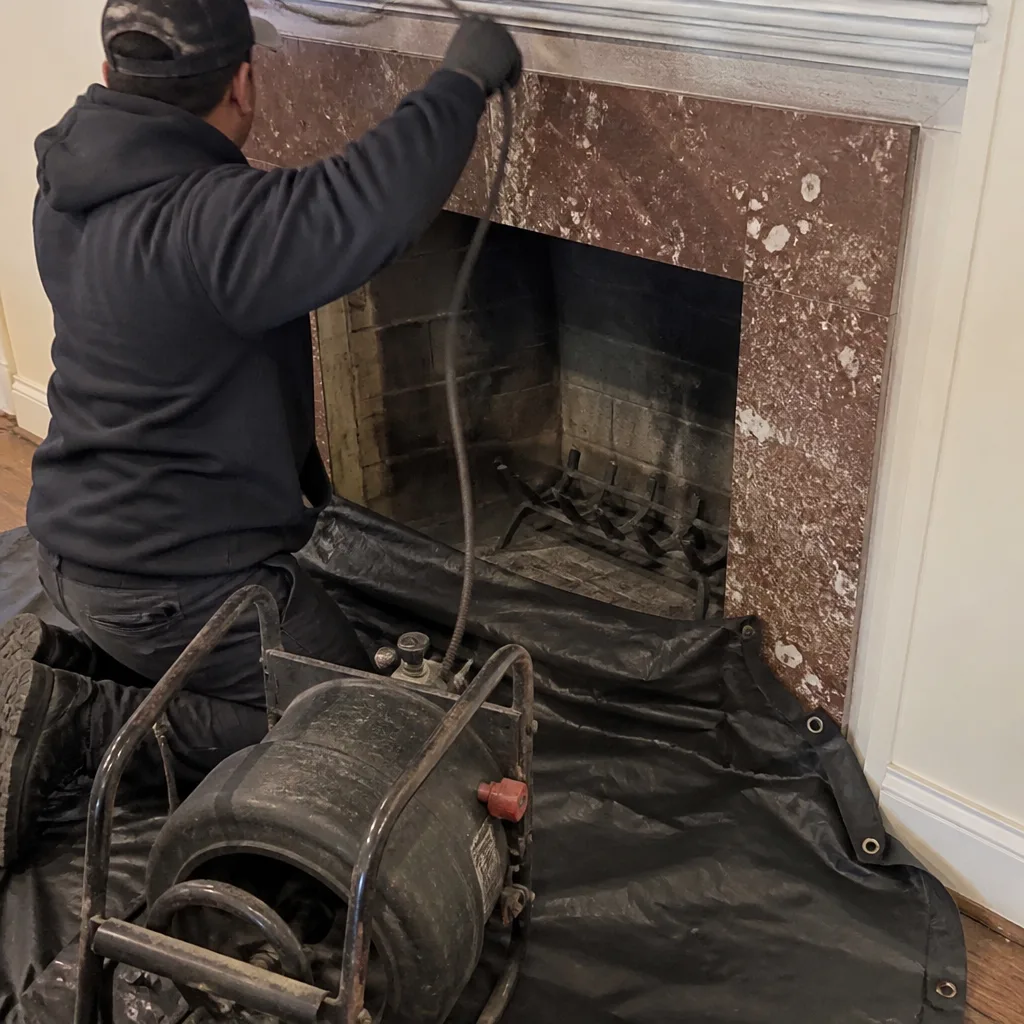 Before
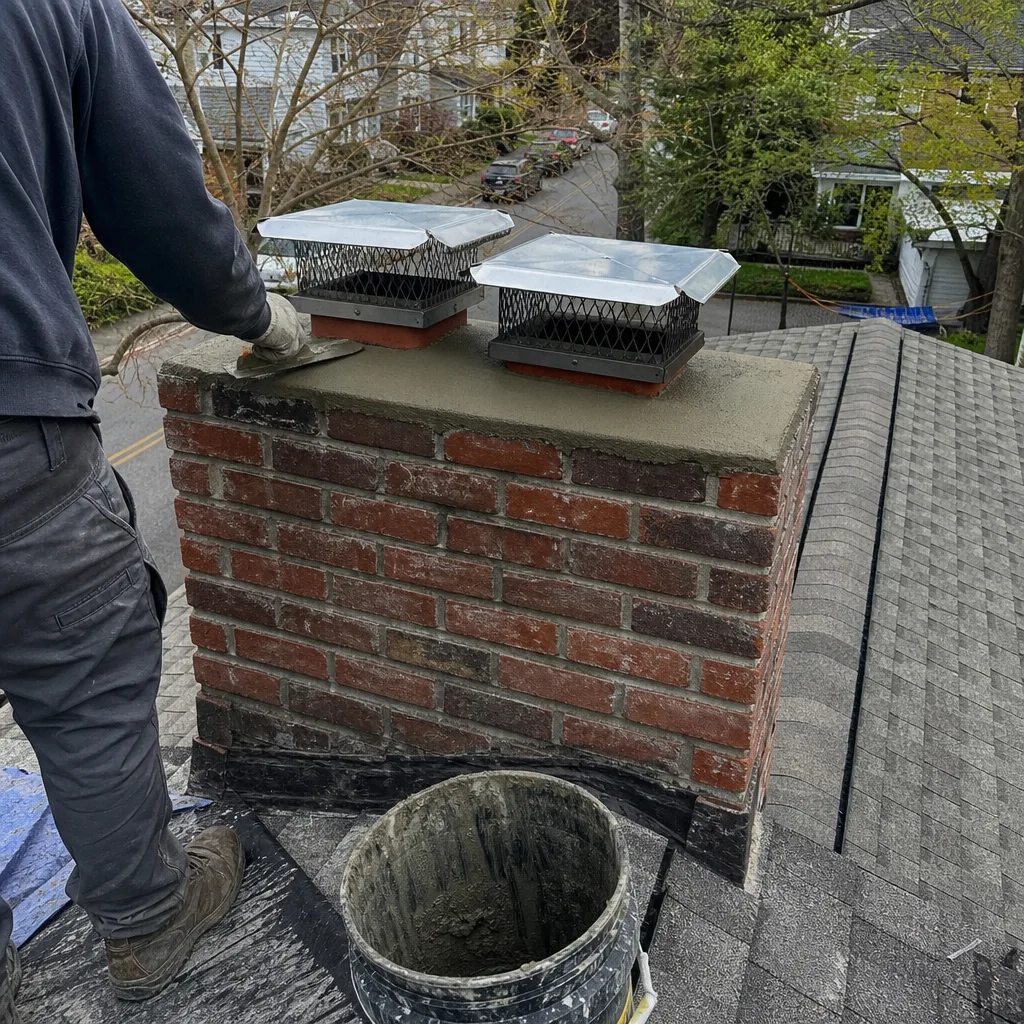 After
AfterCreosote Removal in Flushing, NY
Creosote removal in Flushing typically runs $180 to $600, depending on how much has built up and which class of deposit is present. Most standard Level 1 Inspection cleanings are handled in a single visit; heavier Class II or Class III buildup requires chemical treatment and a follow-up sweep before we call the flue clean. If you’re smelling something sharp and oily when the fireplace runs, or you haven’t had the flue swept in more than a year, there’s a real chance creosote is already past the point where a basic brushing will handle it.
Level Two Chimney Flushing has been documenting, cleaning, and clearing Flushing’s fireplaces and wood-burning stoves since 2009 – more than 38,000 inspections and cleanings across Queens and the surrounding boroughs, every one of them quoted in writing before work started. You can reach us directly at (516) 240-9191. A live person answers, around the clock, every day of the year.
Creosote removal is part of what we do under our full Chimney Cleaning & Sweep in Flushing service. But when the buildup is heavy, glazed, or has already caused a small flue fire, it becomes its own job – one that requires chemical pre-treatment, specific rotary tools, and a camera scan before and after to document that the liner is clear. That’s what this page covers.
When You Need Creosote Removal
Creosote is the byproduct of incomplete combustion. Every fire leaves some behind. The problem is that Flushing’s housing stock skews toward older row houses, semi-detached brick colonials, and pre-war co-op buildings where the original clay-tile flue liners have been in continuous use for 50 to 80 years. Narrowed, cracked, or offset tiles create turbulence in the flue that drops flue gases before they fully exit – and that means faster accumulation. Here’s what should send you to the phone:
- A strong, oily or tar-like smell near the fireplace, especially in summer. Flushing’s humid July and August weather draws that odor through the firebox. It usually means Class II or Class III creosote is coating the upper flue and absorbing ambient moisture.
- A visible layer of dark, flaky, or shiny residue inside the firebox or on the damper. Flaky black deposits are Class I. A hard, tar-like glaze is Class III – that one doesn’t brush off and should not be lit again until it’s treated and removed.
- You burned a lot of fires last winter and haven’t had the flue swept yet. NFPA 211 calls for annual inspection and cleaning. In Flushing, where many homes run their fireplaces hard from October through March, a year of heavy use can push a clean flue to a moderate buildup before the next season starts.
- Your smoke doesn’t draft well – it rolls into the room instead of pulling up the flue. A creosote-restricted flue reduces the effective diameter and kills the draft. The fire smokes, deposits accelerate, and the liner wears faster.
- You’ve already had one small flue fire. Sometimes a homeowner hears a rumbling sound in the chimney, or sees sparks above the cap, and doesn’t know what happened. A small creosote fire can crack clay-tile liners without producing any visible external damage. If this sounds familiar, a camera scan is not optional.
- The last company swept without a camera. A brush pass removes loose deposits, but it doesn’t reveal glazed creosote bonded to the tile surface, and it doesn’t document what’s underneath. If you have no photo record of your liner’s current condition, the effective inspection age is zero.
Our Creosote Removal Process
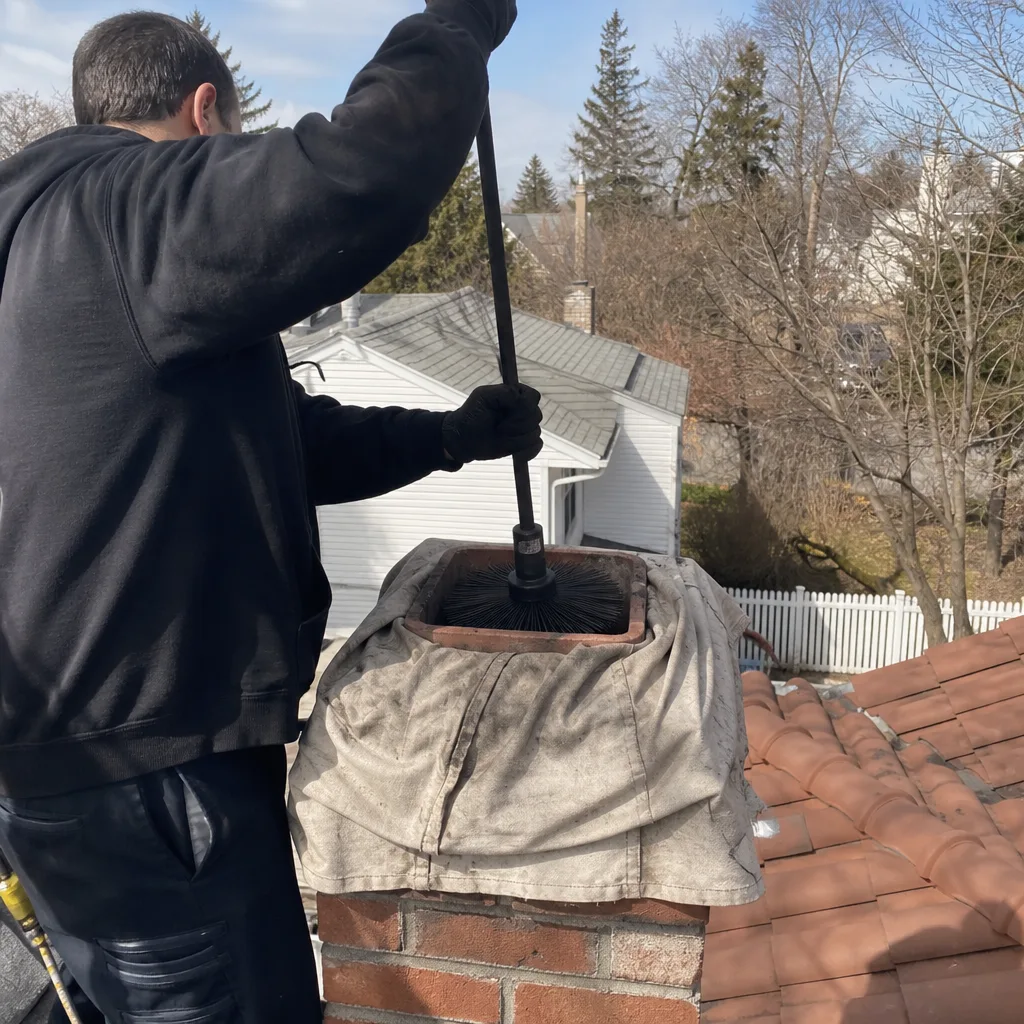
We don’t start with brushes. We start with the camera. Every creosote removal visit at Level Two Chimney Flushing follows the same documented sequence – partly because NFPA 211 Level 2 Inspection requires it, and partly because we’ve been doing this long enough to know that skipping the scan at the start means missing things that matter at the end.
- Written Price Before We Touch Anything. The technician reviews the flue dimensions, the fuel type, and the reported symptoms. A written scope and price are on the table before any equipment comes out. Haven Standard Clause 1 – no surprises after the tech is already in your living room. If the camera reveals something that changes the scope, we stop, show you what we found, and get written approval before we proceed.
- Pre-Removal Camera Scan (NFPA 211 Level 2). We run the camera down the full length of the flue liner – smoke chamber, smoke shelf, tile joints, cap connection, the works. This tells us exactly what class of creosote we’re dealing with, whether the liner has cracks or deterioration that change the removal approach, and whether the firebox or smoke chamber is holding pockets of compressed deposit. That scan is documented and becomes part of your photo record under Haven Standard Clause 4.
- Chemical Pre-Treatment for Class II and Class III Deposits. Glazed or tarry creosote (Class II and III) cannot be safely removed by brushing alone. We apply a creosote-modifying chemical – typically a certified powder or spray formulation – directly to the deposits. The chemistry converts the glaze to a more brittle, brushable state over 8 to 12 hours (for spray applications on a next-visit protocol) or, in some cases, via controlled low-fire activation. We’ll tell you which approach applies to your specific flue on the day of the visit.
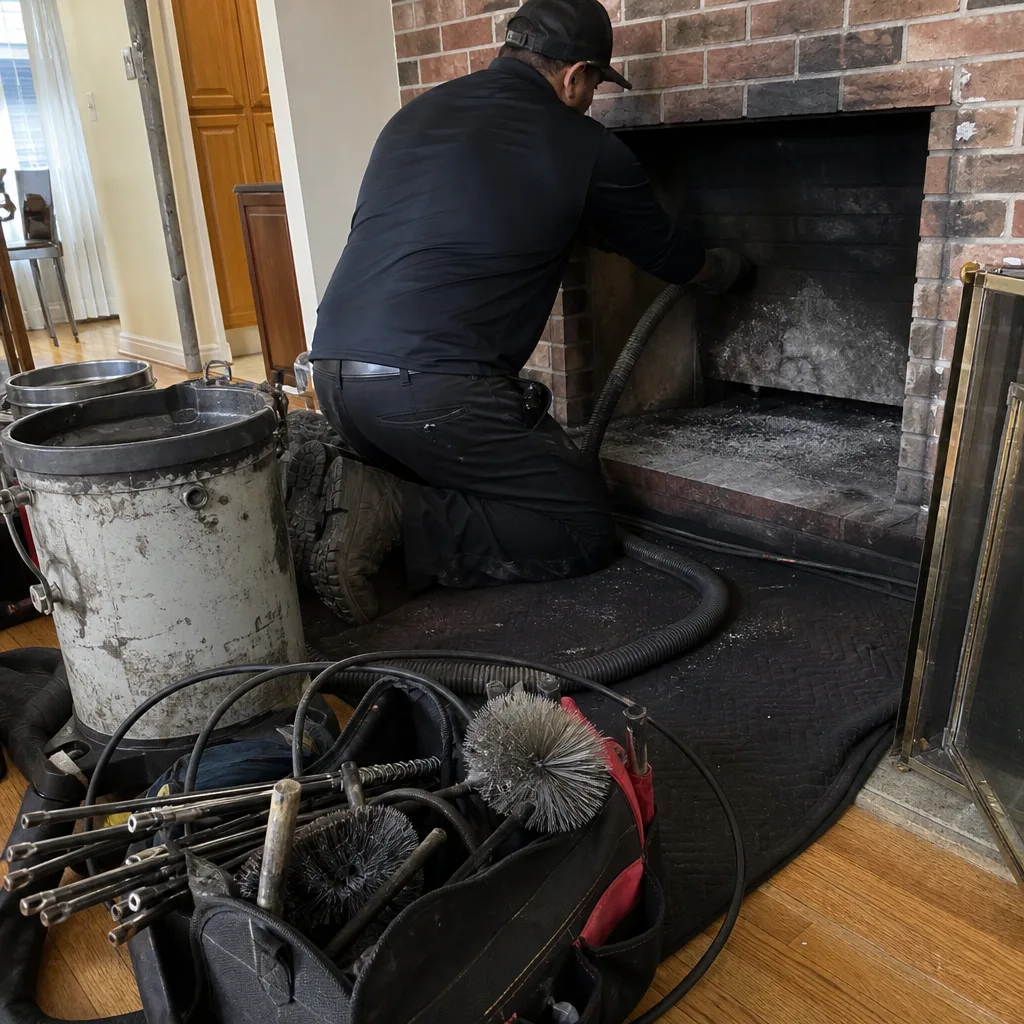
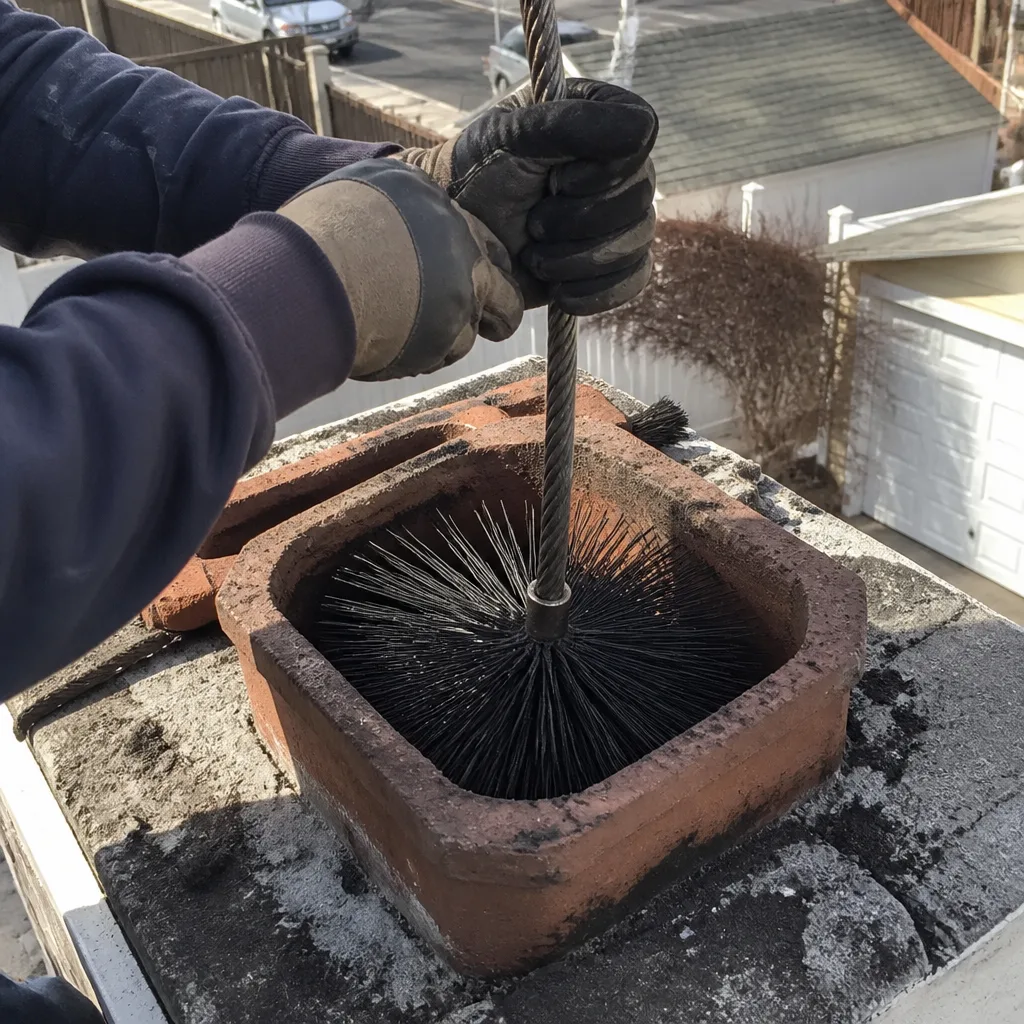
- Mechanical Removal – Rotary Cleaning System and Hand Tools. Once the deposit is properly conditioned, we use a rotary cable system with the correct brush size for your liner diameter to systematically break and evacuate the material. The firebox is sealed with a drop cloth and a negative-pressure vacuum system to keep your living space clean. We work from above and below where liner access permits.
- Firebox, Smoke Chamber, and Smoke Shelf Cleaning. Creosote doesn’t stay in the liner. The smoke chamber above the damper and the smoke shelf behind it are frequent deposit points, especially in older Flushing homes where the corbeled brick smoke chamber hasn’t been parged smooth – rough masonry grabs and holds creosote faster than a glazed surface. We hand-clean these areas as part of the same visit.
- Post-Removal Camera Scan and Documented Photo Record. We run the camera again after the work is done. You get before-and-after photo documentation of the liner condition, confirmation that the flue is clear, and a written record of what was done. If we find a crack or spalling in the liner that was hiding under the creosote – something that happens more often than you’d expect in Flushing’s older clay-tile flues – we document it on the spot and give you a written scope and price for repair before we leave.
BeforeAfterCreosote Removal Pricing in Flushing
Creosote removal costs in Flushing vary by the severity of the buildup and the liner condition underneath. The ranges below are what we actually charge – not teaser rates that climb once the tech sees the flue.
| Creosote Class | Description | Typical Price Range (Flushing) |
|---|---|---|
| Class I | Loose, flaky deposits – standard annual buildup | $180 – $260 |
| Class II | Hardened or tar-like deposits, partial glaze | $280 – $420 |
| Class III | Fully glazed, thick, or concentrated deposit – chemical treatment required | $420 – $600+ |
| Multi-visit protocol | Class III requiring chemical dwell and return sweep | Quoted as a package in writing at the first visit |
What affects the final price in Flushing specifically:
- Flue height and access. A Flushing row house with a two-story chimney and a hatch-style cleanout is a different job than a three-story semi-detached with no cleanout and a tight chimney breast. Taller flues take longer to brush and more time to camera-scan thoroughly.
- Liner material and diameter. Older 8×12 clay-tile liners are common in Flushing homes built before 1960. Tile joints deteriorate and creosote bonds more aggressively to rough surfaces than to smooth stainless steel. If the liner is already cracked, the removal approach changes.
- Number of fireplaces or appliances sharing the chimney. Some Flushing homes have a fireplace on one floor and a gas appliance on another sharing the same chase. Each flue is a separate scope.
- Whether a liner repair or reline is needed. If the scan reveals that Class III creosote has masked a cracked liner, we’ll give you a written price for a home-page-referenced liner repair or full reline using DuraFlex or HeatShield materials before we ask you to decide anything.
Every estimate is written before work begins. That’s not a marketing line – it’s Haven Standard Clause 1, and it’s how we’ve run every one of our 38,000+ jobs. Call (516) 240-9191 and we’ll give you a same-day appointment window and a written price when the tech arrives – no obligation to proceed.
We also offer a Free Second Opinion on any written estimate from another company. Bring us the quote and we’ll camera-scan the flue and compare our findings, in writing, at no charge.
What Happens If You Don’t Remove Creosote
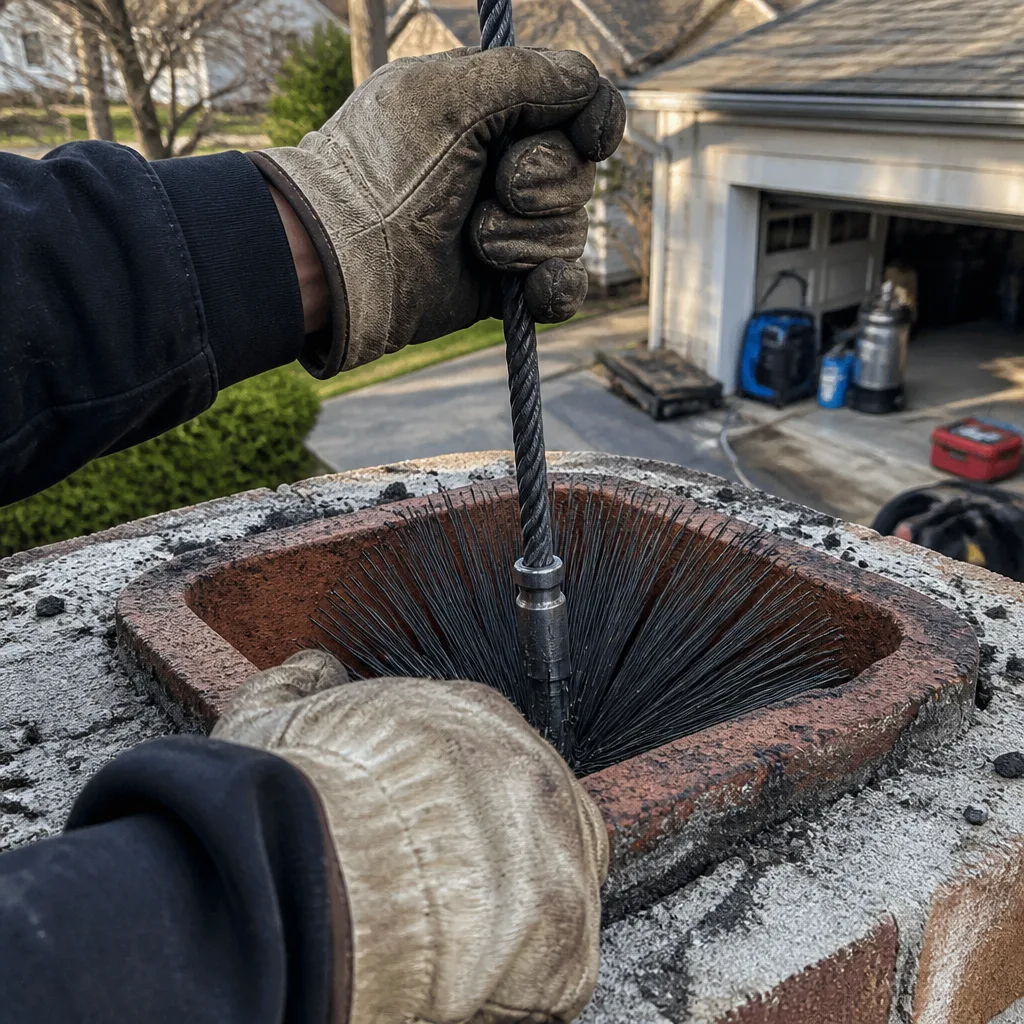
This section is plain information, not alarm. Creosote at Class I is manageable. Left to accumulate to Class III, it becomes a structural and fire risk that neither a brush pass nor a hasty sweep will address.
The National Fire Protection Association’s data on chimney fires consistently identifies creosote as the primary ignition source. In a Flushing-area row house, where chimney walls are often shared party walls between two homes, a flue fire doesn’t stay contained. Clay-tile flue liners that have absorbed years of creosote can spall, crack at the joints, and allow combustion gases – including carbon monoxide – to pass into the living space or into the wall cavity between units.
We’ve inspected Flushing chimneys after small flue fires where the homeowner heard a brief rumble and saw smoke briefly above the cap, then assumed everything was fine. In several of those cases, the liner had hairline cracks at the tile joints that were invisible without a camera – and in at least three cases, those cracks were sitting directly behind a shared wall. The camera scan makes that visible. A flashlight inspection does not.
Class III creosote also doesn’t respond to standard brushing. Attempting to remove glazed deposits by brushing without chemical pre-treatment can fracture and dislodge chunks that block the flue or compact below the damper, making the problem worse. This is not a safe DIY project at the Class II or III stage. The tools, the chemistry, and the confined-space conditions require trained technicians. We’re not saying that to protect our business – we’re saying it because we’ve seen what happens when it goes wrong.
Key Takeaways
- Creosote removal in Flushing costs $180 to $600+ depending on the buildup class – a written price is given before any work starts.
- Class I deposits brush out in a single visit. Class II and Class III require chemical pre-treatment and are quoted as a package.
- Every visit includes a before-and-after camera scan (NFPA 211 Level 2) and a documented photo record under Haven Standard Clause 4.
- Flushing’s older clay-tile flue liners accumulate creosote faster than smooth stainless steel and require careful post-removal inspection for underlying cracks.
- A 365-Day Done Right Promise backs every job – if the flue isn’t clean and clear, we make it right.
- A Free Second Opinion is available on any written competitor estimate.
FAQs – Creosote Removal in Flushing
How much does creosote removal cost in Flushing, NY?
Creosote removal in Flushing runs $180 to $260 for Class I deposits, $280 to $420 for Class II, and $420 to $600 or more for Class III glazed buildup that requires chemical treatment. Multi-visit protocols for severe Class III cases are quoted as a single written package price at the first visit – you’ll know the total before agreeing to anything. Call (516) 240-9191 to schedule, and the written price will be on the table when the technician arrives.
What is Class III creosote and why is it dangerous?
Class III creosote is a fully glazed, tar-like deposit that bonds to the flue liner surface and cannot be removed by brushing alone. It ignites at a lower temperature than the deposits it forms from, burns extremely hot when it does, and is the primary cause of chimney fires that crack liners and spread to surrounding structure. In Flushing’s older clay-tile flues, a Class III deposit burning off can fracture tile joints along the full height of the chimney – damage that only shows up clearly on a camera scan. If you suspect Class III buildup, don’t run another fire until the flue is inspected.
Can you remove creosote in one visit, or does it take multiple appointments?
Class I and most Class II deposits are handled in a single visit. Class III glazed creosote requires a chemical pre-treatment step – either a controlled low-fire activation or a spray-dwell protocol that needs 8 to 12 hours before the follow-up mechanical removal. We’ll tell you at the first visit which approach your specific flue requires, and we’ll quote both visits as a single written package so you know the full cost upfront. Call (516) 240-9191 to get on the schedule.
Do I need a chimney inspection along with creosote removal?
Yes – and at Level Two Chimney Flushing, the camera scan is included as a standard part of every creosote removal visit, not billed as a separate line item. NFPA 211 Level 2 documentation means a camera goes down the flue before and after the cleaning. This is how we confirm the liner is clear and document whether the removal has revealed any underlying damage. That photo record goes home with you. If you’ve already had a recent camera inspection from another company and have the written report, bring it – we’ll review it and factor it into the scope.
Schedule Your Creosote Removal in Flushing
If your fireplace has a season of heavy use behind it, a lingering oily smell, or no inspection record at all, a Chimney Cleaning & Sweep assessment is the right starting point. We give you the written price when the technician arrives, the photo record when the job is done, and the 365-Day Done Right Promise on everything in between. There’s no voicemail to leave and no web form to wait on – call (516) 240-9191 and a live person will get you scheduled.
Already have a written estimate from another company? Bring it. Our Free Second Opinion includes a camera scan and a written comparison – no charge, no pressure.
Written by Corrine Halstead, Owner at Level Two Chimney Flushing, serving Flushing.