
Last updated September 20, 2026
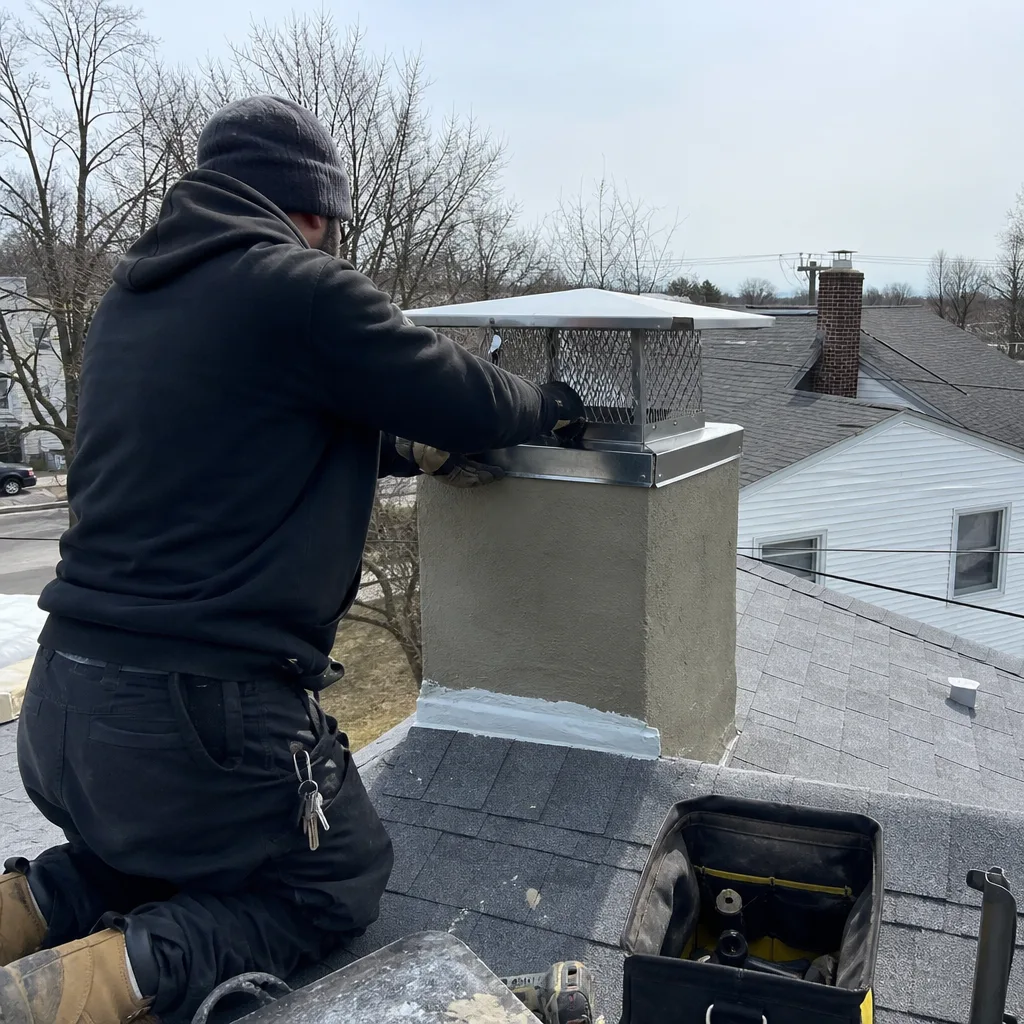
Level 1 sweep and inspection to the NFPA 211 annual standard - flue, crown, cap, and flashing checked and photographed
Chimney sweep logs do not sweep chimneys. They loosen some creosote - which then falls where a brush and vacuum still have to collect it.
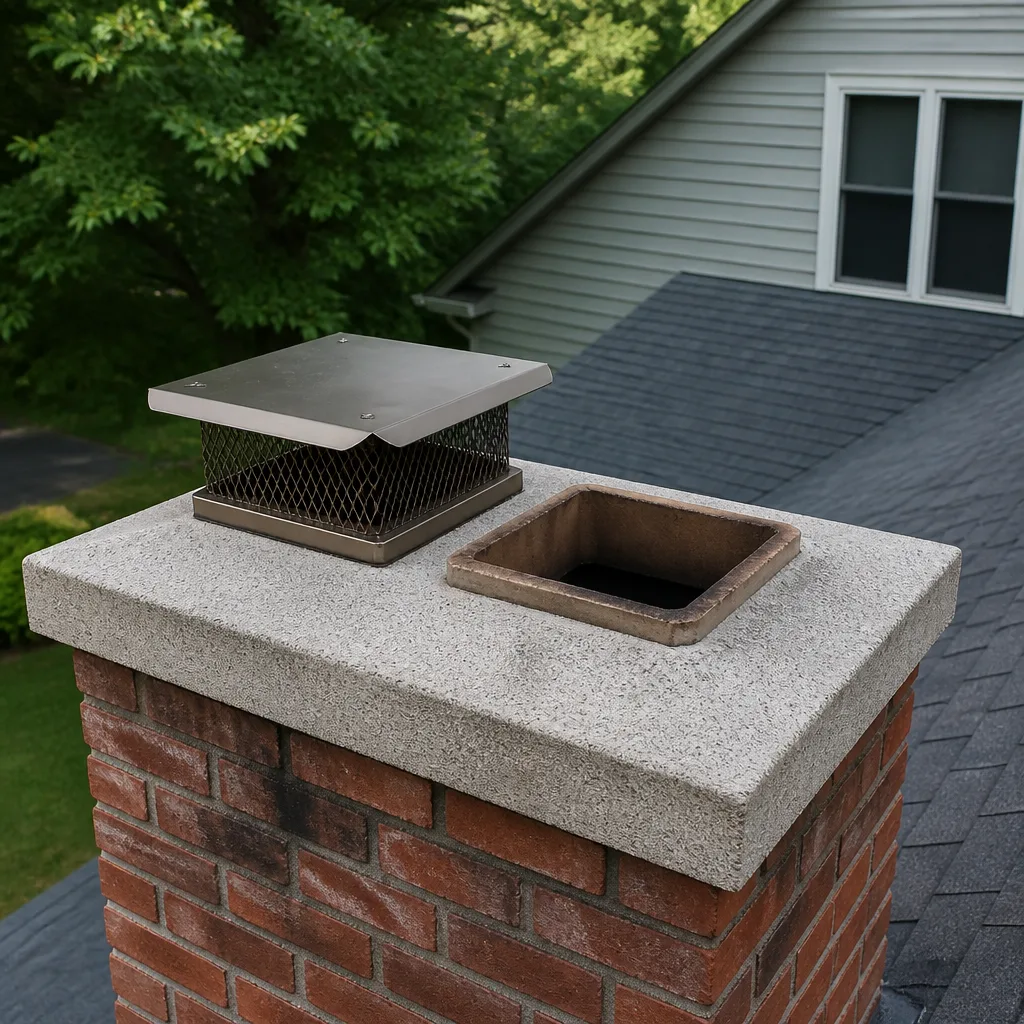
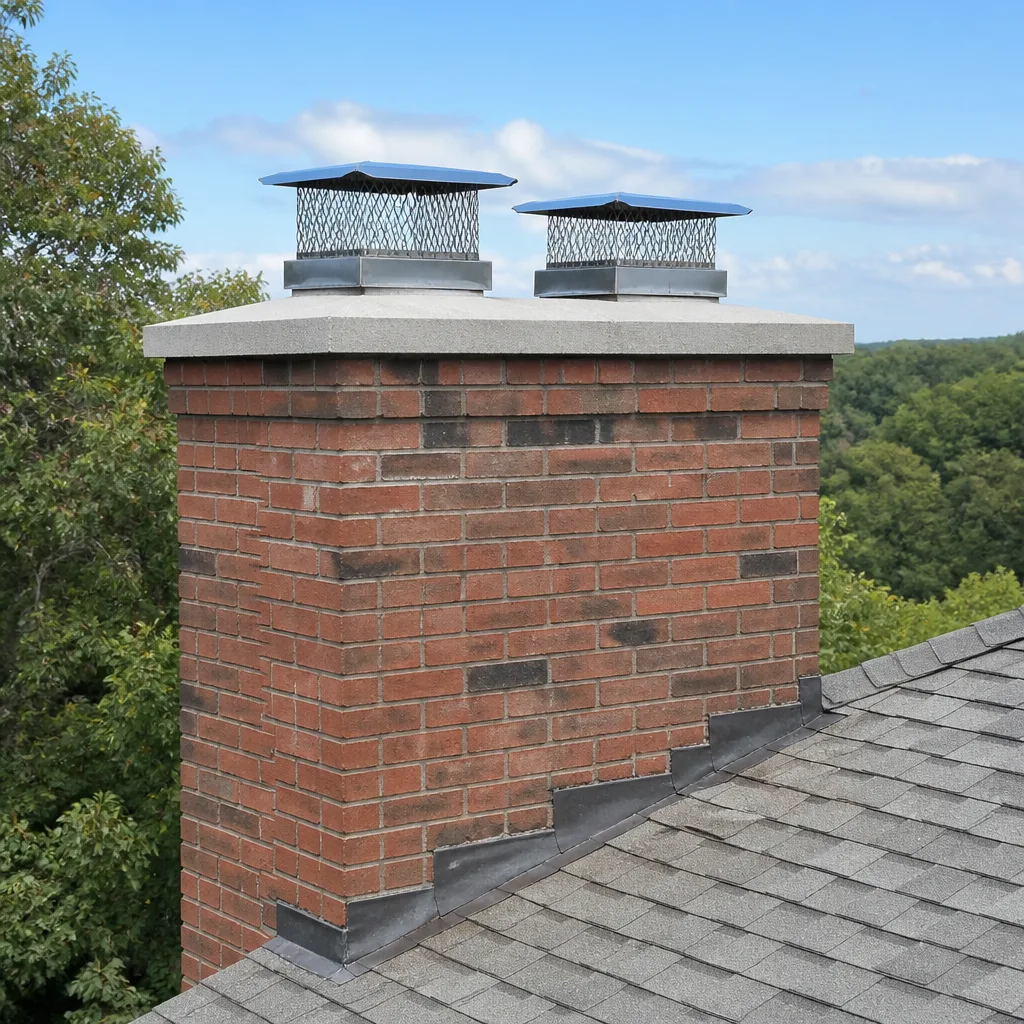
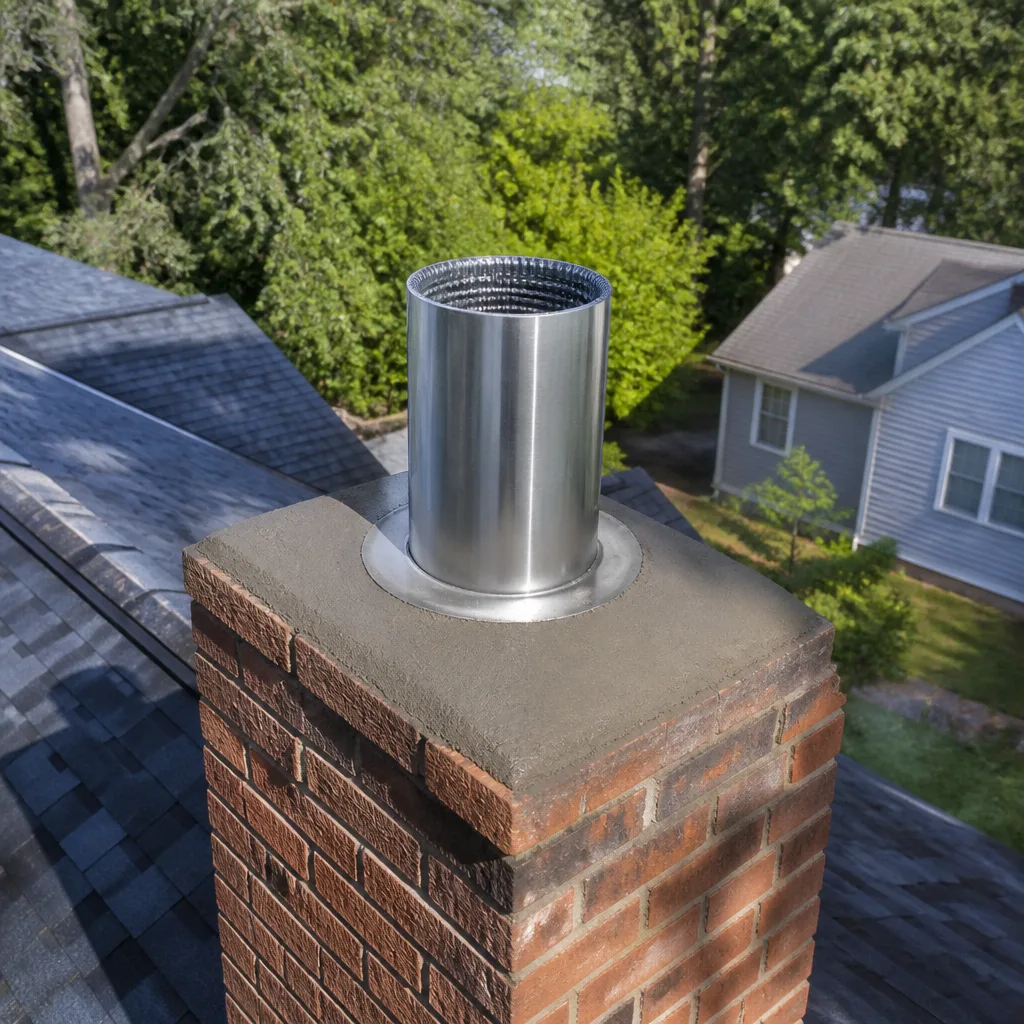
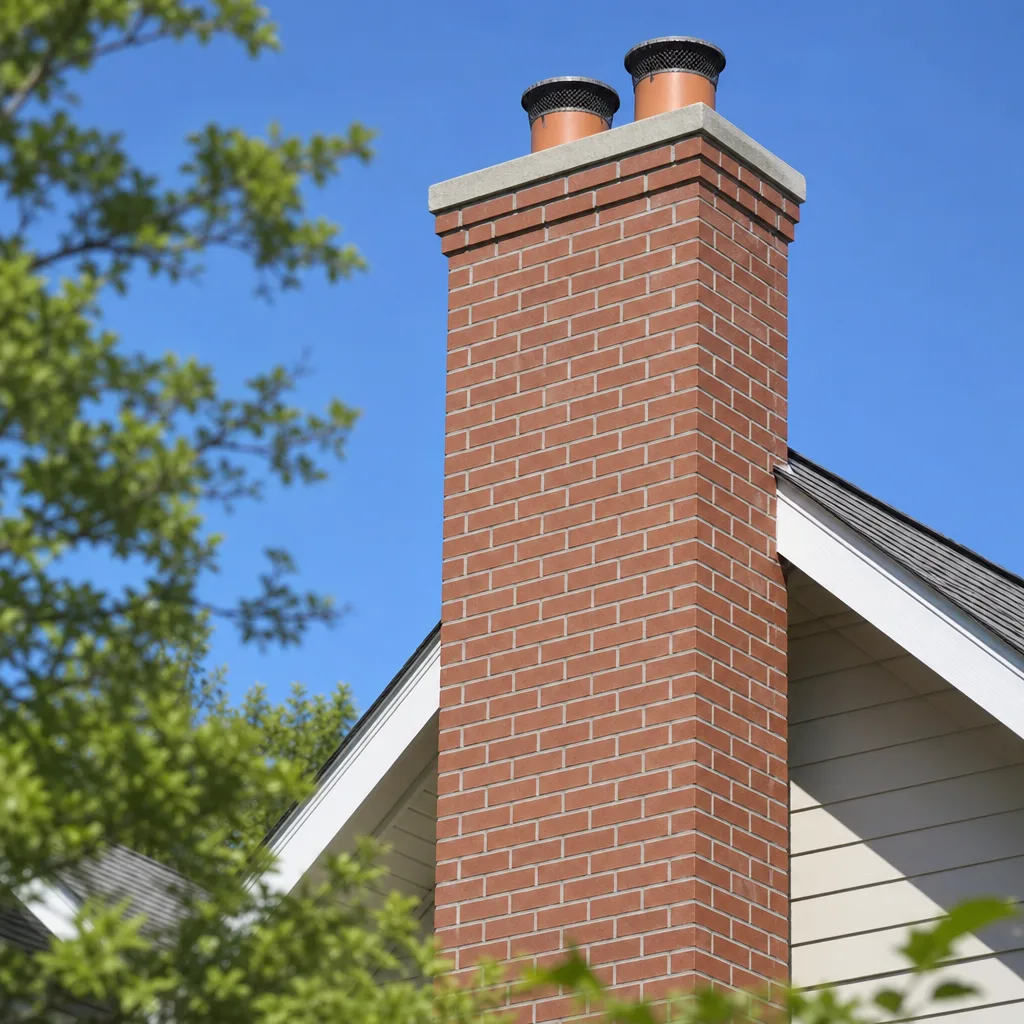
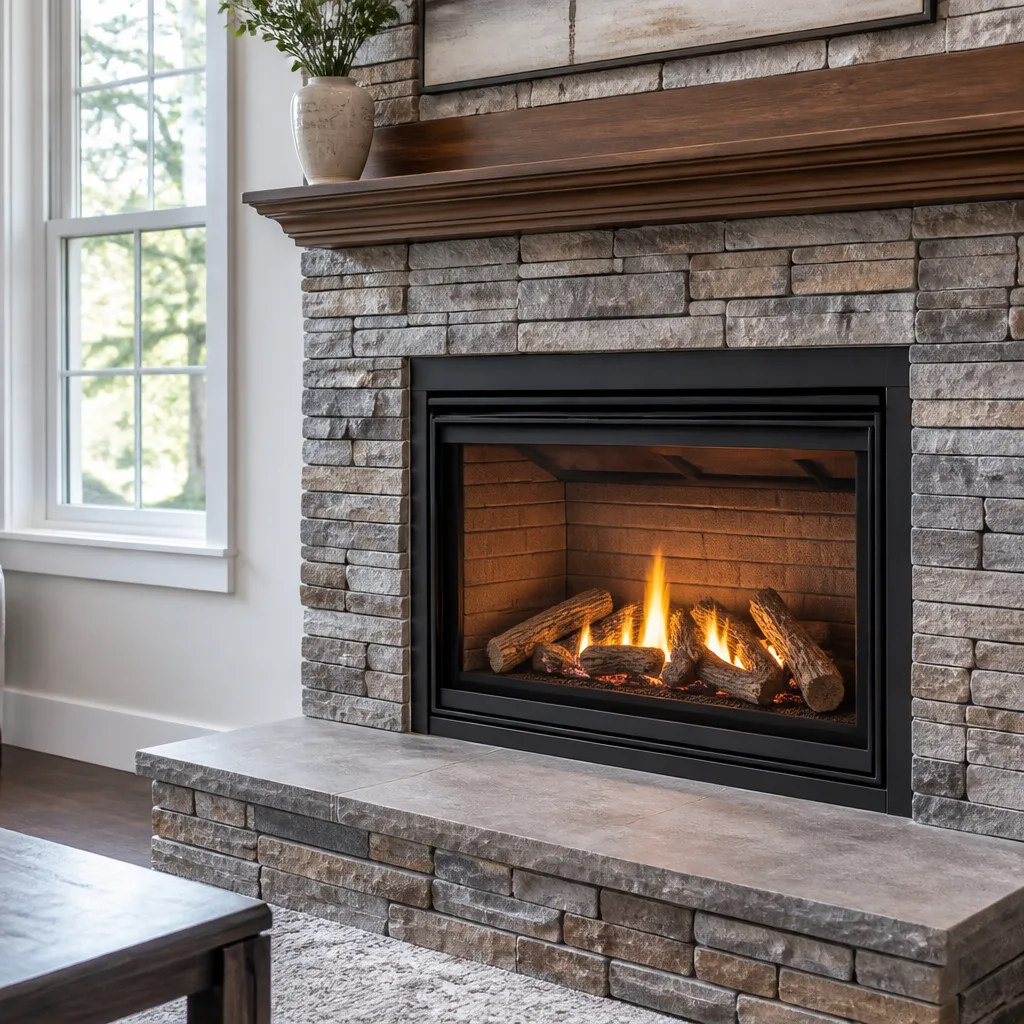
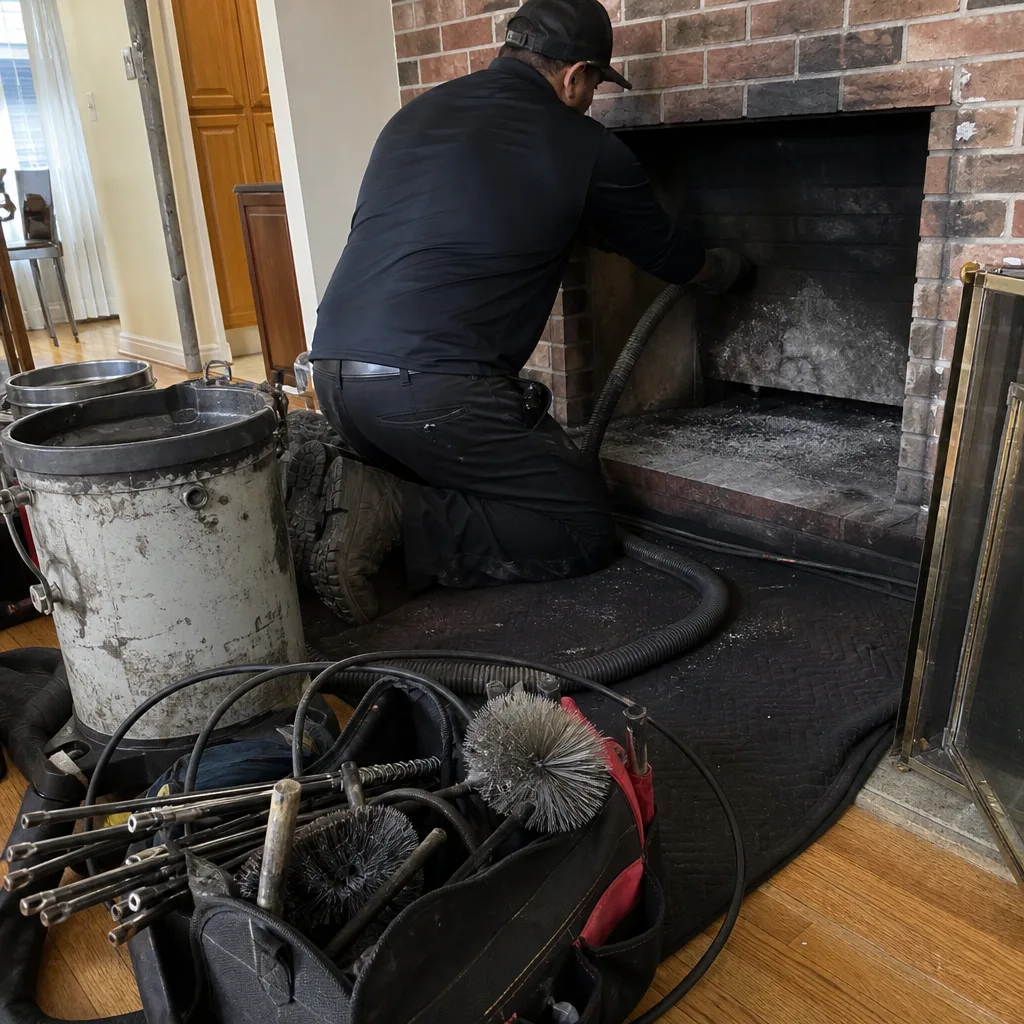 Before
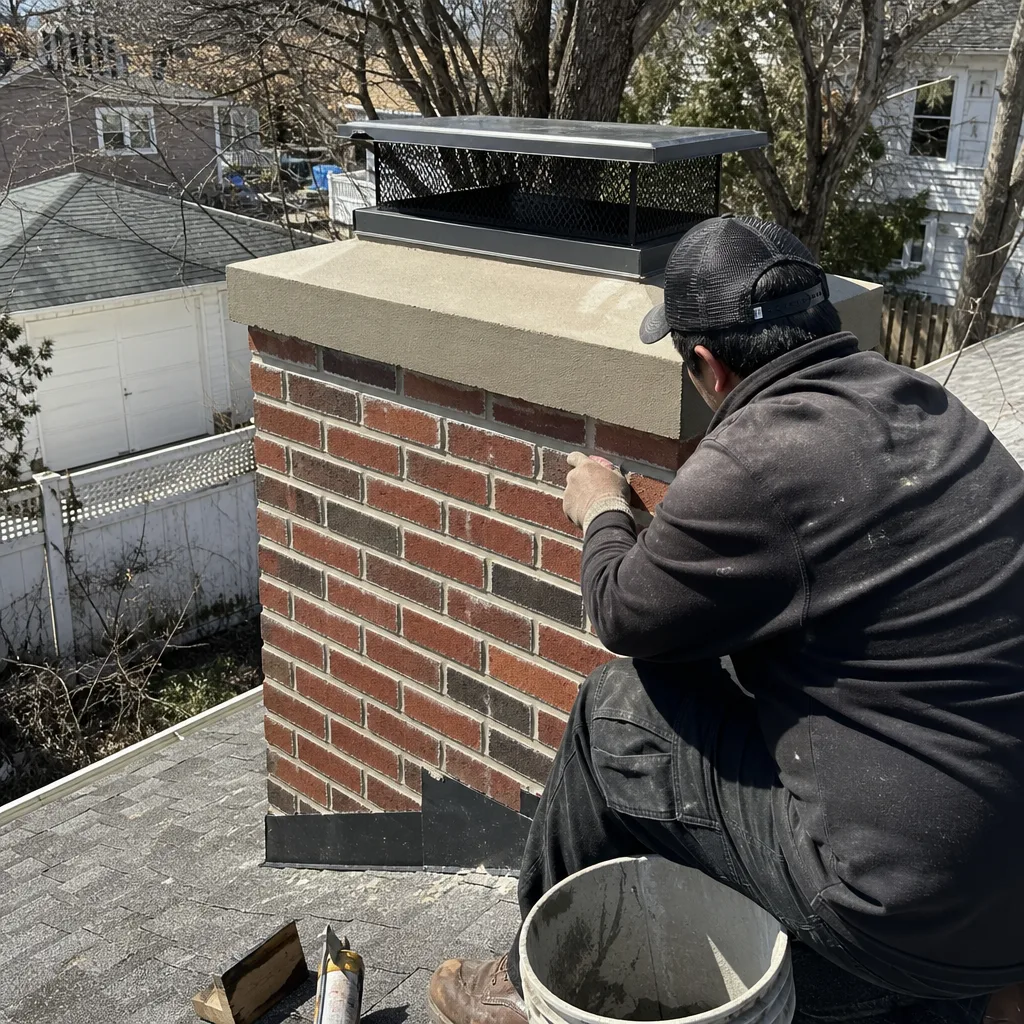 After
After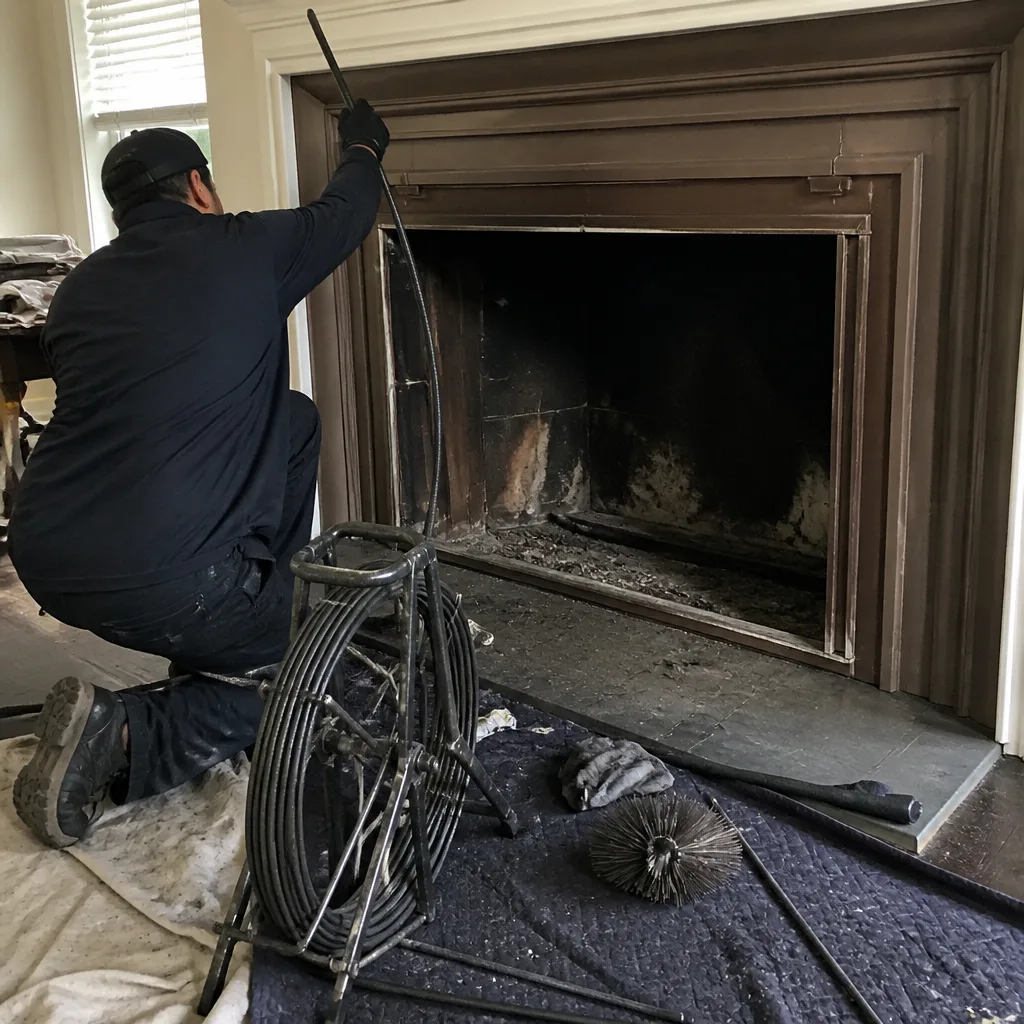 Before
 After
After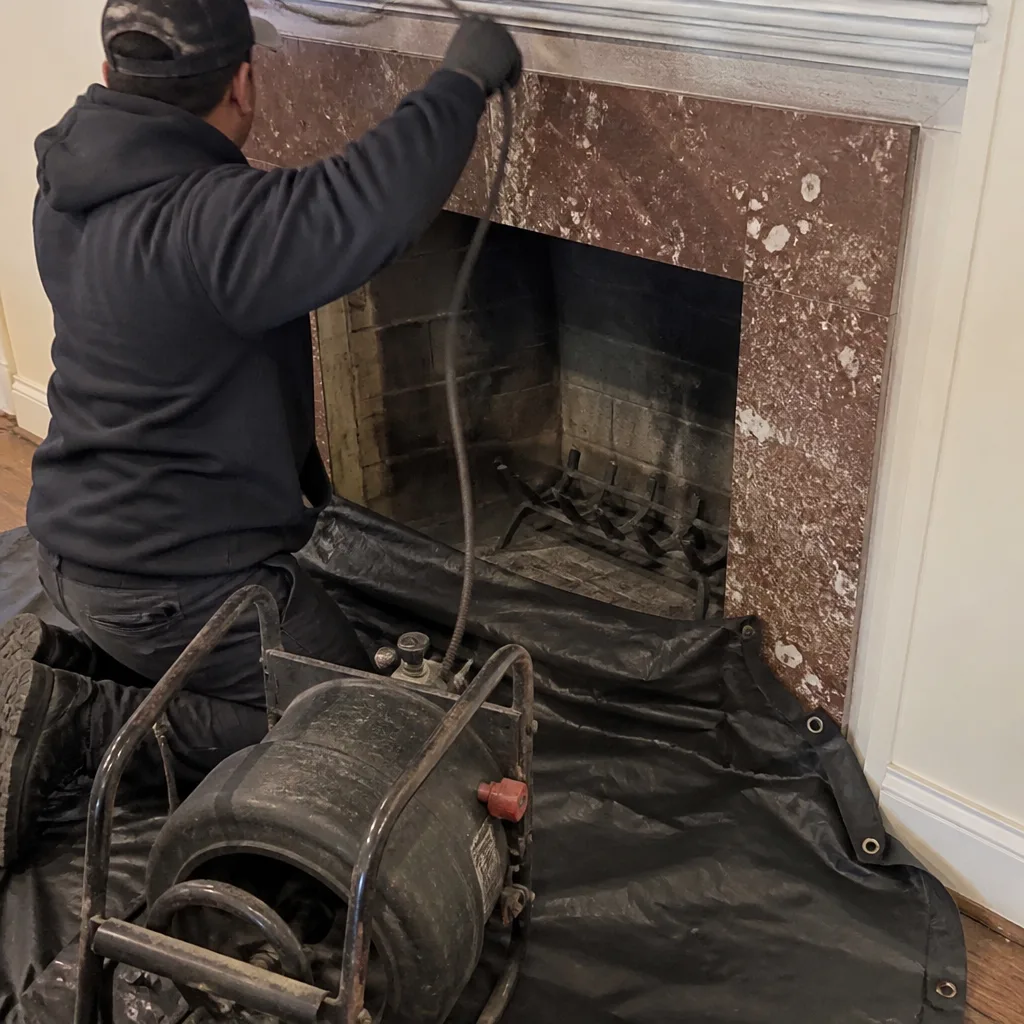 Before
 After
AfterDIY vs Professional Chimney Cleaning: The Flushing Homeowner’s Decision Guide
A chimney brush kit costs about $80 at any hardware store and does a genuinely decent job scraping surface soot off flue walls. What it cannot do is tell you whether the terra cotta tile liner behind that soot has a hairline crack that’s been venting carbon monoxide into your chase for two winters. That distinction is the entire DIY-versus-professional debate in Flushing, where homes built between 1920 and 1960 carry flue systems that are older than most of the people living in them. This guide draws the line precisely: what you can see without a camera, what you can’t, and what each option actually costs over time.
Quick Answer
DIY chimney cleaning in Flushing is reasonable for removing loose firebox debris, visible smoke-shelf soot, and confirming your damper opens and closes, but it cannot replace a professional Level 2 camera inspection. The hard truth: a brush removes what you can see, while the risks that actually cause chimney fires and carbon monoxide leaks live behind the soot, where only a camera reaches. For most Flushing homeowners, the smartest approach is DIY surface maintenance paired with professional inspection every year or two-our Seasonal Chimney Cleaning Care for Flushing: Year-Round Homeowner’s Guide breaks down the ideal schedule.
Table of Contents
- What DIY Chimney Cleaning Can Actually Accomplish
- The Camera Boundary: What No Brush Can Reveal
- Flushing-Specific Risks: Rowhouses, Co-ops, and Shared Flues
- The Honest Cost Comparison Over Five Years
- The One Scenario Where DIY Makes Unambiguous Sense
- Three Scenarios Where DIY Creates More Risk Than It Saves
- A Step-by-Step DIY Surface Cleaning You Can Do Safely
- What a Professional Sweep in Flushing Actually Includes
BeforeAfterWhat DIY Chimney Cleaning Can Actually Accomplish
Let’s be straight about what a homeowner with a drop cloth, a shop vacuum, and a basic brush set can legitimately do. The firebox floor is the easiest win. After a winter of fires, you’ll find an inch or two of fine ash, bits of charred wood, and sometimes small fragments of deteriorated brick. Scooping that out, vacuuming it with a HEPA-filtered shop vac, and wiping down the firebox walls with a dry rag is safe, simple, and takes twenty minutes. You don’t need a professional for it, and you shouldn’t pay for it.
The visible smoke shelf soot is a step up in difficulty but still doable. The smoke shelf sits just above the damper, and in many Flushing fireplaces built mid-century, it’s a flat ledge that catches falling debris and creosote flakes. With a flashlight and a mirror, you can see the front edge of it. A curved brush on a flexible rod can knock loose the loose flakes sitting there. What you’re removing is dust and light soot, not the tarry Class III creosote that forms in the flue above. That distinction matters more than most DIY guides admit.
Damper operation is the third legitimate DIY task. Open it, close it, feel for resistance, look for rust on the hinges, and listen for scraping. A damper that won’t fully close means warm air leaves your Flushing rowhouse all winter and cold air comes down in summer. A damper that won’t fully open means smoke rolls back into your living room the moment you light a fire. You can diagnose either problem yourself. You should not attempt to replace or repair a damper without experience, since the damper frame is often set into the masonry and a badly installed replacement is worse than the original problem.
Here’s the honest summary of DIY territory:
- Firebox debris removal: safe, simple, recommended. Do it before every burning season.
- Visible smoke shelf soot: doable with the right brush, but you’re only reaching the front edge.
- Damper operation check: DIY-diagnosable, but leave repairs to someone who has done them before.
- Anything above the smoke shelf: this is the line. Stop here.
The Camera Boundary: What No Brush Can Reveal
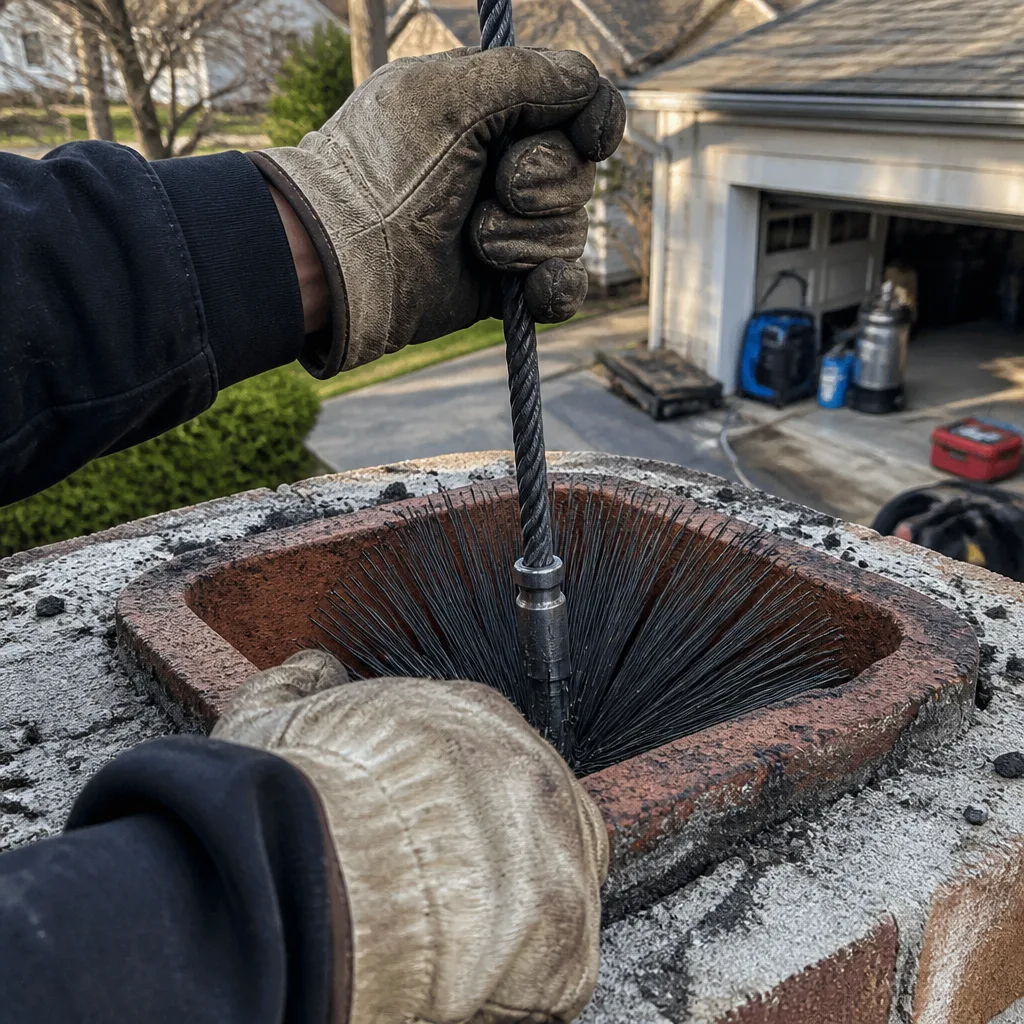
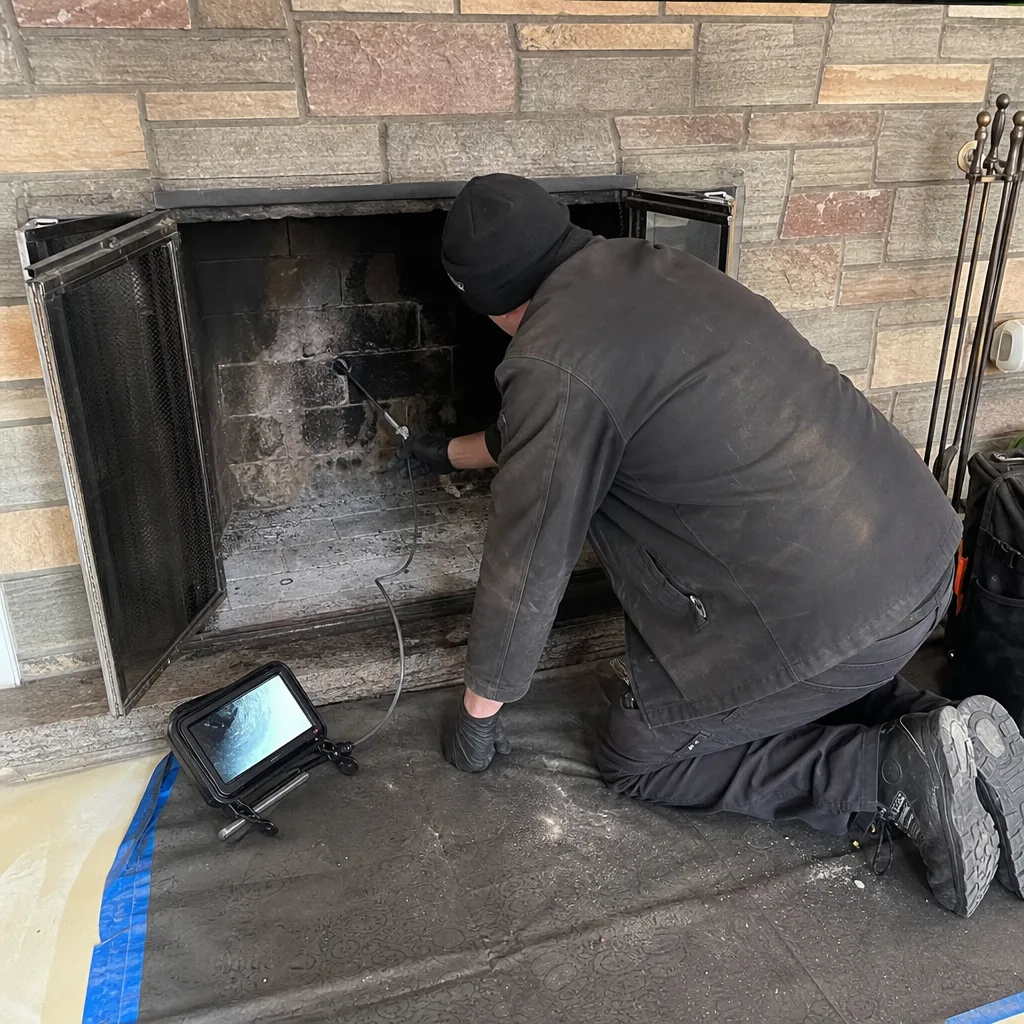
Here is the part where DIY guides stop being honest. A brush cleans what it touches. The flue liner walls are only one surface in a system that includes the smoke chamber, the crown at the top, the chase, and the masonry surrounding all of it. Cracks in terra cotta tile liners are invisible behind soot. Gaps between tile sections open up over decades as Flushing’s freeze-thaw cycles work on mortar joints. A camera pushed up the flue shows these in real time. No flashlight, no inspection mirror, no phone camera pointed up the chimney substitutes for a camera actually traveling the flue’s full height.
We’ve been running camera-scan inspections since 2009, and the pattern is consistent: roughly one in seven chimneys we inspect in Flushing has some structural issue behind the soot that a surface cleaning would never reveal. Some of those are minor, like spalling brick on the exterior chimney stack that’s visible from the ground anyway. Others are genuinely dangerous, like a cracked flue liner venting into the wall cavity of an attached rowhouse, where the neighbor’s bedroom is on the other side of that wall.
The term you’ll hear is NFPA 211 Level 2 inspection. That’s the standard that applies when a property is being sold, when the fuel source changes, or after a chimney fire. A Level 2 inspection always includes a camera scan. It’s not an upsell. It’s the only way to see the flue interior. We made camera documentation the default on every single job years before insurers started asking for it, and that practice became Clause 4 of the Haven Standard: a documented photo record on every visit.
What the camera reveals that a brush cannot:
- Hairline cracks in terra cotta liners: invisible behind soot, but a path for carbon monoxide into living space.
- Missing mortar joints between tile sections: common in homes built before 1970, especially after decades of freeze-thaw.
- Class III creosote: the tarry, glazed kind that a standard brush barely scratches and a fire can ignite.
- Animal nests or blockages mid-flue: squirrels and raccoons favor Flushing chimneys with missing caps.
- Improperly sized or partial liners: a flue liner that doesn’t extend fully to the crown vents into the chase.
Flushing-Specific Risks: Rowhouses, Co-ops, and Shared Flues
Flushing is not a suburb of standalone colonials. Large portions of the area are attached housing: rowhouses, co-op buildings, and multi-family conversions. That changes the DIY equation in a way generic chimney guides never touch: if you share a party wall or a flue system, your cleaning decisions affect people who never agreed to them.
Shared flues are less common than they were a century ago, but they still exist in older Flushing buildings where multiple fireplace openings on different floors vent into a single flue. If you push a brush up a shared flue and dislodge a partial obstruction that then settles lower and blocks your neighbor’s unit, you’ve created a problem in someone else’s home. If that neighbor then runs a gas fireplace or boiler vented into the same flue, the blockage can push carbon monoxide back into their unit. You are now liable for an outcome you couldn’t see and never intended.
Even in attached homes with separate flues, the liability picture matters. A chimney fire in a rowhouse doesn’t respect the property line. Fire that starts in your flue and spreads through the party wall to the attached unit is a claim against your homeowner’s policy, and if your insurer learns you were performing your own chimney maintenance without professional documentation, a claim dispute is entirely possible. Professional sweeps in Flushing carry documentation: the written scope, the before-and-after camera record, the dated service report. That paper trail is not a formality. It’s what you hand to an adjuster when someone asks what happened.
Co-op buildings add another layer. Most Flushing co-op boards require professional chimney work as a condition of the building’s master insurance policy. Unit owners who DIY their way through a chimney problem may find themselves in violation of the proprietary lease. Before you buy a brush kit in a co-op building, check your building’s alteration agreement and maintenance rules. This is a five-minute phone call that can save you a board action.
Flushing’s climate also deserves a paragraph. We get real winters, with freeze-thaw cycles that test masonry every year from December through March. The chimneys that fail in Flushing are usually the ones where water has been getting in through a cracked crown or missing cap for years, slowly eroding mortar joints and rusting damper assemblies. A DIY cleaning won’t catch a deteriorating crown because the crown is on the roof, most visible from above. A professional inspection includes a roofline check specifically for crown condition and flashing integrity.
The Honest Cost Comparison Over Five Years
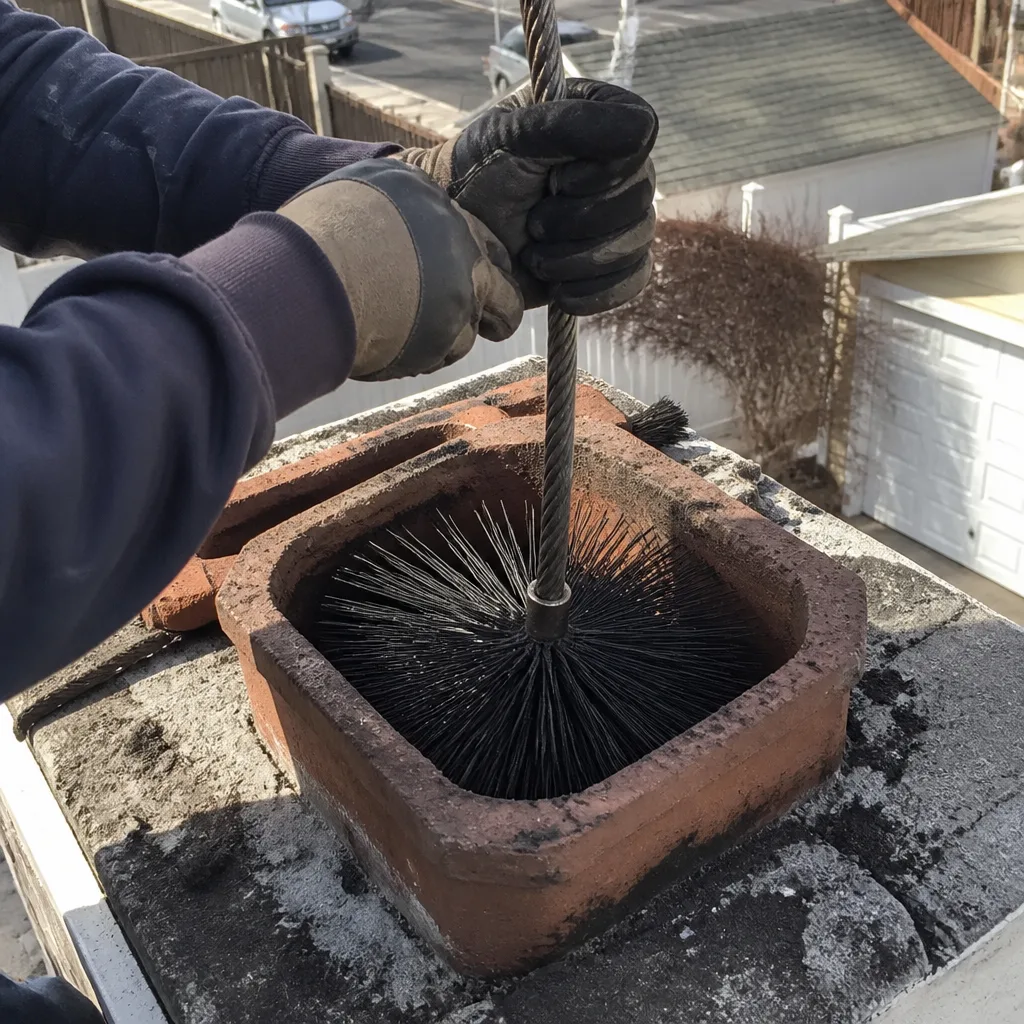
DIY chimney cleaning is sold as a money-saver, and the sticker price supports that. A decent brush kit with rods, a drop cloth, gloves, and a HEPA shop vacuum rental might run you $150 to $200 the first year. Subsequent years cost less since you own the brush set. Over five years of annual cleanings, a DIY-only approach might total $250 to $400, assuming nothing major goes wrong.
A professional sweep in Flushing typically runs $180 to $350 depending on the flue height, accessibility, and condition-see our Chimney Cleaning Cost Breakdown: The Flushing Homeowner’s Reference for 2026 for full details. That price includes the brushing, but it also includes the camera-scan documentation, the written service report, and the photo record. Over five years of annual professional service, you’re looking at roughly $900 to $1,750.
Here’s the part the DIY math misses: documentation. If you ever sell your Flushing home, the buyer’s home inspector will flag the chimney. A documented professional service history answers that flag in one minute. No documentation means a Level 2 inspection as a condition of sale, which you’ll pay for anyway, and now the buyer has leverage in the negotiation. That one inspection at sale, which in Flushing commonly runs $250 to $400, erases most of the five-year DIY savings by itself.
Here’s the actual five-year comparison, assuming one professional inspection every other year paired with DIY surface cleaning in between:
- DIY-only (no professional visits): $250-$400, but zero documentation, zero camera evidence, and undiscovered flue condition.
- Professional-only (annual): $900-$1,750, full documentation, early detection of liner and crown issues.
- Hybrid (DIY surface cleaning + professional inspection every other year): $500-$900, documentation trail exists, most surface debris handled by homeowner, camera catches structural issues early.
The hybrid approach is what we recommend to Flushing homeowners who want to be involved in their home’s maintenance without betting the house on what they can’t see. You handle the firebox and visible smoke shelf. We handle the camera, the roof, the liner, and the documentation. You save 30-50% versus annual professional service. The only thing you give up is the ability to claim you’ve never missed anything, because you haven’t seen the upper flue yourself.
The One Scenario Where DIY Makes Unambiguous Sense
If you have a newly built or recently relined chimney with documented professional service from the last twelve months, and you’re seeing light surface soot in the firebox after occasional use, DIY surface cleaning between professional visits is genuinely reasonable. The liner was camera-verified recently. The crown was inspected from the roof. The system’s structural condition is a known quantity. Your brush work is removing ash and surface dust, not masking an unknown crack. In that specific situation, a once-a-season DIY firebox and visible-smoke-shelf cleaning is honest maintenance that saves you a service call.
Even then, you don’t skip the next professional visit. You just space it confidently, knowing the camera record from last year is recent enough to cover you.
Three Scenarios Where DIY Creates More Risk Than It Saves
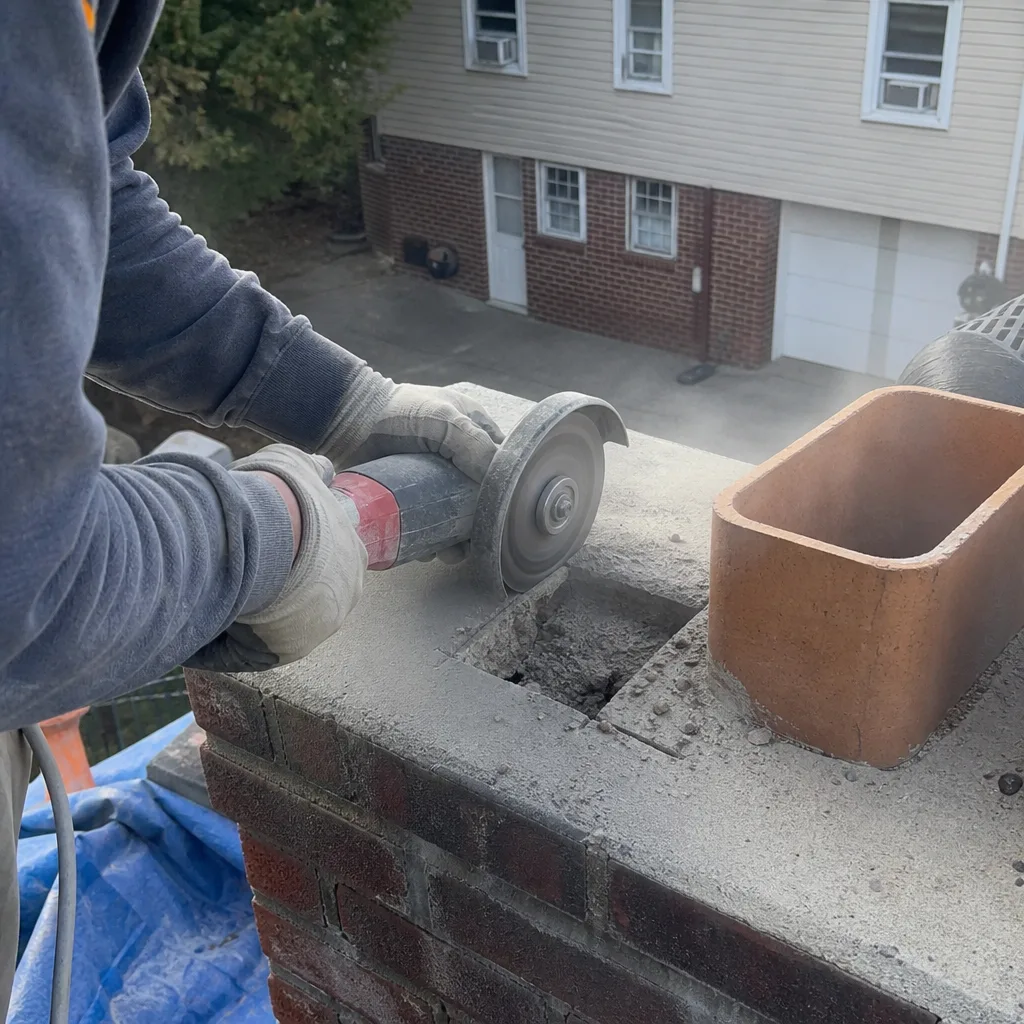
Three situations in Flushing make DIY chimney cleaning a net negative. If you’re in any of them, the brush kit should stay at the hardware store.
- You just bought the home and have no service history. The previous owner’s word is not documentation. A camera-scan inspection is the only way to establish your baseline. Cleaning before inspecting means you may be sweeping soot off a crack without ever knowing it was there.
- You share a wall, a flue, or both with another unit. Your liability exposure changes the math entirely. The cost of a professional sweep is a rounding error compared to a claim from a neighbor whose unit was damaged by a fire or carbon monoxide incident traced to your flue.
- You smell smoke or see staining inside the home near the chimney chase. That’s not a cleaning problem. That’s a liner or masonry problem presenting itself. A camera-scan inspection is the diagnostic step, and it should happen before anyone runs a brush through the flue.
These three scenarios share one feature: in each, the unknown condition of the flue interior is the actual risk. Cleaning is a nice-to-have. Seeing is the must-have.
A Step-by-Step DIY Surface Cleaning You Can Do Safely
If you’re in the one-scenario camp and want to do surface maintenance yourself, here’s the method we’d use if we were teaching a homeowner. This is not professional flue cleaning. This is firebox and visible-smoke-shelf work only.
- Confirm the fireplace is cold. No embers, no warm ash, no recent fire within 48 hours. Warm ash in a vac can ignite.
- Lay a drop cloth across the hearth and floor area. Soot on hardwood or tile is a bear to remove. Cover a six-foot radius.
- Don a dust mask and safety glasses. Ash dust is fine particulate. You don’t want it in your lungs or eyes.
- Remove the grate and andirons. Set them on the drop cloth outside the firebox.
- Scoop the bulk ash into a metal bucket. Use a small metal shovel. Do not use plastic. Embers can survive longer than you think.
- Vacuum the firebox floor and walls with a HEPA-filtered shop vac. Standard shop vacs blow fine ash back into the room. HEPA filter or don’t bother.
- Inspect the visible smoke shelf with a flashlight. You’re looking for loose flakes and debris, not performing a condition assessment.
- If visible loose flakes are present, use a curved brush on a short rod to knock them down. Do not reach beyond what you can see. Do not push the brush up into the unseeable flue.
- Test the damper. Open it, close it, check for smooth operation. Note any rust, warping, or resistance.
- Photograph the finished firebox and any damper issues you notice. Your future self and your next chimney professional will both appreciate it.
That’s the whole list. Anything beyond step 10 crosses into professional territory.
What a Professional Sweep in Flushing Actually Includes
When you book a professional sweep with a Flushing company, you’re buying more than brush time. The service starts with a written price before anyone shows up: a written scope, written warranty, and written price delivered before work begins, every time. That’s Haven Standard Clause 1, and it’s non-negotiable. If a company won’t give you a written price before arriving, that’s information about how they’ll handle surprises once they’re on the roof.
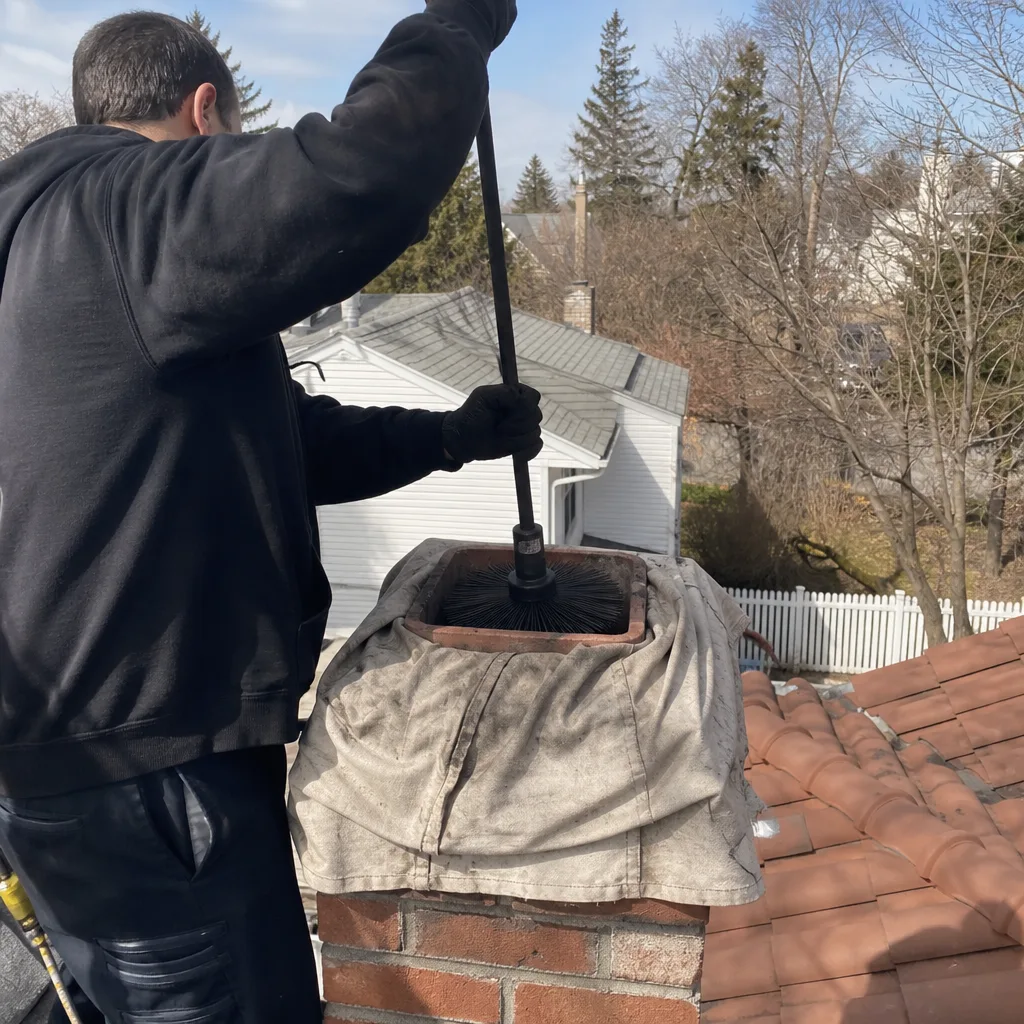
The sweep itself covers the full flue height with brushes sized to the liner dimensions. We use materials from manufacturers like Olympia Chimney, Famco, and Copperfield, sourced through Haven’s buying network, which keeps replacement components reasonable when the camera finds something that needs attention. After the brushing, the camera goes up. You get a photo record of the flue condition, not a verbal summary. Clause 4 of the Haven Standard requires the photo record on every job, and it’s been that way since 2009.
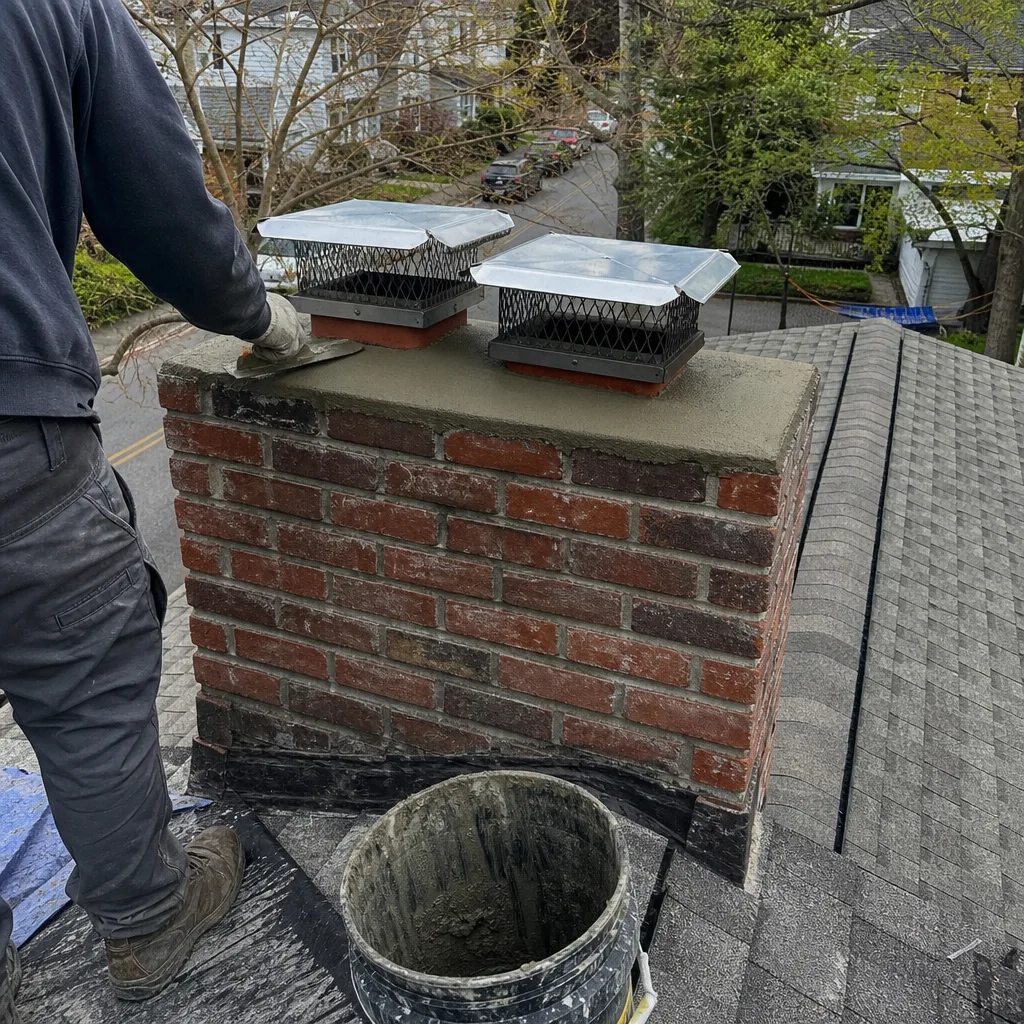
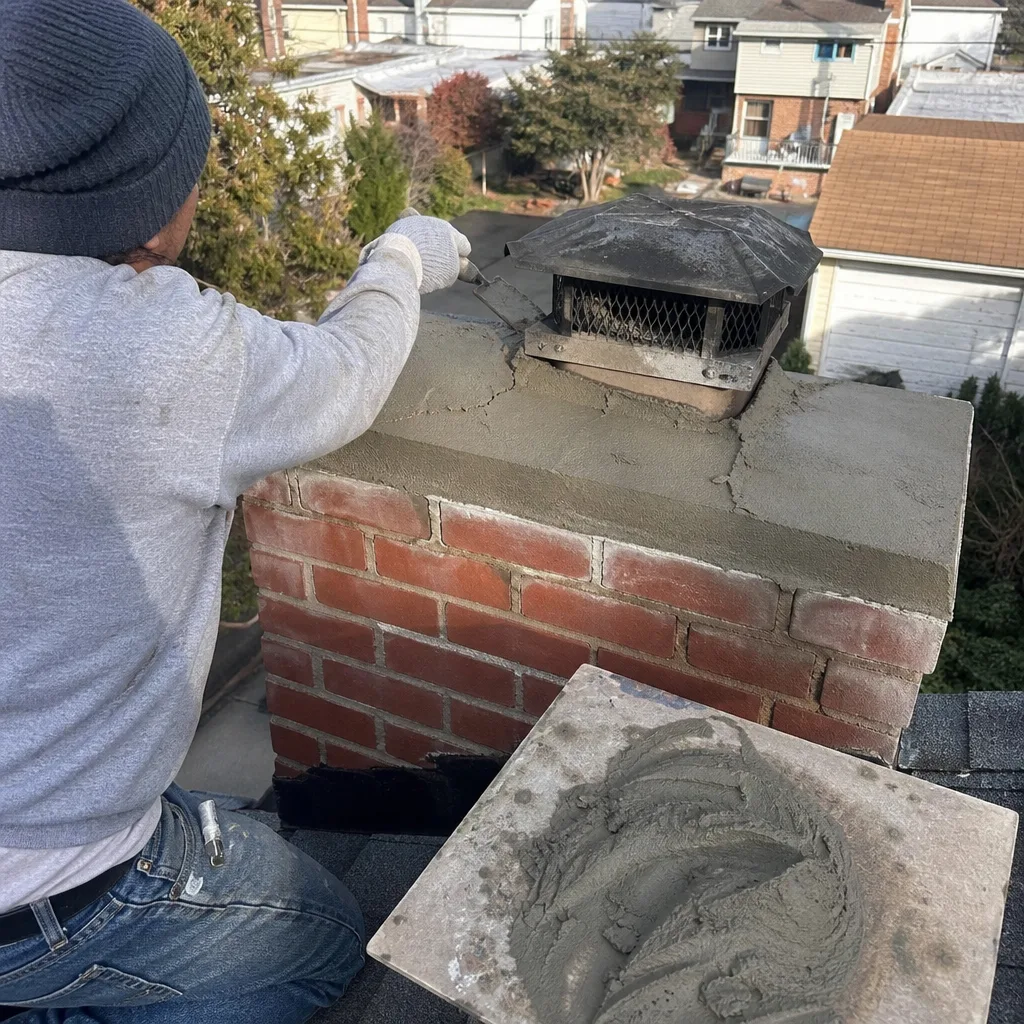
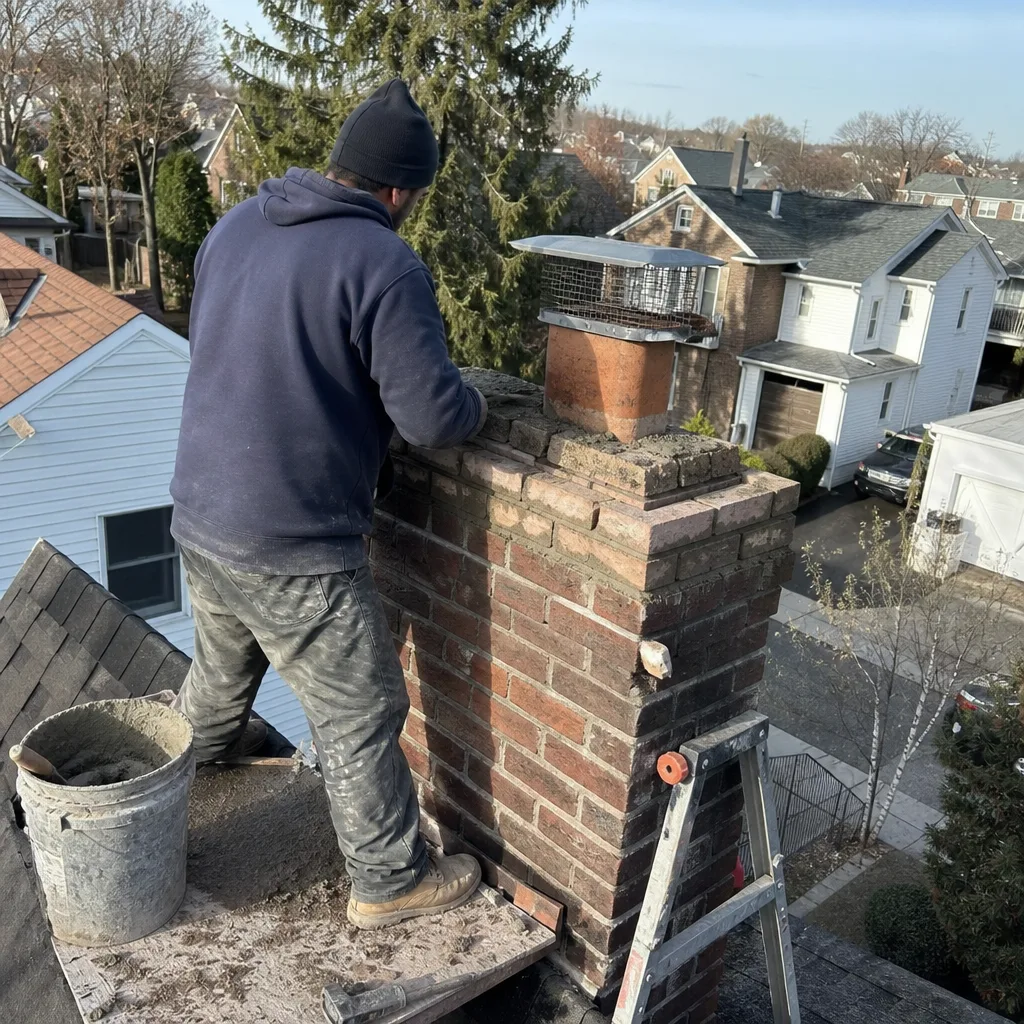
The technician checks the crown from the roof, the flashing, the cap, and the brickwork at the roofline. Those are components a DIY cleaning never reaches. If the crown is cracked or the cap is missing, you’ll have photos of that too, plus a written recommendation for repair with a price attached. Nothing is recommended without camera evidence you can see for yourself, and if the camera shows a flue that’s clean and structurally sound, the recommendation is honestly “nothing needed this year.”
You also get a documented record when the job is done. In Flushing, where real estate transactions happen constantly and inspectors flag chimneys routinely, that record is worth real money at closing. The Chimney Cleaning & Sweep service in Flushing as we run it produces a paper trail a seller can hand to a buyer’s inspector and close the topic in sixty seconds.
More serious findings route to our Chimney Repair in Flushing service, where the same written-price, photo-documented process applies to liner replacement, crown rebuilding, and masonry repair. If the camera reveals damage beyond cleaning, you’ll know exactly what it is, what it costs to fix, and whether it can wait. The Fireplace Services in Flushing division handles the firebox, damper assembly, and surround when those need work beyond a cleaning. And our Level Two Chimney Flushing home page carries the full service list, the Haven Standard clauses, and the 365-Day Done Right Promise in writing.
The 365-Day Done Right Promise applies to every job: if it’s not done right, we make it right. No fine print about exclusions. The promise is stamped on the work. The Free Second Opinion on any written estimate means you can bring us a competitor’s quote and we’ll give you a straight read on it. And if you call, a live person answers, 24 hours a day. No voicemail tree, no web form.
Common Mistakes to Avoid
- Brushing a flue you’ve never camera-inspected. You’re cleaning a surface without knowing if the surface is intact. In Flushing’s older housing stock, that’s a gamble you don’t need to take.
- Using a standard shop vac for ash. Non-HEPA filters blow fine particulate back into the room. You’ll spend longer cleaning the living room than you spent on the chimney.
- Assuming a chimney cap is optional. Missing caps are the top entry point for Flushing’s raccoon and squirrel population, and a nest mid-flue is a blockage waiting to redirect carbon monoxide.
- Thinking a clean firebox means a clean flue. The firebox is the floor. The flue is the pipe. They accumulate completely different kinds of material at different rates.
- Attempting to remove Class III creosote with a wire brush. Glazed, tarry creosote requires chemical treatment or professional removal. A brush just polishes it, and aggressive scrubbing can damage a terra cotta liner.
- DIYing in a co-op or shared-flue building without checking the rules. Board violations and neighbor claims both start with good intentions. Both are expensive.
- Waiting until you smell smoke to investigate. By the time you smell it inside, the problem has been presenting for a while. Camera inspection beats odor investigation by months or years.
When to Call a Professional
Call a professional if you’ve never established a camera-verified baseline for your flue, if you share a wall or flue with another unit, if you see staining near the chimney chase, if your damper doesn’t operate smoothly, or if it’s been more than two years since anyone looked at the upper flue and crown. Call if you’re preparing to sell and want the documentation in hand before the buyer’s inspector arrives, or read How to Hire a Chimney Cleaning Contractor in Flushing: A Step-by-Step Guide to choose wisely. In Flushing, where a chimney flag can slow a closing by weeks, having the photo record ready is a small service with an outsized return. Level Two Chimney Flushing offers free estimates in Flushing. Call (516) 240-9191 for a written price before anyone sets foot in your home.
Frequently Asked Questions
It’s legal in a privately owned single-family home with a dedicated flue. It may violate co-op proprietary leases, building maintenance agreements, or insurance policy conditions in multi-unit buildings. Check your governing documents before you start, and document any professional work you’ve had done regardless.
A professional sweep in Flushing typically costs $180 to $350, depending on flue height, roof accessibility, and condition. Level Two Chimney Flushing always provides a written price before work starts, not an estimate you have to call for. Camera-scan documentation is included in every visit under Haven Standard Clause 4.
For a wood-burning fireplace used regularly during winter, annual cleaning is the NFPA recommendation, and it’s the sensible cadence in Flushing’s freeze-thaw climate. If you burn infrequently or use a gas insert, you can often extend to every 18-24 months, but the camera-scan inspection should still happen annually to catch crown and liner deterioration early.
Creosote builds up in layers, and the lower layers harden into Class III glazed creosote that a standard brush won’t remove. That material is combustible, and a hot fire can ignite it, producing a chimney fire that reaches 2,000°F. Even without a fire, a blocked or restricted flue can push carbon monoxide back into your living space. Neither outcome announces itself in advance.
A Level 2 camera inspection is the only way to see the flue interior behind the soot, inside the smoke chamber, and at the crown connection point. It’s required by NFPA 211 for property sales, fuel changes, and after chimney fires. Level Two Chimney Flushing has included camera-scan documentation on every job since 2009, when we made it the default before insurers or regulators asked for it.
Chimney cleaning logs can loosen light creosote in some cases, but they don’t remove it, and they don’t address Class III deposits, blockages, or structural issues. They’re a supplement to brushing at best, not a replacement. If you’re burning wood in an older Flushing home, get a camera-scan inspection before relying on any chemical product.
The Bottom Line
The DIY-versus-professional chimney cleaning question in Flushing has less to do with skill than with visibility. You can clean what you can see. You cannot clean what you can’t see, and what you can’t see is exactly what causes chimney fires, carbon monoxide leaks, and failed real estate transactions. If your chimney is recently inspected and structurally documented, DIY surface cleaning between professional visits is honest, safe maintenance. If you have no baseline, shared walls, or symptoms, the brush kit is the wrong tool for the job. Camera evidence, written price, written warranty, and a documented record beat a flashlight every time. For more guides & resources on keeping your Flushing home safe, visit our blog. Call (516) 240-9191 for a free estimate, and we’ll show you what’s actually in your flue before you decide anything.
Written by Corrine Halstead, Owner at Level Two Chimney Flushing, serving Flushing since 2009.